


Leila sat on her favorite bench in the small park tucked behind her apartment building. The gentle rustle of early autumn leaves provided a soft symphony to accompany her thoughts. It was here she felt the greatest sense of herself—an identity somewhat separate from the layers of expectation that seemed to cling to her in every other part of her life.
At twenty-six, Leila had grown adept at navigating the intricate web of cultural and familial expectations that defined much of her world. Her parents, Iranian immigrants who had worked tirelessly to build a stable life in a new country, had dreams for her that were clear and unwavering. They wanted security and success, which translated into a prestigious career and a suitable marriage; two achievements they equated with happiness.
Leila loved her family deeply and understood the sacrifices they had made. Their values were not unfamiliar to her, yet there was a quiet whisper within her that craved something different. As a child, she’d been enchanted by stories, by the ability of words to craft worlds and reshape realities. Her dream was to be a writer, to weave tales that might one day offer readers the same escape and insight she’d found in her favorite books.
Yet, the pathway to becoming a writer seemed fraught with uncertainties. Her parents were supportive in many respects but grew visibly uncomfortable whenever she brought up her passion for storytelling as a career. “Writing is a wonderful hobby,” her mother would say, “but you need something more stable to rely on.”
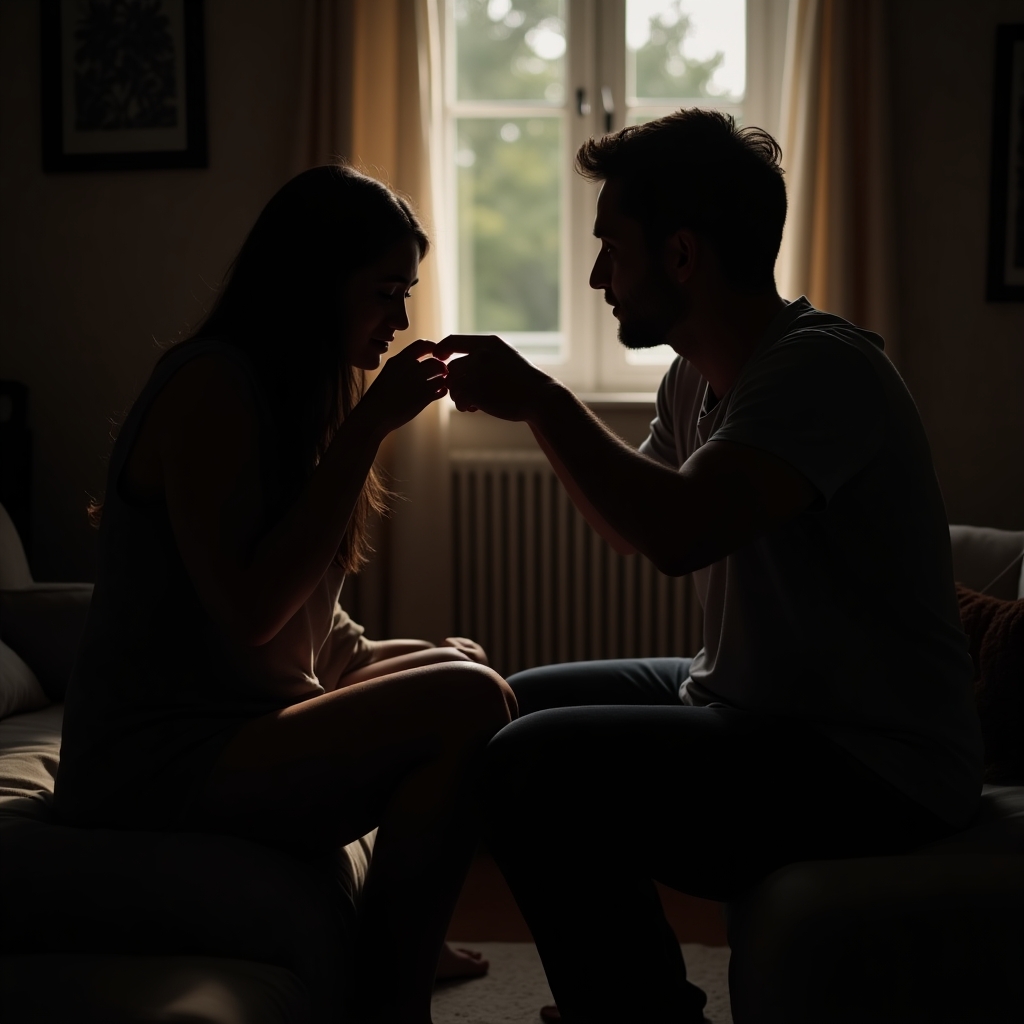
Caught between these two worlds, Leila felt like a tightrope walker, balancing on the thin line that separated her desires from her duties. This tension, subtle but ever-present, was like a persistent hum in the background of her life.
She tried not to overthink it, often telling herself that in due time everything would fall into place. But beneath her calm exterior was a mounting anxiety, a gnawing fear that she might one day find herself waking up in a life that didn’t feel like her own.
The park was her haven, the space where she could momentarily cast off the weight of expectations. It was here she could indulge in the fantasy of what life might be like if she truly followed her heart. Sometimes she brought a notebook and wrote snippets of stories, ideas that danced in her mind and begged to be captured.
One late afternoon in October, as the sun dipped below the horizon and painted the sky with strokes of orange and pink, Leila had an encounter that quietly shifted the axis of her internal struggle. An elderly woman who often fed the pigeons sat beside her, and through the course of an unhurried conversation, inadvertently held up a mirror to Leila’s life.
“You remind me of my daughter,” the woman said, her voice a gentle melody. “She always dreamed of being an artist. I was so afraid for her, worried about how she’d survive. But now, seeing how her art brings joy to so many, I can’t imagine her doing anything else.”
The woman’s words settled in Leila’s heart like a warm embrace. She realized, in that moment, that her fears were not unique, and that the struggle between duty and desire was a narrative as old as time. But more importantly, she understood that the quiet whisper of her own dreams was as valid as those of her parents.
Leila left the park that evening with a renewed sense of purpose. She didn’t need to reject her family’s values or expectations entirely; instead, she could find a way to weave them into the vibrant tapestry of her own life, creating a picture that was uniquely hers.
In the days that followed, her resolve grew stronger. She began to articulate her desires to her family, gently but firmly. It was met with resistance at first, but gradually, through honest dialogue, she began to see a shift in their understanding.
Leila learned that courage did not always roar; sometimes, it was the quiet voice at the end of the day saying, “I will try again tomorrow.” Embracing her truth did not mean choosing one path over another but finding a way to walk her own. In doing so, she also became a bridge, an embodiment of generational healing.
As the autumn leaves continued to fall, Leila knew she was stepping into a future more aligned with her inner self. And that quiet, persistent whisper within her began to sing.