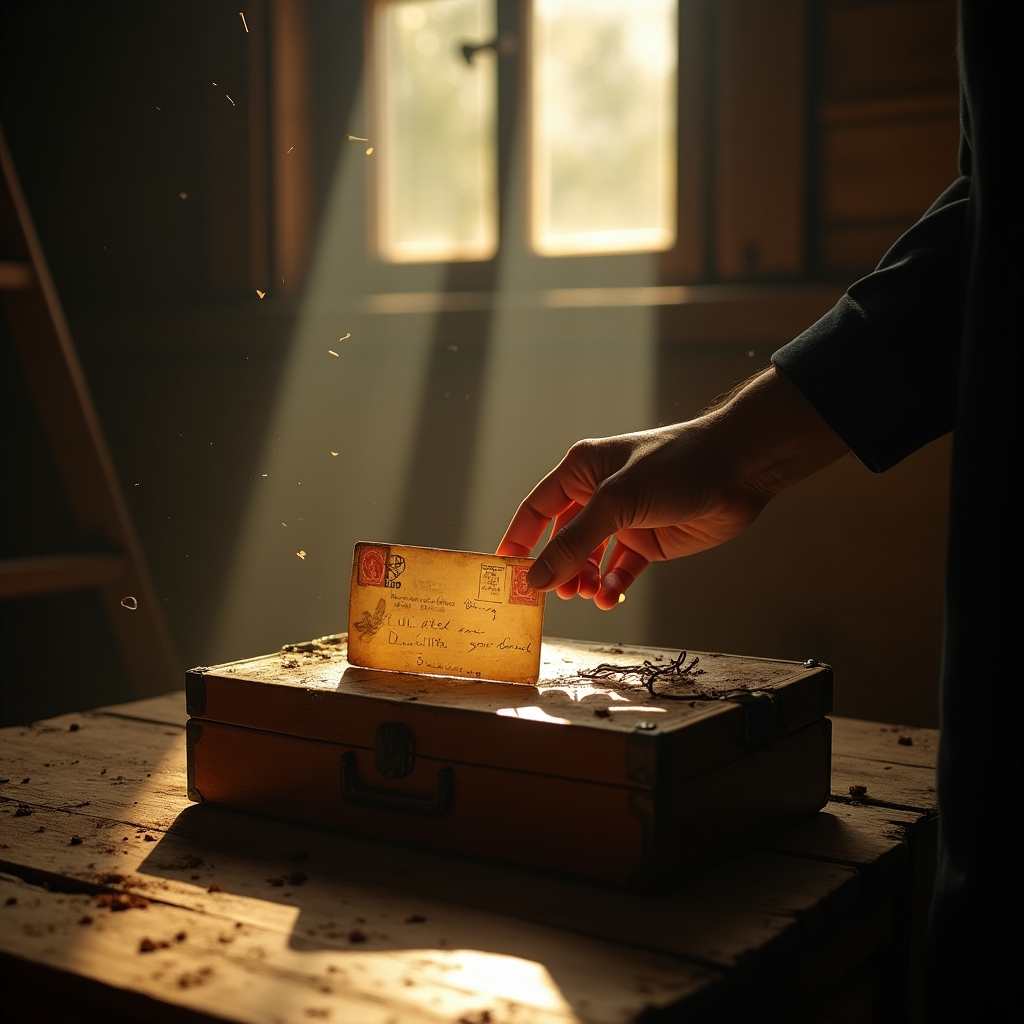
I never thought something as simple as a forgotten postcard could unravel so much of the past. It was a sunny afternoon when I decided to clear out the attic. My hands were dusty and sneezing was inevitable as I pulled out boxes that hadn’t been touched in years. That’s when I found it, tucked between the pages of an old photo album: a postcard, with sun-faded edges and almost illegible handwriting.
The postcard was addressed to Mom. The picture on the front was of a sunflower field, vibrant and alive, much like her spirit once was. I turned it over and squinted at the faded ink, desperately trying to decode the message. It was signed by a ‘James.’ I stared at that name for a long moment, unease slipping into my bones. James was my father’s name, but the date written above his signature was troubling—it was dated a year before I was born.
“Hey, Mom,” I called out as I descended the attic stairs, the postcard clutched tightly in my hand. She was in the kitchen, her favorite place in the house. The aroma of freshly baked bread embraced me as I entered.
“Tim, you’ve been up there for ages,” she said, turning to me with a flour-dusted smile.
“Yeah, I found something,” I said, trying to keep my voice steady as I handed her the postcard. Her smile faded as she took it, her eyes scanning the familiar handwriting.
For what seemed like an eternity, she just stared at it, the lines on her face deepening. I expected a flurry of questions or perhaps an immediate denial, but she simply sighed, the sound heavy with a history I was only beginning to glimpse.
“This was from your father,” she finally said, her voice barely above a whisper.
“I figured,” I replied, cautiously. “It’s dated before I was born, though.”
She nodded slowly, her gaze drifting to a spot somewhere beyond the kitchen window. “There’s… there’s something I need to tell you.” Her words trembled slightly, like the quiver of a bird on the edge of flight.
What followed was a story I could never have prepared for. My father, James, had been deeply in love with another woman before he met my mother. They had been together for years, but life had a way of pulling them apart. The postcard was a farewell, a last grasp at something that was slipping through his fingers. It wasn’t meant for my mother. It was meant for her.
“Why do you have it?” I asked, not accusingly, but with a desperate need to understand.
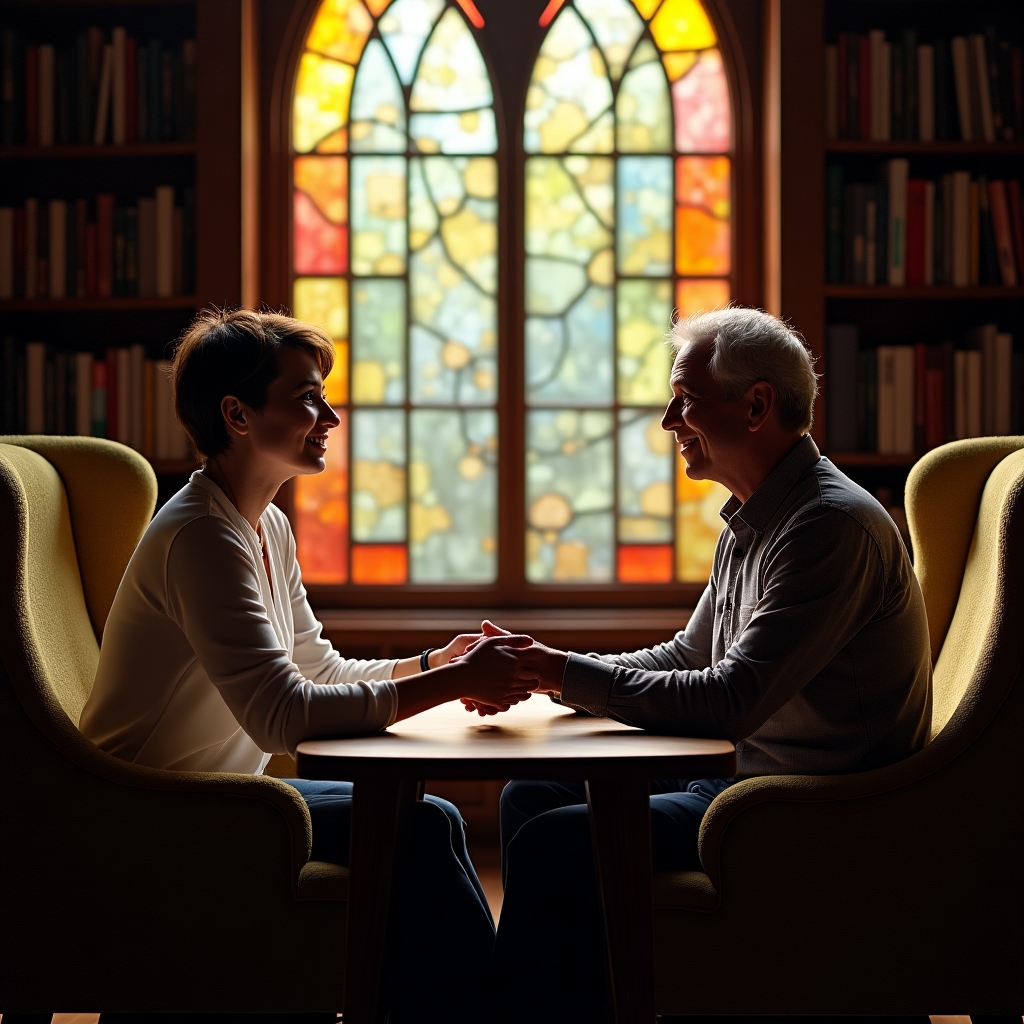
“He gave it to me on the night we first met,” she explained, tears pooling in her eyes. “He was saying goodbye to her… and somehow, I became his next hello.”
The truth of her words settled heavily in the room. I felt an ache in my chest that I couldn’t quite place, like the echo of a sorrow I hadn’t lived but now understood.
It wasn’t just Dad’s love story I had discovered; it was the realization of how deeply intertwined love and loss can be. The woman he wrote to could have been a part of my life—a different life, a different me.
“And yet,” Mom continued, voice steadying as she looked directly at me, “he chose us, Tim. Whatever life he thought he wanted, he realized it was with us.”
In that moment, I saw her not just as my mother but as a woman who had once been at a crossroads herself, choosing to trust in a love that came with its own shadows.
Days passed, and the weight of the postcard’s revelation slowly shifted within me. I looked at old family photos with renewed eyes, searching for traces of hidden stories in the smiles and embraces captured there. It made me appreciate the complexity of the lives that led to mine, the decisions that shaped my very existence.
I kept the postcard, not out of a sense of betrayal, but as a reminder of the unseen moments that define us. Somewhere, amidst those sunflower fields, lay a history that I had to acknowledge—a history that was never meant to separate but somehow united the fragments of who I am.
Every family has its untold stories; mine just happened to speak softly through a yellowing piece of paper. Perhaps love, in its most genuine form, is the act of embracing both the seen and the unseen—writing our own story, while keeping a space for the echoes of those who came before.