
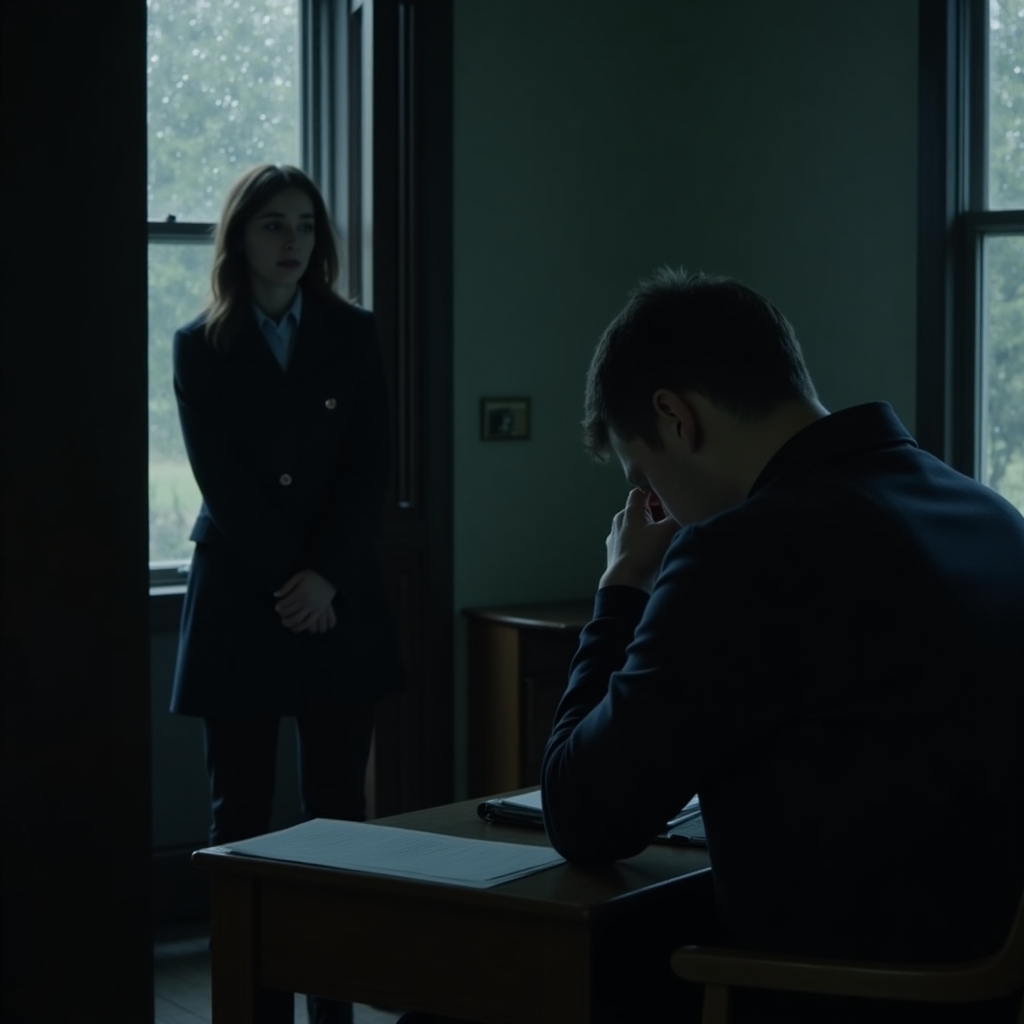




Maggie had always found solace in the soft ticking of the old clock that hung on her kitchen wall. The rhythmic sound was a reliable companion, a contrast to the unpredictable nature of her day-to-day life. Every morning, from the moment she woke until she stepped into the quiet stillness of her evening, she felt the weight of expectations pressed upon her.
Steven, her partner of ten years, was the kind of man who believed in order and routine. His expectations were not cruel, but they were constant, an ever-present reminder of what she should be. In the early days, Maggie had found comfort in his decisiveness and the structure he provided. Over time, however, his words, laced with unintended condescension, turned into a script that dictated her existence. Her thoughts, her opinions, were often drowned out by his louder voice.
It wasn’t just Steven. Her family, with their traditional outlook, had their own set of expectations. “Maggie, when are you going to give us a grandchild?” her mother would often ask, her voice tinged with longing and impatience. Maggie would smile and nod, pushing down the flickers of resistance that tried to rise whenever the subject came up.
Deep inside, a restlessness began to churn. It was subtle at first, manifesting in her inability to finish a book or her sudden disinterest in her usual hobbies. The feeling grew stronger, like a small ember waiting to catch fire. One afternoon, as she sat in the local café, the noise of clinking cups and quiet conversations around her, she allowed herself to think about her own wants.
“I used to love painting,” she confessed to Kelly, her friend from college, who was in town for the weekend.
Kelly nodded, stirring sugar into her coffee. “And you were good at it. Why did you stop?”
Maggie shrugged, feeling the familiar sting of regret. “Life got in the way, I guess.”
In the days following her conversation with Kelly, Maggie spent more time reflecting. She found herself standing in front of the art store, her fingers tingling with the desire to buy supplies. But the voice in her head, echoing years of conditioning, whispered, “It’s too late.”
Yet the whisper of doubt was counteracted by a growing internal voice, a soft but persistent call to remember who she was. One evening, as she prepared dinner, the tension between her and Steven surfaced again.
“Did you get the groceries? You know I like us to stick to the list,” Steven said, his eyes scanning the kitchen counter.
Maggie paused, the knife hovering above the vegetables. “I got what I felt we needed,” she replied evenly, trying to keep her tone light.
He sighed, not noticing the slight edge in her voice. “Maggie, how can we plan meals if you don’t stick to the list?”
Something inside her snapped, a quiet resolve that had been building for a long time. She set the knife down and turned to face him, her eyes meeting his with a steadiness she hadn’t felt in years.
“Steven, I think we need to talk,” she said, her voice calm but firm.
He frowned, a hint of confusion crossing his features. “About what?”
“About us. About me. About how I need to start making decisions for myself.” Her heart pounded, each word a small rebellion.
In the ensuing silence, she felt the weight lift, a lightness she hadn’t anticipated. It wasn’t a dramatic confrontation, but the simplicity of speaking her truth was liberating. Steven, to his credit, listened, though he didn’t fully understand. It was the beginning of a series of conversations that would slowly reshape their relationship.
Later that night, Maggie found herself in front of the mirror, studying her reflection. She saw a woman capable of reclaiming her own story, and for the first time in years, she allowed herself to envision a future colored by her own choices.
The following Saturday, she picked up a brush and let it glide across the canvas, the strokes liberating and full of possibility.