

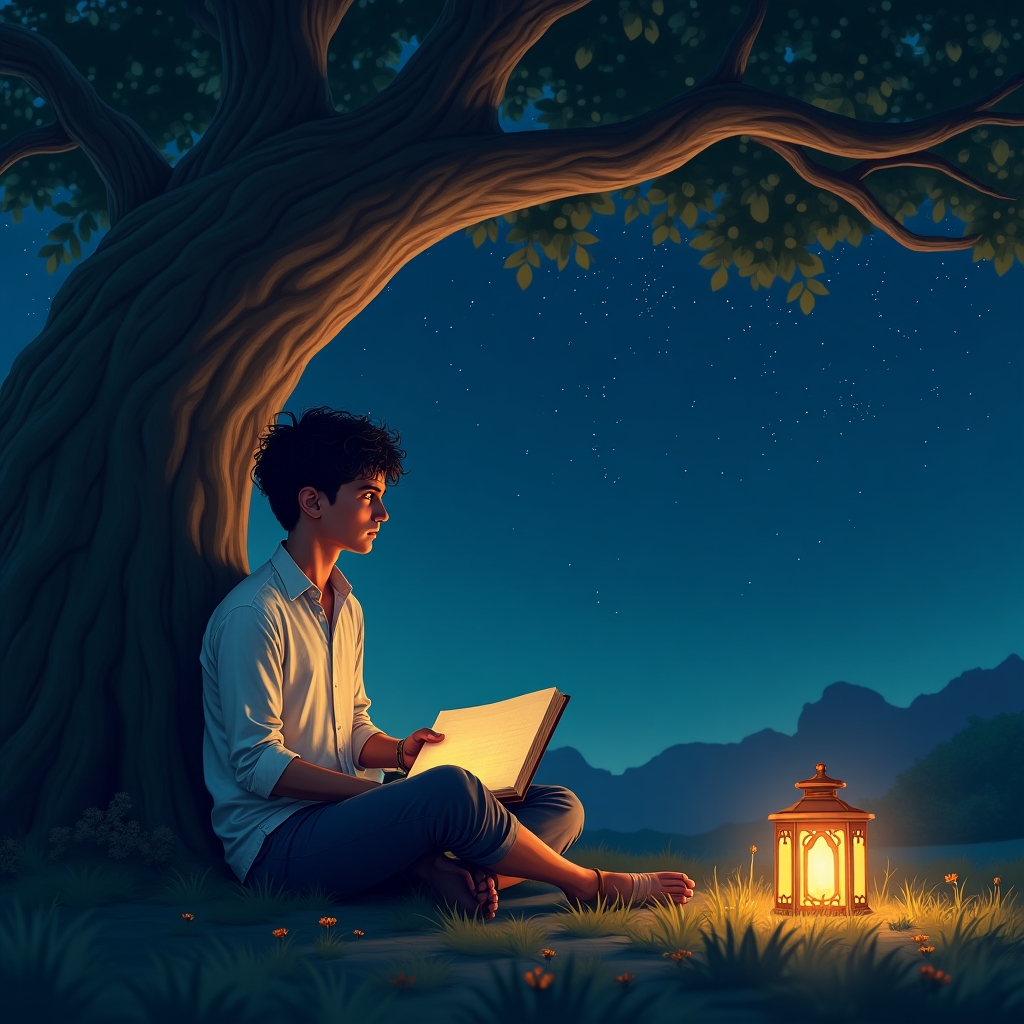
Nestled in the northern foothills of an age-old mountain range, the small village of Ajanpur lay cradled between nature’s bounteous arms and the whispers of ancestral traditions. It was a place where the air carried the scent of lush tea gardens, and the winds often echoed with chants of stories passed down through the ages. Here lived Arjun, a young adult whose heart was a quietly simmering cauldron of dreams and doubts.
Arjun, at 21, stood on the precipice of adulthood in a family deeply rooted in the traditional ways of life. His father, Raghav, was a well-respected figure in the community, known for his unwavering adherence to age-old customs. Arjun’s mother, Mira, was the silent keeper of the household, her life devoted to nurturing her family and honoring the societal norms. The village collectively cherished a pattern of life that had changed little over the years, and this continuity brought a sense of stability and belonging to its people.
Yet, within Arjun stirred a restlessness that whispered a different song. While he cherished his heritage, the same traditions that shaped him felt constricting at times. His dreams of pursuing art as a career were met with raised eyebrows and gentle reprimands. ‘Art is a hobby, not a livelihood,’ his father would say, his voice firm but laced with love.
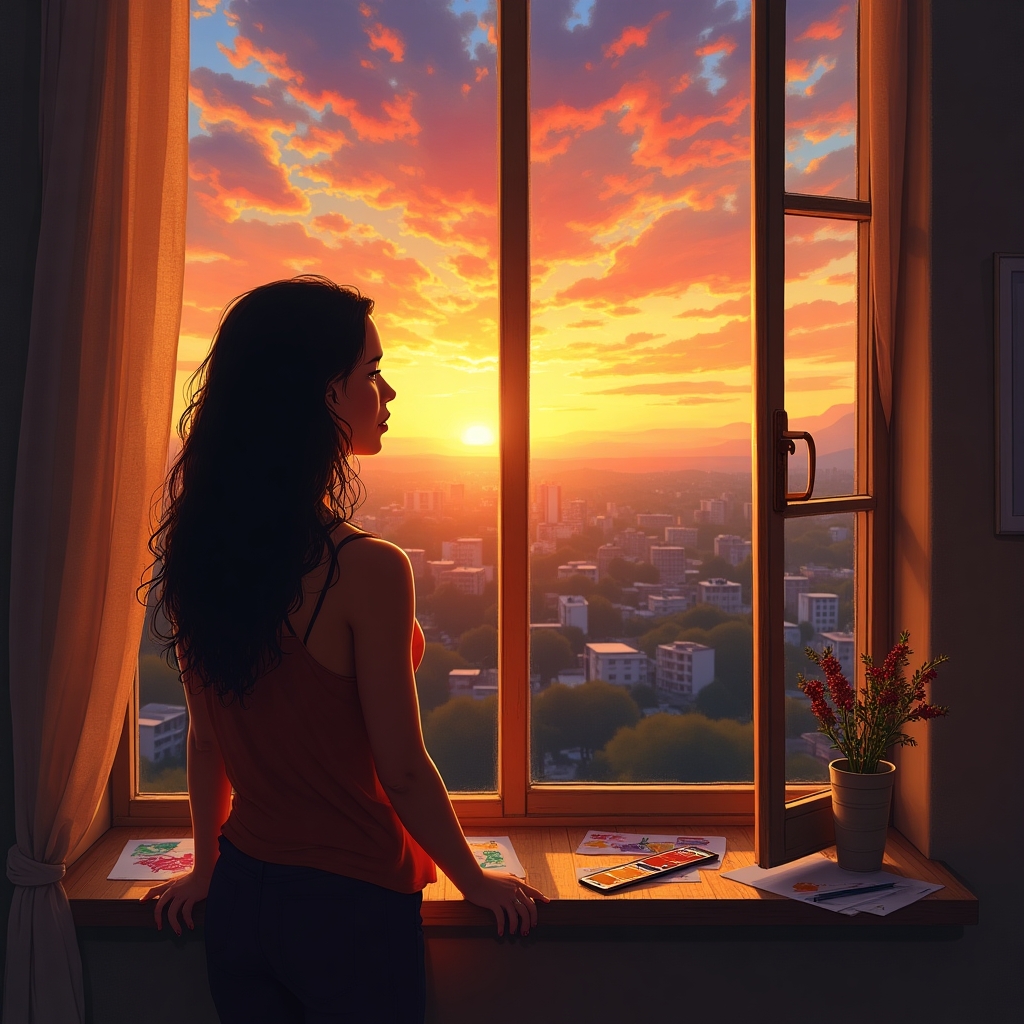
Each morning, as the first light of dawn kissed the tea leaves, Arjun would settle under the ancient banyan tree in the village square, sketching the world around him. His sketches held the essence of his village’s soul, yet captured it through his unique lens. But each line he drew seemed to quietly thrum with the tension of his internal conflict.
Evenings were a gentle cascade of familial duties and societal expectations. As the family sat for dinner, conversations often revolved around community events and the mundane, punctuated by Raghav’s reminders of Arjun’s future responsibilities.
‘You will take over the family business, Arjun,’ Raghav would state, not as an obligation, but as a truth as immutable as the stars. Arjun would nod, a silent agreement that formed a delicate balance between love for his family and the quiet yearning in his heart.
In his solitude, Arjun grappled with a storm of emotions. His journal became a sanctuary where he poured out his fears and dreams, each stroke of the pen an act of quiet rebellion against the waves of expectation. His art was his voice, yet it was a voice he feared to raise aloud.
The turning point came on a humid summer evening during the village’s annual festival. Lanterns flickered in the night, casting a warm glow over the gathered crowd as music filled the air. Amidst the vibrant celebration, Arjun noticed an outsider – a journalist from the city, captivated by the charm of Ajanpur.
Impressed by the young artist’s sketches, the journalist approached Arjun, urging him to share his work beyond the village. ‘Your art tells a story that the world needs to hear,’ she said, her words kindling a fire within Arjun that had long been smoldering.
Later that night, as the village rested under a blanket of stars, Arjun found himself at the banyan tree once more. The journalistic encounter had laid bare his internal struggle, leaving him feeling exposed yet invigorated. He sat in silence, the weight of his duality pressing upon his chest.
It was then, in the hushed embrace of the night, that Arjun experienced a moment of profound clarity. He realized that his love for art did not diminish his love for his family or his heritage. Instead, it was an extension of it, a means to honor and illuminate the nuances of his world.
With a newfound resolve, Arjun returned home and sought out his parents. In the quiet of the night, with only the moon as witness, he shared his truth. His voice, though soft, carried the strength of his convictions. ‘I will always honor our traditions, but I must also be true to myself. My art is part of who I am. It is my way of cherishing our story and sharing it with others.’
Raghav listened, his expression inscrutable. The silence that followed was a canvas, waiting to be filled by the old and the new, by acceptance and understanding. Mira’s gentle touch on her son’s shoulder spoke volumes. It was a gesture of silent acknowledgment, a bridge between generations.
In that moment, a subtle shift occurred. Arjun’s quiet courage began to weave its way into the tapestry of his family’s legacy, promising the possibility of transformation and healing. As dawn broke, the village awakened to a day that looked just like any other, yet for Arjun, the world felt irrevocably changed.
His journey was just beginning, but the path he walked was now illuminated by a soft glow of hope and the truth of his heart.