He built an empire, lost his legs, and his fiancée left him the same week — then a 4-year-old girl handed him a drawing that destroyed him completely.
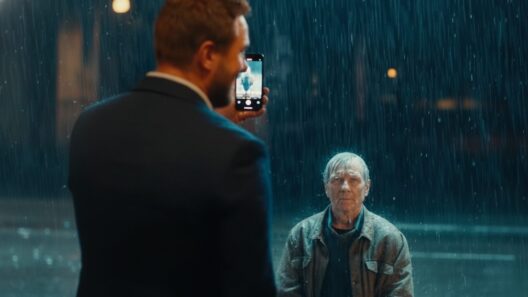
The rain over Mexico City fell like it had a grudge.
Augusto Herrera sat by the hospital window, watching the lights on Reforma blur into wet smears on the pavement. Thirty-four years old. Successful beyond reason. And completely, irreversibly broken from the waist down.
He didn’t look at his reflection. He already knew what he’d see.
“I need to leave.”
Valeria’s voice was barely above a whisper. She still wouldn’t meet his eyes.
“What did you say?” Augusto asked.
“I said I need to leave.” Her voice cracked — but not from grief. From relief. The relief of someone who’d been trapped and finally found the door.
“Valeria.” Her name came out fractured. “Seven years.”
“The doctors said you’ll never walk again.” She said it gently, as if gentleness would make it less of a blade. “I’m still… me. I still have a life.”
She placed the ring on the bedside table. Three carats. A soft tap against metal. The most expensive sound he’d ever heard.
The monitors beeped as his pulse spiked. He wanted to scream that his mind still worked, that his heart still worked, that he was still him. But Valeria was already lifting the expensive handbag — the one he’d given her for her birthday — and walking toward the door.
Her heels clicked like a countdown.
When the door closed, the hospital grew enormous. And Augusto grew very small.
Friends came in the first weeks. Flowers. Practiced words. Uncomfortable hugs. Then fewer visits. Then only messages. Stay strong, brother. It’ll pass. You’ve got this.
Polite phrases lobbed from a safe distance, as if pain were something you could outrun with optimism.
Only Fernando — Nando — remained. On discharge day, he pushed Augusto’s new wheelchair down the hospital corridor without a word. Outside, the sky sat low and grey.
“It’s going to be okay, man,” Nando said, his voice cracking on the last word.
“Don’t lie to me.” Augusto kept his head down. “I saw the missed calls. The messages you erased before showing me your phone. They’re gone, aren’t they? All of them.”
Nando stopped pushing.
“Not everyone,” he said quietly. “I’m here.”
“Because you care? Or because you pity me?”
The question hung between them like smoke. Nando didn’t answer. The truth burned in Augusto’s chest anyway.
The mansion in Lomas de Chapultepec became a museum of his old life. Vast, silent, echoing. He hired three caretakers and dismissed all three within two weeks. One spoke to him like a child. One sighed every time she helped him transfer from the chair. The third looked at him with that look — the one he’d come to hate more than the accident itself. That mixture of pity and discomfort, like his existence made people feel guilty for having working legs.
“You need someone for the house,” Nando told him one afternoon. “Not a caretaker. Just someone quiet.”
“As long as they don’t talk to me,” Augusto muttered. “And as long as they don’t look at me like I’m a charity case.”
That’s how Lucía arrived.
One cold morning, the doorbell rang early. Augusto sat in the library, staring at company reports that once defined him and now felt like artifacts from someone else’s life. Lucía appeared in the doorway — simply dressed, hair tied back, work gloves already on. Her expression was calm. Not careful. Not performing calm. Actually calm.
She didn’t bring pity. She brought efficiency.
“Are you Mr. Herrera?” she asked.
“The rules are simple,” he said without greeting her. “You clean. You leave. You don’t make conversation. You don’t ask questions. And you don’t look at me with pity. Understood?”
Lucía met his eyes without flinching.
“I can do that, sir.”
No hesitation. No performance of reassurance. He’d expected at least a sympathetic smile. He got nothing — and somehow that was exactly what he needed.
For weeks it worked perfectly. She arrived before sunrise and left once the house had settled into shadows. Augusto barely registered her presence, which was precisely the point.
What he didn’t know — because Lucía had hidden it out of fear of losing the job — was that she had a daughter.
Sofía. Four years old. Eyes like two dark questions. The daycare had closed for emergency repairs, Lucía had no family in the city, and she couldn’t afford to lose this contract. So she’d brought Sofía quietly, settled her in the small maid’s quarters near the back of the house with a backpack full of crayons and a worn rag doll.
“You stay quiet, my love,” Lucía whispered, adjusting Sofía’s collar that first morning. “You draw, you play. But you don’t leave this room. Okay?”
Sofía looked up at her with those enormous eyes. “Is the man brave?”
Lucía felt her throat tighten.
“He’s not brave right now,” she said carefully. “He’s very sad.”
The first few days passed without incident. Sofía colored quietly, hummed to her doll, stayed exactly where she was told. But children are curiosity without a cage. And one afternoon, while Lucía worked upstairs, Sofía noticed a door left slightly ajar — one that led deeper into the house, into hallways that felt like a different country. Tall paintings. A chandelier that caught the afternoon light. Cold marble under her small sneakers.
She followed the sound.
In the library, Augusto was straining toward a high shelf, his wheelchair pressed against the wall, arm shaking, fingertips grazing the spine of a blue book without quite reaching it. The frustration finally broke.
“Damn it!“
Sofía jumped — but she didn’t run. She stood in the doorway, watching him with scientific interest. Then, as if it were the most natural thing, she walked in.
“Should I grab it?” she asked.
Augusto spun the chair so fast he nearly clipped the shelf. “Who the hell are you?”
Sofía took one careful step back. Then she lifted her chin.
“I’m Sofía. I came with my mom.”
“Your mom?” His voice rose instantly. “The cleaning lady brought a child here without saying a word to me?”
“The school closed,” Sofía said quickly, her voice rushing to fill the gap. “And I had nowhere to go. But I promised to stay quiet.”
Augusto opened his mouth — and then realized he was in a full confrontation with a four-year-old. The absurdity of it deflated him slightly.
“Which book?” Sofía pressed, pointing at the shelf with total practicality. “I can reach it if I climb.”
Without understanding why, Augusto pointed at the blue one.
Sofía dragged a chair over, climbed up without hesitation, and pulled the book free like she was claiming a prize. She handed it to him with a smile that required nothing in return.
Her fingers brushed his. Small. Warm. Alive.
Something inside him — something that had been frozen solid for months — shifted. Just barely. Just enough.
“Why are you using that chair?” Sofía asked, pointing at it.
Augusto’s stomach tightened. Adults treated the question like a grenade. Sofía asked it the way she’d ask why the sky changes color.
“My legs were hurt,” he said finally. “In an accident. They don’t work anymore.”
She frowned, thinking hard. Then she placed her small hand over his.
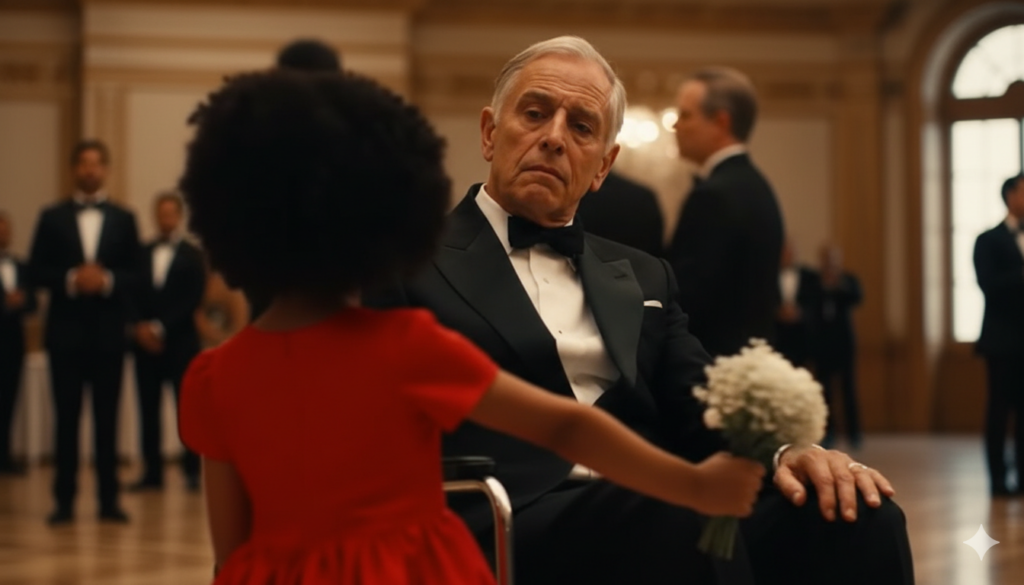
“When I hurt my knee, my mom gives it a kiss and it helps a little. Do you want me to rub your leg? Sometimes it works.”
Augusto went completely still.
Since the accident, his legs had only been touched by clinical hands — efficient, detached, professional. Valeria had never once reached for them. And here was this child, offering the simple, human thing everyone else had been too uncomfortable to give.
Lucía’s voice sliced through the moment. “Sofía! Where are you?”
She appeared in the doorway a second later, and the color drained from her face.
“Mr. Herrera — I’m so sorry, I didn’t know she left the room, she knows the rules, I’ll take her right now—”
“She can stay,” Augusto said.
Lucía blinked.
“But with rules,” he continued, his voice controlled. “And teach her that a wheelchair isn’t a tragedy. I don’t want drama about it. From either of you.”
Lucía nodded, tears threatening. “Yes, sir. Thank you.”
Augusto turned his chair back toward the desk, acting as if nothing had shifted.
That afternoon, for the first time in months, he didn’t think about Valeria once.
What broke came wrapped in paper.
One morning, a scream tore through the house.
“Get out of here!“
Lucía flew downstairs. Sofía stood in the center of the library, crying, a crumpled drawing crushed against her chest. Augusto’s face was dark red, his finger shaking as he pointed toward the door.
“She went through my things! My documents!”
Lucía took the paper from Sofía’s hands. It was a child’s drawing in crayon — Augusto standing, smiling, beside a woman in a blue dress. And taped carefully at the top: a torn photograph. Augusto and Valeria on their engagement day. The photo he’d buried in the bottom drawer because he couldn’t throw it away and couldn’t look at it.
“I just wanted you to be happy,” Sofía sobbed. “My mom said you were sad. In my drawing you’re happy. You’re standing still.”
The silence hit him like a wave.
But Augusto, trapped inside his own wound, did the worst thing possible.
“Go away.“
Lucía left with Sofía in her arms. The door shut. Alone in the library, Augusto picked up the drawing from the floor. On the back, in unsteady letters: For the sad uncle: cheer up.
The man who had built a company from nothing sat in the silence he’d demanded, and wept like he hadn’t since the night of the accident.
Two days later, Nando tracked down Lucía’s address.
An old building in a modest colonia. Peeling paint. No elevator. Nando carried Augusto up the stairwell without commentary — dignity wasn’t the point. Forgiveness was.
Lucía opened the door cautiously. Sofía peered out from behind her legs.
“I came to apologize,” Augusto said. His voice was rough. “To her. And to you. I shouted. I shouldn’t have.”
Sofía studied him with those serious eyes.
“Are you going to shout again?”
Something inside him broke — gently this time. Like a knot finally loosening.
“No,” he said. “I promise. Your drawing was beautiful. You saw me in a way I had forgotten how to see myself.”
Sofía considered this. Then she stepped forward and held out her rag doll — an offering, or perhaps a peace treaty.
“I forgive you,” she said.
Three words. And a weight Augusto had been carrying since the hospital lifted just enough to breathe.
“Lucía,” he continued. “I want you to come back. But not only that. There’s an event. An important one. I want you to come with me.”
Lucía’s eyes widened. “Sir, I… I don’t belong in that world.”
“I didn’t belong in this one either,” Augusto said, touching the wheel of his chair. “And here I am.”
The hotel on Paseo de la Reforma glittered like another planet. Cameras. Jewels. Expensive suits. The kind of perfume that costs more than Lucía’s monthly rent.
She held Sofía’s hand too tightly at the entrance.
“Mom,” Sofía whispered, “you’re hurting me.”
“Sorry, my love.” Lucía loosened her grip. “Sorry.”
Augusto leaned toward them slightly. “Heads up. You’re with me.”
Inside, the whispers started immediately. Who are they? Did he bring a child? That woman…? Lucía swallowed it all and kept walking.
Then Valeria appeared.
She arrived flawless — spotless makeup, a designer dress, an older man on her arm whose suit probably cost more than Lucía’s car. She approached Augusto with that familiar expression he now recognized completely: pity dressed up as concern.
“Augusto.” Her voice was warm, practiced. “I didn’t expect to see you here.”
“Here I am,” he said evenly.
“I… I did what I could,” she said. “I hope you understand that, eventually.”
“You did what was convenient for you,” Augusto replied. “That’s all it was.”
Valeria’s gaze moved to Lucía. Then to Sofía. Contempt flickered beneath the surface of her smile.
“Is this your new… family? Your employee and her daughter?”
Lucía took a half-step back. But Sofía — still holding a half-eaten canapé she’d found on a passing tray — moved forward. She planted herself in front of Augusto with her small arms spread wide, like a very tiny, very determined shield.
“Don’t be mean to Uncle Augusto,” she said. “He’s a good person.”
Valeria’s smile faltered. Then, because cruelty doesn’t require a good reason:
“Uncle? How ridiculous.”
Augusto felt the blow land — not on his face, but deep in his chest. And yet. He didn’t shatter.
“She treated me with more dignity in one month,” he said, his voice completely steady, “than you did in seven years. This child saw me as a human being when everyone else only saw a burden. So yes. If that bothers you — too bad.”
Valeria’s slap came fast. The crack of it rang through the hall.
Before anyone could react, Sofía stepped directly in front of Augusto — arms still outstretched, visibly trembling, but completely immovable.
“Don’t hit my friend!“
The room erupted. She slapped a man in a wheelchair! Valeria’s new companion took a visible step away from her, as if disgrace were airborne.
Augusto placed his hand gently on Sofía’s shoulder.
“Thank you, warrior,” he said softly. “But it’s okay. She can’t hurt me anymore.”
His name was called from the stage.
As he rolled toward it, the applause that broke was not polite. It was real.
When the microphone was placed in his hands, Augusto didn’t speak about overcoming adversity. He didn’t give the speech they’d expected — the triumphant return, the man who refused to be beaten.
He told the truth instead.
“I don’t deserve this for ‘becoming who I was again,'” he said. “Because I didn’t return to who I was. I broke. I was abandoned. I became bitter and small and cruel to people who deserved better.” He paused. “And then one day, a little girl gave me a drawing where I was standing. Not with my legs. With my soul.”
He looked at Lucía, tears tracking silently down her face.
He looked at Sofía, waving at him from the crowd like a princess acknowledging her kingdom.
“I learned that real worth isn’t measured in walking. It’s measured in character. In who stays. In who sees you when you can no longer see yourself.” He let the silence hold for a moment. “That’s why tonight I’m announcing the founding of the Herrera Institute for Inclusion and Dignity. So that no one — not one person — ever again feels disposable because of a disability.”
The room rose.
Valeria had already left before the applause ended.
She came back once, a few days later.
Not to the mansion — to the Institute’s preliminary office, where Augusto was reviewing plans with his team. She stood in the doorway, immaculate as always, but her eyes were swollen behind the perfect makeup.
“I came to say you were right,” she said. Her voice didn’t hold together well. “I didn’t know how to love someone. I only knew how to use people. And that little girl…” She stopped. “She really loves you. Take care of them.”
Augusto listened without anger. Without satisfaction. With something quieter — a sadness that had finally run out of heat.
“Goodbye, Valeria,” he said. “For real this time.”
She left. He didn’t watch her go.
A year later, the Herrera Institute was alive.
Laughter moved through its corridors. Workshops ran. Families arrived. Volunteers came with skills and stayed for the community. Lucía was no longer the cleaning lady — she was the operational coordinator, the person who made everything actually work, the one everyone called when something mattered.
Sofía, in her school uniform, ran the hallways holding a sign she’d made herself: Respect Has No Barriers.
At the anniversary event, Augusto rolled up the ramp to the stage and looked out at the room — at Lucía in the front row trying not to cry, at Sofía bouncing on her toes beside her.
“I thought I’d lost everything,” he said. “But life took away the noise. And left me what was home.”
He looked down.
Sofía was holding up a new drawing: three figures, hands joined. A man in a wheelchair. A woman standing. A girl between them. Underneath it, in letters that were only slightly less crooked than before:
My chosen family.
Lucía pressed her hand to her mouth.
“Family isn’t blood,” Sofía announced to no one and everyone at once. “It’s who takes care of you.”
Augusto’s smile, when it came, was not the practiced, functional smile he’d worn for board meetings and charity galas. It was something he hadn’t felt on his own face in so long it felt like a new muscle.
“Then yes,” he said. “We are family.”
And in the applause, in the tears, in the absolute ordinary miracle of it — Augusto finally understood what the accident, the abandonment, and one small girl with a box of crayons had taken years to teach him:
He never got his legs back.
But he got his world back. The real one. The one that had been waiting for him to stop mourning the version of himself that was gone — and finally meet the one that remained.