
They celebrated 30 years of marriage… But one stranger’s comment at the party made her walk out that same night.
“Smile more, Claire. People are watching.”
David’s hand pressed against my lower back as we entered the country club. Thirty years. Three decades of this exact pressure, this exact correction.
“I am smiling.”
“Not like that. You look tired.”
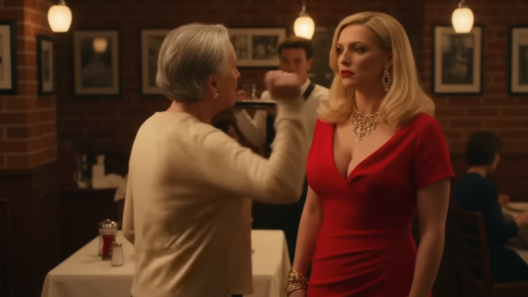
The anniversary party sparkled around us. White tablecloths. Champagne towers. Two hundred people celebrating what they thought was love.
My sister grabbed my arm. “You okay?”
“Perfect,” I said. The word tasted like metal.
David was already across the room, holding court. I watched him gesture broadly, telling the story of how we met. He always told it wrong. In his version, I was a mess he had to save. In reality, I was a graduate student with a full scholarship. But I’d stopped correcting him years ago.
“Thirty years,” someone said, clinking my glass. “What’s your secret?”
I opened my mouth. David appeared beside me.
“Hard work,” he said, sliding his arm around my waist. “Marriage isn’t easy. You have to keep improving each other.”
The woman nodded enthusiastically. “That’s beautiful.”
My chest felt tight.
“Claire used to be so shy,” David continued. “I had to teach her how to network, how to dress for success. She’s a project that finally paid off.”
Laughter rippled through the group. Affectionate laughter. Admiring laughter.
I excused myself to the bathroom.
In the mirror, I saw a woman I barely recognized. Expensive dress David had picked out. Hair styled the way he preferred. Makeup he’d critiqued that morning until I’d redone it twice.
I splashed water on my face.
Back in the ballroom, I headed for the bar. A man about my age stood there alone, looking uncomfortable in his suit.
“You look like you’d rather be anywhere else,” I said.
He laughed. “Wedding or anniversary?”
“Anniversary. Thirty years.”
“Congratulations.” He didn’t sound convinced.
“You don’t have to say that.”
“Sorry. I just got divorced. I’m here with my sister.” He gestured vaguely at the crowd. “I’m Tom.”
“Claire.”
We stood in comfortable silence. It felt strange. David never let silence happen. He filled every gap with advice, corrections, improvements.
“So thirty years,” Tom said. “That’s impressive. You must really love each other.”
I stared at my champagne. “He loves me. He just… loves me better when I’m different.”
The words hung there. I’d never said them out loud before.
Tom’s expression shifted. “How so?”
“He wants to help me be my best self. That’s what he says. But my best self is always just slightly out of reach. A little quieter, a little more polished, a little more—”
“Someone else?”
“No. Yes. I don’t know.” I laughed, but it came out broken. “He thinks love is work. Constant work. Fixing and improving and—”
“That sounds exhausting.”
Three words. That’s all it took.
My hand started shaking. The champagne glass trembled.
“Are you okay?” Tom asked.
I wasn’t. I was the opposite of okay. Because in thirty years, no one had ever said that. Not my sister, not my friends, not my therapist who David had chosen because she “specialized in helping women reach their potential.”
Everyone praised David’s dedication. His commitment. His refusal to give up on making me better.
No one ever asked if I was tired.
“I have to go,” I whispered.
I didn’t remember walking to the coat check. I didn’t remember finding David.
“We need to leave,” I said.
He frowned. “The party just started. What’s wrong with you?”
“I’m tired.”
“You’re always tired. We talked about this. You need to—”
“Stop.”
The word came out louder than I intended. People nearby turned.
David’s face went red. “Claire, not here. We’ll discuss your attitude at home.”
My attitude. My dozens of flaws he’d spent three decades cataloging and correcting.
“No,” I said.
“Excuse me?”
“I said no. I’m done discussing my attitude. I’m done being your project.”
“You’re making a scene.”
“Good.”
I turned and walked out. Behind me, I heard David making excuses. “She’s been stressed. I’ve been telling her she needs to work on her emotional regulation.”
I drove home in my own car. David had always insisted we ride together so he could “help me with my anxiety” about driving at night. But my hands were steady on the wheel.
At the house, I pulled a suitcase from the closet.
David arrived twenty minutes later. “What are you doing?”
“Leaving.”
“Don’t be dramatic. You embarrassed me in front of everyone.”
“I embarrassed myself for thirty years.”
I threw clothes into the suitcase. Not the clothes he’d bought me. My old jeans. My comfortable sweaters. Things I’d hidden in the back of the closet because they didn’t meet his standards.
“You’re being ridiculous,” David said. “I’ve given you everything. I made you who you are.”
“Exactly.”
“What’s that supposed to mean?”
I zipped the suitcase. “It means I want to find out who I am without you telling me.”
“You need me. You’ve always needed me.”
“No, David. You needed a project. I just happened to be available.”
His face shifted through several emotions. Confusion. Anger. Then something I’d rarely seen—panic.
“Wait. Let’s talk about this. What did I do wrong?”
“You thought love was supposed to be hard.”
“It is hard. Real love takes work.”
“Work with someone. Not on them.”
I picked up my suitcase. My purse. My car keys.
“Where are you going?”
“My sister’s.”
“For how long?”
“I don’t know.”
David followed me to the door. “This is insane. Over what? One bad night? I can change. I can work on being less critical.”
“Do you hear yourself? You want to fix your fixing.”
He grabbed my arm. Not hard, but firm. The way he always touched me—corrective, directing, shaping.
“Let go.”
“Claire, please. I love you.”
“You love the version of me you’ve been trying to create. That’s not the same thing.”
I pulled away and walked to my car. He stood in the doorway, backlit by the house we’d built together. The house I’d never been allowed to decorate the way I wanted.
My sister’s apartment was small and messy and perfect.
“What happened?” she asked, hugging me.
“I met someone who said I sounded exhausted.”
“You are exhausted. We’ve all been worried for years.”
“Why didn’t anyone say anything?”
She pulled back, looking guilty. “David made it seem like you were fragile. Like we’d upset you if we questioned things. He was always so concerned about your wellbeing.”
My wellbeing. My mental health. My need for constant improvement.
He’d built a cage and convinced everyone it was protection.
My phone buzzed. David. I turned it off.
“What now?” my sister asked.
“Now I figure out who I am when no one’s correcting me.”
The divorce took eight months. David fought it, insisting we needed counseling. More work. More fixing.
His lawyer painted me as unstable. Impulsive. Making rash decisions because of a “midlife crisis.”
My lawyer—a woman I’d chosen myself—painted a different picture. She subpoenaed our joint therapy records. Thirty years of sessions where the therapist’s notes repeatedly stated “patient’s husband dominates sessions, speaks for patient, dismisses patient’s concerns.”
She interviewed my friends. All of them had stories. Times David had critiqued my clothes, my speech, my weight, my career choices, my hobbies—always publicly, always framed as “helping.”
She found emails. Hundreds of them. David sending me articles about self-improvement, weight loss, public speaking, wardrobe choices. Subject lines like “This could really help you” and “You should read this.”
In court, his lawyer called it love.
My lawyer called it coercive control.
The judge awarded me sixty percent of the assets. “The court recognizes,” she said, “that Mrs. Patterson sacrificed significant career advancement due to her husband’s insistence that she focus on personal development rather than professional goals.”
David looked genuinely shocked.
Outside the courthouse, he caught up with me. “I never meant to hurt you.”
“I know.”
“Then why—”
“Because intent isn’t the same as impact.”
He stood there, graying and confused, unable to understand why his hard work had failed.
“I hope you find someone who wants to be your project,” I said. “But I’m done being furniture that won’t stay where it’s put.”
I walked away. My phone stayed silent. No corrections. No suggestions. No helpful articles.
Six months later, I ran into Tom at a coffee shop. The man from the party.
“Claire,” he said, smiling. “How are you?”
“Good. Really good.”
“Glad to hear it.” He hesitated. “I’ve thought about that night. Hoped I didn’t overstep.”
“You said exactly what I needed to hear.”
We talked for an hour. Then another. He didn’t try to fix me. Didn’t suggest improvements. Just listened.
When I told him I was thinking about going back to school, he said, “That’s exciting.”
Not “Are you sure you can handle it?” or “Let me help you make a plan.”
Just excitement. Support. Acceptance.
We started dating slowly. Carefully. I was learning to trust my own voice again.
One evening, I wore an old sweater I loved. Ratty and comfortable and completely unstylish.
I braced myself for criticism. For kind suggestions about dressing better.
Tom looked up from his book. “That sweater looks comfortable.”
“It is.”
“Good.”
That was it. No notes. No improvements. Just—good.
I realized I was crying.
“What’s wrong?” he asked, concerned.
“Nothing. Everything. This is what easy feels like.”
He pulled me close. “Yeah. It’s supposed to be.”
David sent an email a year later. He’d been in therapy. Real therapy, apparently. He wanted to apologize.
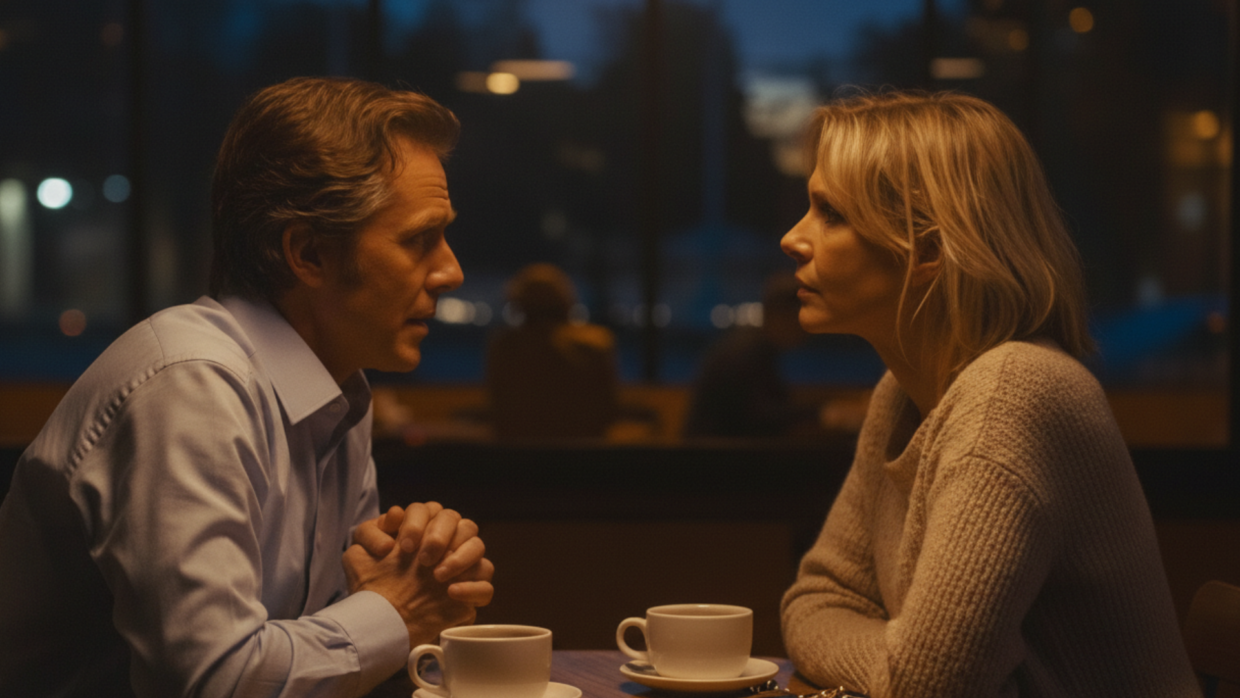
We met at a neutral coffee shop.
“I’ve been working on myself,” he said. “Understanding why I needed to control everything.”
“That’s good.”
“My therapist says I have anxious attachment. I thought if I could perfect you, you’d never leave.”
“But I left anyway.”
“Because I was so busy trying to keep you from leaving that I pushed you away.” He stirred his coffee. “Ironic.”
“Yeah.”
“Are you happy?”
I thought about my small apartment. My part-time grad school schedule. Tom’s easy presence in my life. The way I could spend an entire day doing nothing and no one suggested improvements.
“I am.”
David nodded slowly. “I wish I’d let you just—be.”
“Me too.”
We finished our coffee. Said polite goodbyes. It wasn’t closure exactly. Just two people acknowledging that hard work isn’t the same as right work.
On my way out, I passed a young couple arguing by the sugar station.
“You never plan anything,” the man said, frustrated. “I’m always the one organizing us.”
“Because you won’t let me plan anything,” the woman replied. “You just criticize how I do it.”
I paused, caught between remembering and warning.
The woman met my eyes. Tired eyes. Corrected eyes.
I smiled at her. Not David’s approved smile. My real one.
She blinked, startled. Then slowly smiled back.
Sometimes that’s all someone needs—permission to acknowledge they’re exhausted.
I walked out into the sunshine. My phone buzzed with a text from Tom: “Dinner at my place? I’m making that pasta you like. Or we can order in. Or nothing. Whatever you want.”
Whatever I wanted.
I typed back: “Pasta sounds perfect.”
No edits. No second-guessing. Just an honest answer to a simple question.
Thirty years I’d spent being someone’s renovation project.
Now I was just myself. Imperfect, comfortable, and finally, finally—
Easy.