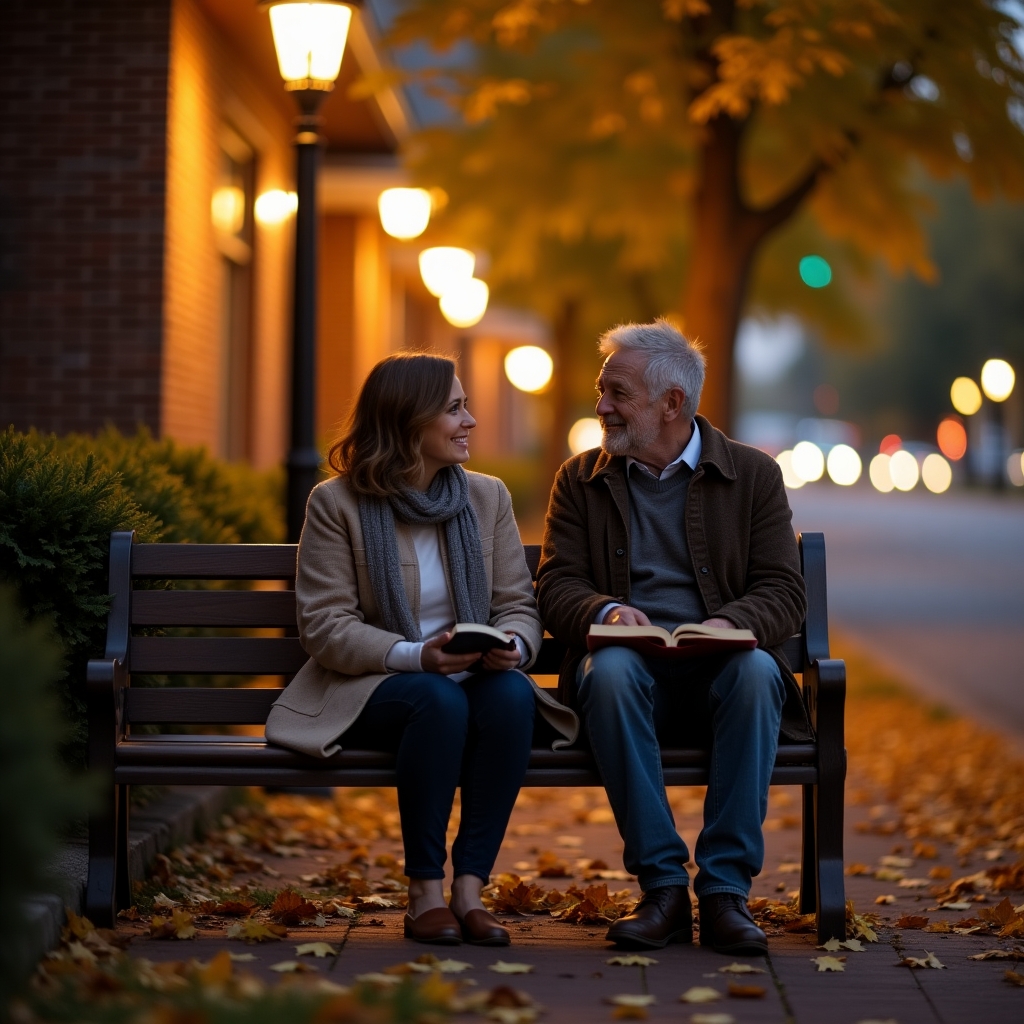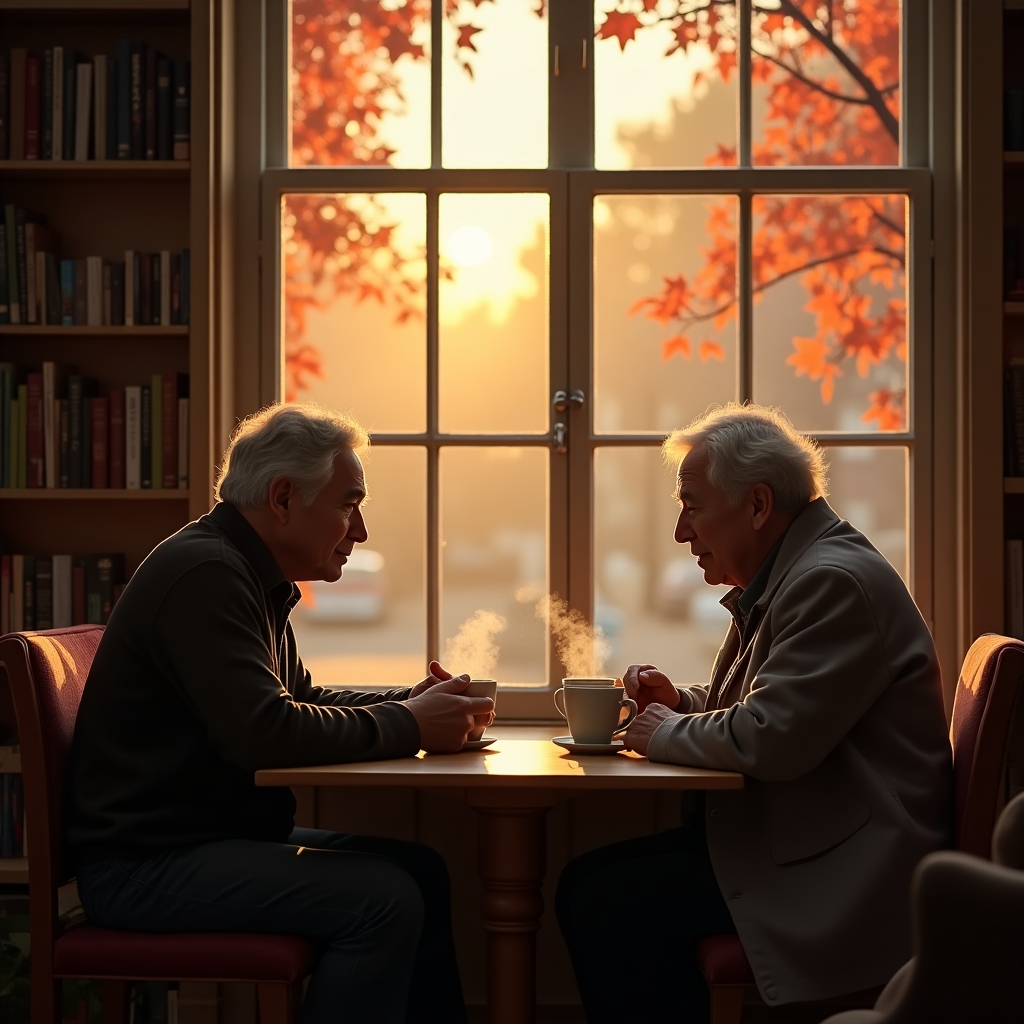

The warm, golden tint of the autumn leaves ushered in a season Rhea had always cherished. Yet this year, as October’s chill seeped into the city, she felt an unfamiliar coolness threading through her life. It began in the quiet moments when her partner, Tom, would seem to drift into private silences more profound than the usual introspections he was prone to.
Their evenings at home, once filled with lively discussions and playful debates, had become heavy with unspoken words. Tom would sit by the fireplace, book in hand, but his eyes often failed to move across the pages. “Lost in a thought?” Rhea would gently probe, and he’d smile—a smile that never quite reached his eyes—answering her with vague reassurances.
Rhea tried to dismiss it as stress. Maybe it was work-related. Tom, a graphic designer, sometimes took on more than he could handle. Yet, there was an evasiveness in his responses that left a knot in her heart.
One evening, as Rhea cooked dinner, she noticed Tom’s phone buzzing with a message. He hesitated, glancing at her before pocketing the device and stepping outside. A cold draft followed his departure, leaving Rhea to stir the soup, her mind a whirlpool of doubt and speculation.
Days turned to weeks, and her unease grew. The gaps in Tom’s stories about his day were becoming canyons. “I’ll be late, got to meet a client,” he’d say, then stumble when she asked about the specifics. He was missing the little things—a colleague’s name he’d mentioned just a day before, or a project he supposedly worked on.
Unable to shake her apprehension, Rhea began to notice the small inconsistencies. The scent of a new cologne, the unfamiliar name that slipped from his tongue in the middle of a dream, and the sudden interest in abstract art—something he used to mock. Rhea observed it all, feeling each piece slotting into a puzzle that threatened to unravel her world.
Rhea decided to confront him, hoping for a rational explanation to what seemed increasingly irrational. On a stormy Saturday morning, she asked, “Tom, is there something you’re not telling me?”
His reaction was unexpected. A flash of anger quickly masked by placation, “Why would you ask such a thing? You know me, Rhea.”
Yes, she thought, I know you—or, at least, I thought I did.
The following night, the rain incessantly pounded against their windows, a fragmented symphony that mirrored her inner turmoil. Tom fell asleep quickly, the rhythmic rise and fall of his chest a contrast to the tempest inside her.
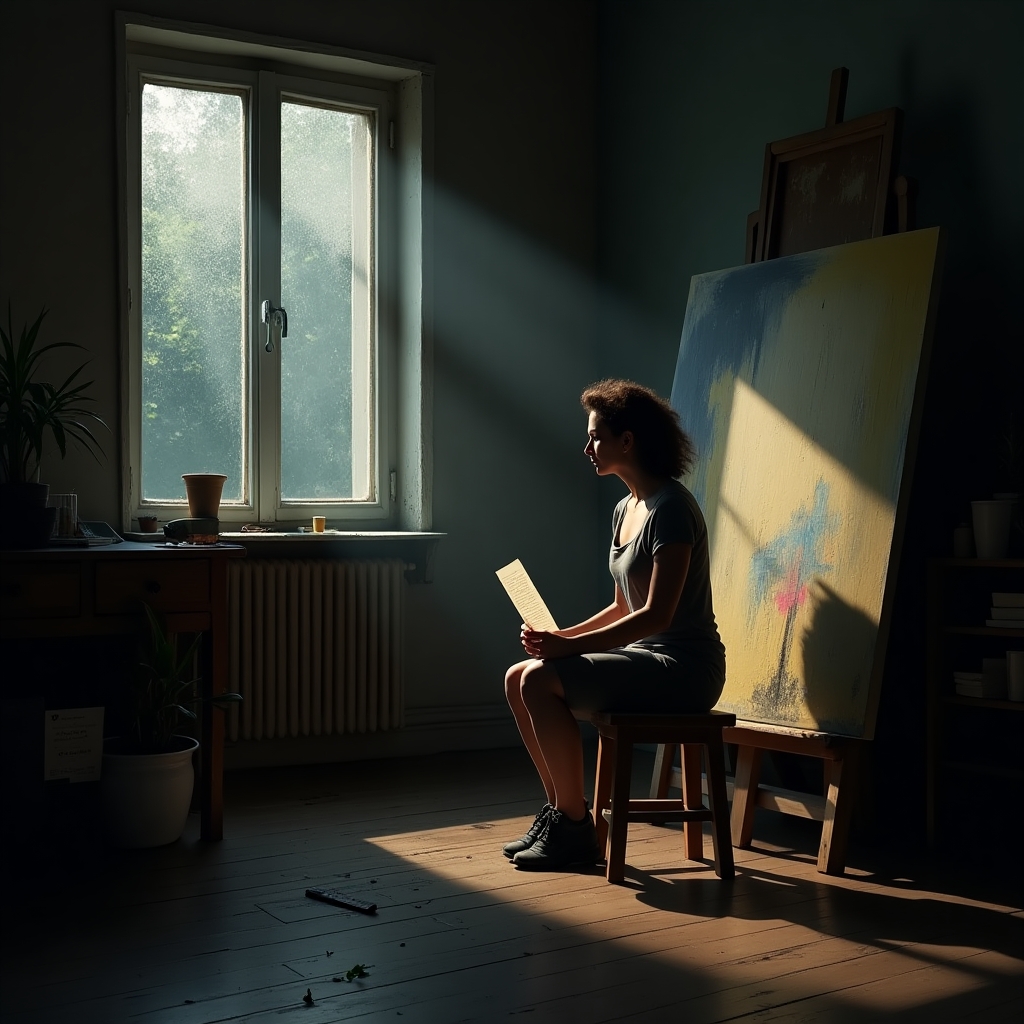
Rhea, unable to rest, wandered to his art studio, a place she rarely intruded upon. Her eyes caught something peculiar—an unfinished canvas starkly different from his usual style. The abstract swirls of dark and light hues seemed to dance angrily across the surface, a haunting depiction of inner conflict.
Then she saw it—a letter, carelessly hidden beneath stained rags. Her hands trembled as she opened it, each line a knife that cut through the fabric of her trust. It was addressed to a woman named Elena, filled with an intimacy and familiarity that confirmed Rhea’s latent fears: Tom was living a dual life.
The revelation was a blow to her heart but, curiously, not in the way she had anticipated. It wasn’t the betrayal that hurt most—it was the knowledge that she had been living in a reality where she was a stranger in her own life.
When Tom awoke the next morning, he found her sitting by the window, the letter in her hand. The truth hung between them like a third entity, palpable and unforgiving.
“Why didn’t you tell me?” Rhea asked, the weight of her words pressing into the silence.
“I—” Tom faltered, the facade finally crumbling. “I didn’t know how. I thought I could keep it separate.”
His confession came with tears, but Rhea felt detached, like watching a scene unfold in a stranger’s story. The emotional breach was too vast for any words to bridge.
Over the days that followed, they spoke at length. Tom admitted to having started a companionship with Elena over a shared passion for abstract art—a part of him that he felt Rhea could never understand, or so he had convinced himself.
Rhea listened, her heart an ocean of conflicting emotions. Hurt, yes, but also a curious sense of freedom. She realized that Tom’s secret life had forced her to confront her own truths—the dreams she had set aside, the parts of herself she had allowed to grow silent.
The end of this chapter for Rhea and Tom did not come with dramatic closures or rage. They parted ways with a promise to seek what was truly missing within themselves. Rhea, with tears in her eyes, embraced the uncertainty of her new beginning, stronger and more resolved.
And so, she remained by the window, watching as the last leaves fell from the trees, knowing that with the death of one season, another promised to bloom.