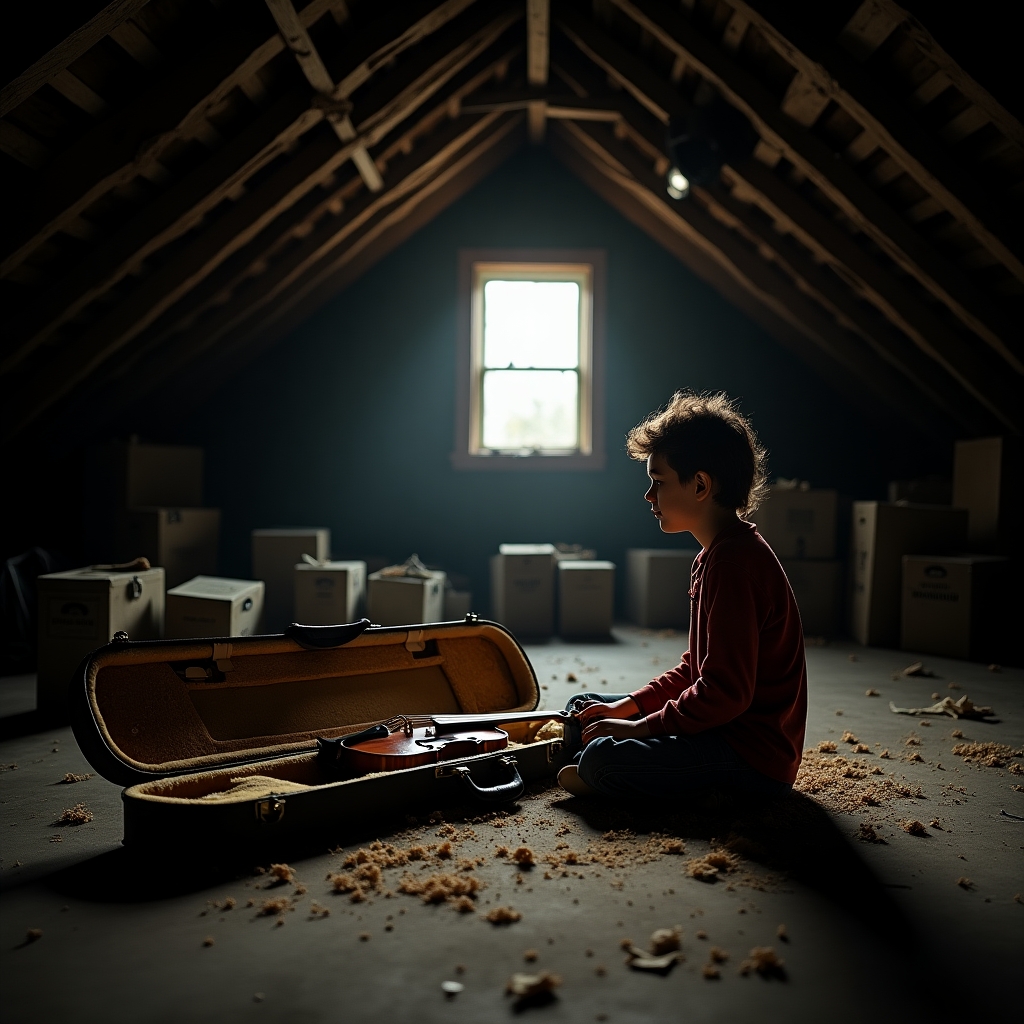
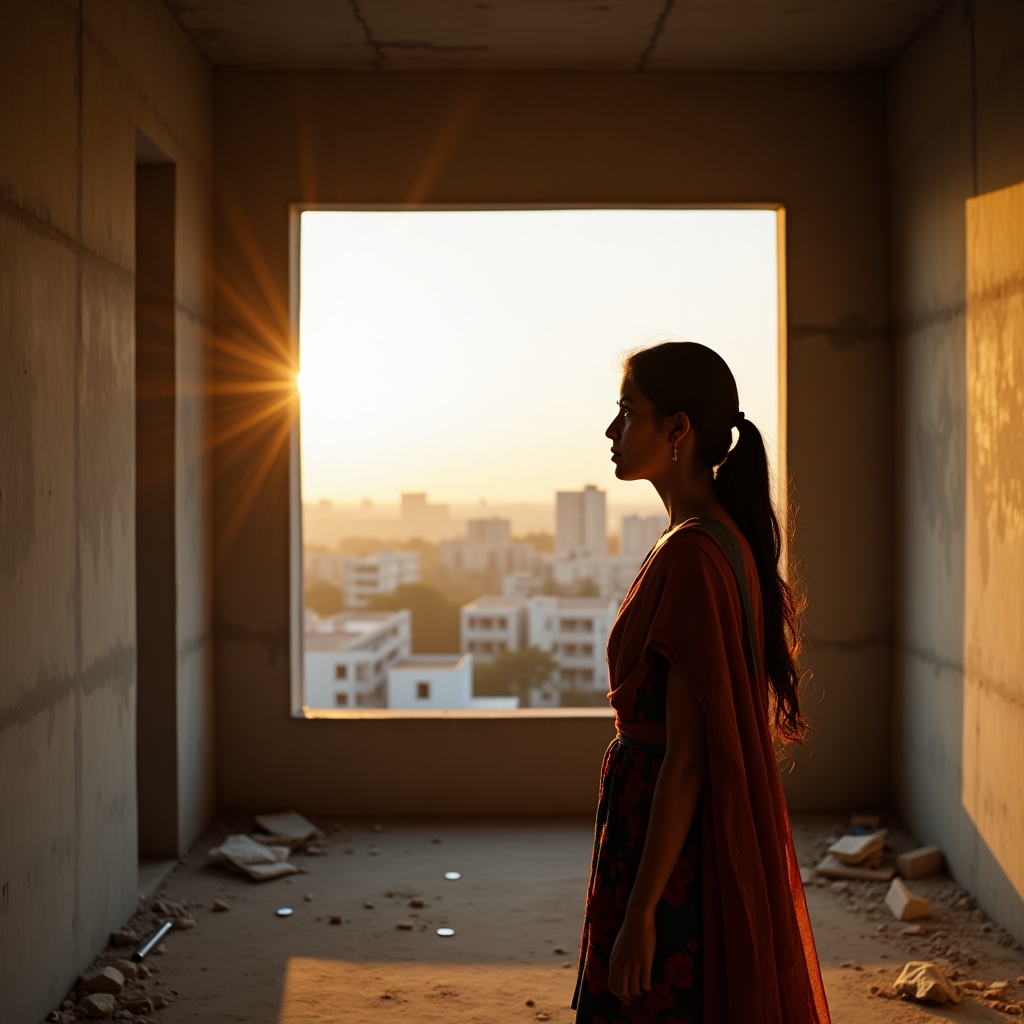




Elias gently closed the door to his room, the click of the latch much softer than the whirlpool of thoughts in his mind. He leaned back against the grainy wood, feeling the weight of the world pressing against his shoulders. The quiet of the evening was punctuated by the distant hum of traffic, a reminder of the city that never slept beyond the walls of his family’s old brownstone.
For years, Elias had been living in the shadow of the dreams his family had crafted long before he was born. They were aspirations passed down through generations, rooted in tradition and woven with tales of the old country. His parents, immigrants who had crossed oceans for a better life, carried with them the hopes and expectations that their children would fulfill the dreams they never could.
Elias was supposed to be a doctor, or perhaps a lawyer, someone whose title commanded respect and whose income brought stability not just for himself, but for all of them. But as he sat at his desk, the textbooks before him lay unopened, their pages pristine, untouched by the ink of ambition.
His heart beat for other things—art, stories, the way light danced through the lens of a camera. He saw beauty in the mundane, found narratives in the unlikeliest places. His soul craved creation, but such desires seemed frivolous in the face of what was expected, what was necessary.
The tension gnawed at him quietly, a silent predator lurking in the corners of his mind. Elias loved his family deeply, understood their sacrifices and the heavy blanket of their dreams. Yet, he felt as if he was smothering beneath it, the shadows of those dreams obscuring his path.
He kept his passion a secret, hidden like a clandestine love affair. When he was alone, he’d lose himself in the world of imagery, capturing moments that spoke louder than any word could. But in the presence of his parents, he was the dutiful son, the promising future they counted on.
Elias often found himself in conversations where his silence was taken as agreement, his quiet presence as acquiescence. It was easier that way, to nod along and let his true feelings remain buried deep within. Yet, beneath the surface, a storm brewed, gathering strength each day.
One fateful dawn, when the world was still bathed in darkness, Elias woke up with a certainty he’d never felt before. Unable to return to sleep, he slipped out into the cool morning air. The city was peaceful at this hour, its usual chaos hushed.
He wandered until he found himself at the park, the vast expanse of greenery a quiet refuge from the concrete jungle. As the first rays of sunlight crept over the horizon, Elias took out his camera, aiming it at the awakening cityscape.
In that moment, surrounded by the gentle hues of dawn, he felt a calmness settle over him. It was an epiphany, a realization that what he wanted for himself was not wrong or selfish, but necessary for his own happiness. The emotional clarity was like a breath of fresh air, filling his lungs with a courage he hadn’t known he possessed.
Elias knew it wouldn’t be easy to assert his truth, to explain to his family that he needed to follow his own path. There would be disappointment, perhaps even anger. But deep down, he understood that it was a step he had to take—not just for himself, but for the future he wished to build.
Returning home, he was greeted by the familiar aroma of his mother’s cooking, the kitchen bustling with morning activity. His father sat at the table, reading the newspaper, a routine scene that now seemed layered with new meaning to Elias.
Armed with his newfound resolve, Elias knew it was time to speak. His voice was soft, but it carried the weight of his truth—a quiet declaration of his desire to pursue a life that harmonized with his values. The conversation was difficult, emotions simmered beneath every word, but Elias remained steady.
As his family listened, the initial resistance in their eyes gave way to understanding. It was not instantaneous, but a gradual acceptance, a healing of sorts that crossed the divide of generational expectations. They saw the passion in his eyes, the certainty with which he spoke, and realized that the fulfillment of one dream did not negate the legacy of another.
In the end, the love they shared was a bridge over the chasm of expectations, and together, they began to navigate the path toward a future that embraced both heritage and individuality.
For the first time, Elias felt free, not from the love of his family, but free to love them back in a way that was authentic to himself.