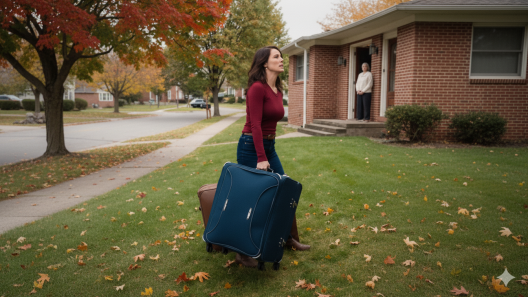


A billionaire’s four grieving daughters hadn’t smiled in eight months… But the woman who cleaned his kitchen brought them back in seven days—then his own family tried to destroy her.
The house had forty-two rooms, and every single one of them was silent.
Nathaniel Cross stood in the doorway of the east wing, still wearing his overcoat, still holding his briefcase. It was half past four in the afternoon. He had cancelled a board meeting, left three calls unreturned, and driven forty minutes through Manhattan traffic just to come home to this.
Silence.
“Margaret?” he called.
Nothing.
He found them where he always found them—on the second-floor landing, pressed together against the wall below the large oil portrait of Ivy. Four small girls, ranging from five to eleven years old, their shoulders touching, their eyes vacant. Maeve, the youngest, was clutching a framed photograph she had pulled from Ivy’s bedside table weeks ago. She hadn’t let go of it since.
“Dad.” It was Nora who spoke. Eight years old, red hair like her mother, voice scraped hollow. “When does Mom come back?”
Nathaniel set down his briefcase.
He had been asked this question seventeen times in the past month. He had counted. He still had no answer that didn’t break something inside him.
“Come here,” he said quietly.
The four of them pressed against him like they were trying to climb inside his chest. He held them. He didn’t speak. He looked up at the portrait of Ivy—her green eyes, her slight smile, the way she always seemed like she was about to say something funny—and he pressed his jaw tight until it ached.
This was not living. This was surviving the wreckage of a life.
Nathaniel had spent over a million dollars in eight months trying to fix what grief had done to his family.
Child psychologists, grief counselors, art therapists, equine therapy out in Connecticut. A woman from Switzerland who specialized in childhood trauma. A specialist from London who came with a briefcase full of credentials and stayed for three weeks before quietly telling Nathaniel that the girls were not ready to be reached.
“They need time,” the man from London said at the door, bag already packed.
“I’ve been giving them time,” Nathaniel said. “Time is all they’ve had.”
The specialist nodded sympathetically and got into his car.
The house manager, a precise man named Gerald, presented Nathaniel with a new candidate file every two weeks. He had stopped apologizing for the departures. He simply handed over the next folder, cleared his throat, and said, “This one comes highly recommended.”
Nathaniel stopped opening the folders.
Until Gerald appeared in his study one Tuesday morning and said, “There is a woman downstairs who is refusing to leave.”
Nathaniel looked up from his desk.
“She doesn’t have an appointment,” Gerald continued. “She’s not in the system. She arrived this morning on the service entrance side, which she clearly should not have known about, and when I asked her to leave she said—” Gerald hesitated. “She said to tell you that she knows what the inside of grief looks like, and that she’s not afraid of it.”
A long pause.
“Send her up,” Nathaniel said.
Amina Brooks was thirty-one years old, with close-cropped natural hair, a worn canvas backpack, and the calm, unhurried posture of someone who had long stopped trying to impress anyone. She sat across from Nathaniel in his study, hands folded in her lap, and looked directly at him without performance.
“Tell me why you’re here,” he said.
“Because I heard about your daughters,” she said. “Through someone who knows someone. And I’ve worked with children who’ve lost parents before—not in a clinical capacity. Just present. Just there.”
“Every expert I’ve hired has been ‘just there,'” Nathaniel said. “At considerable cost.”
“I’m not an expert,” Amina said. “That’s the point.”
He studied her. “What makes you think you can do something seventeen trained professionals couldn’t?”
She didn’t hesitate. “Because I’m not going to try to fix them. I’m going to sit with them. There’s a difference.”
“That’s a pretty thing to say.”
“It’s also true.” She held his gaze. “When I was nine, my mother died. It took three years before I let anyone back in. The one person who helped wasn’t a therapist. She was our neighbor. She used to sit on the porch with me and braid my hair and not say anything at all. That’s what I know how to do.”
Nathaniel was quiet for a long moment.
“One week,” he said finally. “You’ll stay in the guest suite on the third floor. If any of my daughters asks you to leave, you leave immediately. If Gerald has a concern, it becomes my concern. Understood?”
“Understood,” Amina said.
“And your rate—”
“Whatever you think is fair,” she said. “I’m not here for the money.”
He almost said something sharp to that. He didn’t.
The first two days, the girls ignored her completely.
Amina didn’t push. She simply appeared—at breakfast, in the hallway, in the library where Margaret sat reading with her knees pulled to her chest. She didn’t introduce herself with enthusiasm. She didn’t bring gifts or games or structured activities. She sat nearby. She read her own book. She handed Maeve a crayon when the box rolled off the table, and when Maeve looked at her with wide, cautious eyes, Amina just smiled and went back to her page.
Gerald watched this from doorways with his arms crossed.
“She’s not doing anything,” he reported to Nathaniel on the second evening.
“I know,” Nathaniel said.
“We’re paying her to do nothing.”
“We’re paying her to be present, Gerald. That’s not nothing.”
On the third day, Juliette—age seven, the quietest of the four—sat down next to Amina on the window seat in the blue room. She didn’t speak. She just sat close enough that their arms were almost touching. Amina kept reading. She didn’t comment on it, didn’t make it an occasion.
Juliette came back the next morning and brought her stuffed rabbit.
By day five, all four girls were eating breakfast at the same table as Amina. Not with her, exactly—around her. Like planets adjusting their orbit around a new gravitational pull.
“She talks to us like we’re people,” Margaret told her father that evening. She was eleven, the eldest, and she had her mother’s way of saying the obvious like it was actually profound. “Not like we’re broken.”
“You’re not broken,” Nathaniel said.
“I know that,” Margaret said calmly. “Amina knows that too.”
The twins—Nora and Juliette, who were eight—had a birthday on the following Saturday.
Amina asked Nathaniel one thing: to let her use the kitchen.
“It’s your house,” she said. “And your call. But your daughters told me their mother used to make them honey cake and lamb stew on birthdays. I found her cookbook in the library. I want to try.”
Nathaniel stood still for a moment. Ivy’s cookbook. He hadn’t been able to open it himself.
“Do whatever you think is right,” he said, and walked back to his study.
He sat at his desk and stared at his laptop without reading a word for ninety minutes.
Then he smelled it.
Cinnamon. Butter. The particular sweetness of the honey cake Ivy used to make every October, every December, every birthday and ordinary Tuesday when she felt like doing something kind.
He stood up slowly.
He walked down the hall. He stopped at the kitchen doorway.
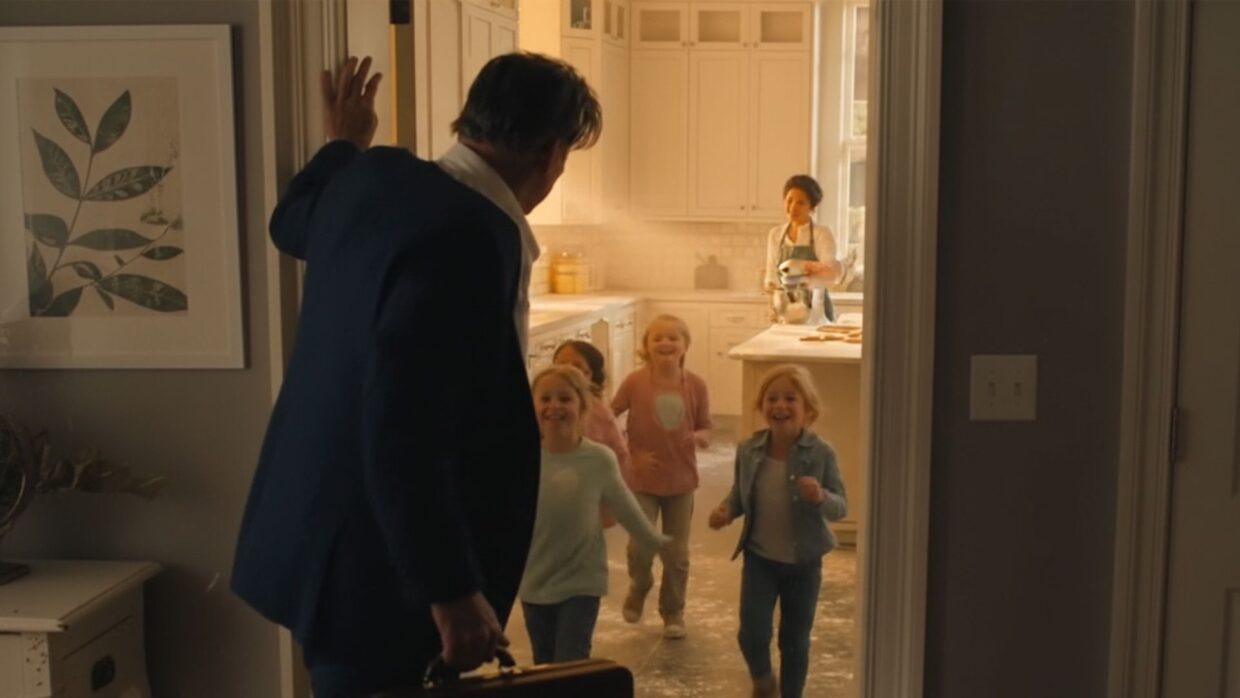
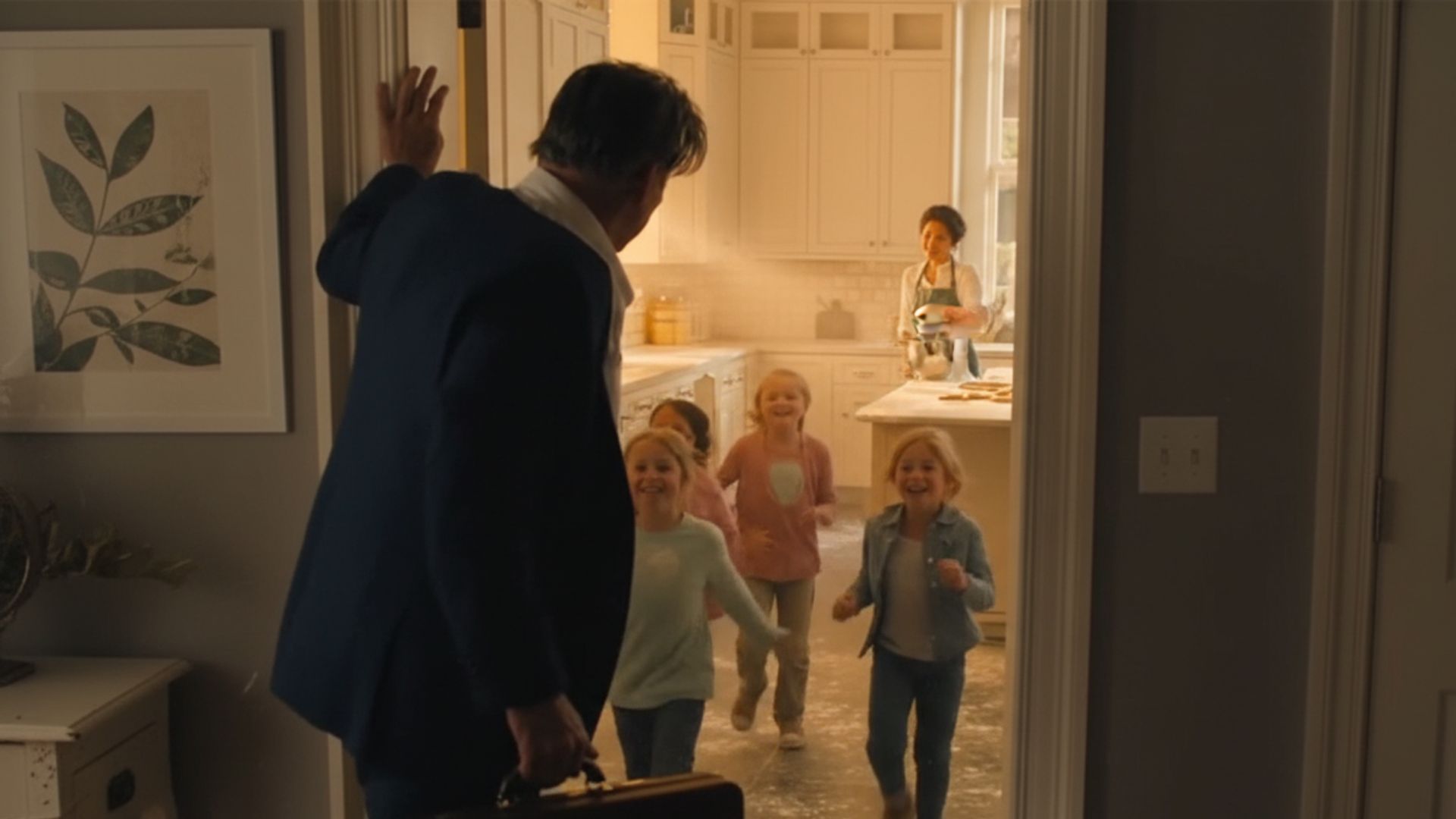
Flour was everywhere—across the counter, dusted on four small noses, scattered across the tile floor in lopsided footprints. Amina stood at the center of it all, guiding Maeve’s small hands over a bowl of dough while Nora perched on the counter narrating the operation in dramatic terms, and Juliette held the cookbook open to the right page like a sacred text, and Margaret—who had not laughed in eight months—was laughing, actually laughing, because Nora had flour in her eyebrow and didn’t know it.
Amina looked up.
She saw Nathaniel in the doorway.
She didn’t say anything. She just kept her hands over Maeve’s and gave him a small, quiet nod—like this moment didn’t need narrating, like it was enough to just let it be what it was.
Nathaniel felt his knees go.
He gripped the doorframe. His daughters turned and saw him, and something shifted in their faces—something unlocked—and Maeve dropped the dough and came running across the floured floor and hit him in the chest with her full weight.
“Dad,” she said, her voice muffled against his shirt. “We made Mom’s cake.”
He dropped to the floor. All four of them piled against him, and he held them there in the middle of the floury kitchen while something in his chest that had been sealed for eight months cracked open and let the air back in.
He thought that would be the end of the difficulty.
He was wrong.
His sister arrived on a Monday morning unannounced, which was exactly how Vivienne Cross always arrived.
She swept through the front entrance in a camel-colored coat, kissed Nathaniel once on each cheek, and then stood in the foyer and looked up at the second-floor landing where Amina was walking with Maeve toward the library.
Vivienne watched her for a long moment.
“Who is that?” she said, her voice pitched precisely loud enough to carry.
“The girls’ caregiver,” Nathaniel said. “Her name is Amina Brooks.”
“I see.” A pause. “How long has she been here?”
“Two weeks.”
Vivienne turned to face him slowly. She had the same jaw as Nathaniel—strong, decided—and when she set it, there was no room for argument. “Nathaniel. You hardly know this woman.”
“I know her well enough.”
“You barely know her name.” She lowered her voice. “You’re a widower with four children and a nine-figure estate. Do you understand what that looks like to someone like that?”
“Someone like what, exactly?”
She met his eyes. “Don’t be naive.”
Later that afternoon, Vivienne cornered Amina in the hallway outside the library.
Nathaniel wasn’t there to witness it. Gerald was. He told Nathaniel about it that evening, uncomfortable and precise as always.
“What did she say?” Nathaniel asked.
“She told Ms. Brooks that she was transparent,” Gerald said. “That everyone in this house could see what she was doing, and that she should leave before she was removed.”
Nathaniel was very still.
“And what did Amina say?”
“She said—” Gerald cleared his throat. “‘With respect, ma’am, I’m here for the children. Not for you, not for your brother, and not for this house. And I’ll leave when Nathaniel asks me to.'”
Nathaniel stood up.
“Where is my sister?”
He found Vivienne in the drawing room, making a call. She looked up and ended it when she saw his face.
“Before you say anything—” she began.
“You spoke to her,” Nathaniel said.
“I was protecting you. Someone has to.”
“She has been here two weeks,” Nathaniel said, his voice controlled with effort. “In two weeks she reached my daughters in a way that no one else could in eight months. Maeve laughed last Saturday for the first time since Ivy’s funeral. Did you know that? Did you come here often enough to know that?”
Vivienne’s expression flickered.
“That is not the point—”
“What is the point, Vivienne? What exactly is the point?”
“The point is that women see opportunity,” she said sharply. “A vulnerable man, four motherless children, a magnificent house, and an open door. I’ve seen it before. You are too—”
“Too what?”
“Too grief-stricken to see clearly.”
A silence stretched between them.
“I see perfectly clearly,” Nathaniel said. “What I see clearly is that you haven’t visited in eleven weeks. My daughters call you twice a month on speaker and you spend most of the call talking about your renovation. You hired someone to send the birthday gifts. I found the gift service invoice in the shared family account.” He held her gaze. “So I’ll thank you to leave the protecting of this family to me.”
Vivienne’s jaw tightened.
“You’re making a mistake.”
“You’re still here,” he said quietly. “That’s the mistake I’m focused on right now.”
She left that evening.
Nathaniel stood at the window and watched her car pull down the driveway, and felt the familiar exhaustion of being both son and father and head of something far larger than himself.
He went to find Amina.
She was in the girls’ room, sitting in the reading chair in the corner while Margaret read aloud from a chapter book and the younger three lay across their beds listening. She looked up when Nathaniel appeared in the doorway.
“Can I speak with you?” he said. “When they’re settled.”
“Of course,” she said simply.
They sat in the kitchen an hour later, both with cups of tea, the flour from Saturday’s baking still faintly visible in the grout lines despite Gerald’s best efforts.
“My sister spoke to you,” Nathaniel said.
“She did.”
“I want to apologize.”
Amina shook her head. “It’s not necessary.”
“It is. You are in my house. You’re here because I asked you to be. What was said to you—”
“Was said to me many times before I ever set foot in this house,” Amina said quietly. “People make assumptions. I’ve learned not to carry them.”
He studied her. “What was said—the implication—does it bother you?”
She looked at him steadily. “What would bother me is if you believed it.”
A pause.
“I don’t,” he said.
She nodded once. That was enough.
“Then it’s handled,” she said, and wrapped both hands around her mug.
It was Margaret who asked the question that changed everything.
Two days later, sitting across from Amina at the breakfast table while her sisters finished getting dressed, she put down her toast and said: “When your mom died, did someone help you?”
Amina set down her cup. She didn’t deflect. “Eventually,” she said. “For a while, nobody did.”
“What did you do during the while?”
“Stayed quiet. Stayed small. Tried not to take up too much space.” Amina looked at her. “That’s not what I want for you.”
“We haven’t been loud lately,” Margaret admitted.
“I noticed.”
“We used to be loud,” Margaret said. “Mom used to say we could rattle the windows.”
“What did she mean by that?”
Margaret almost smiled. “She meant Nora. Nora has a voice like a fire alarm.”
“That’s a gift,” Amina said.
“That’s what Mom said.” A beat. “Tell me something about your mom.”
Amina considered that. “She made rice the way no one else could. I’ve tried to copy it for twenty years. I’ve never gotten it right.”
“What was different about hers?”
“I think it was patience,” Amina said. “She never rushed anything. She always said food knows if you’re in a hurry.”
Margaret was quiet for a moment. Then: “Mom’s cookbook is still in the library. We haven’t been able to look at it since you used it. But I think—I think we should.”
“When you’re ready,” Amina said.
“I think we’re almost ready,” Margaret said. “I think last Saturday was like—a door opening.”
“That’s exactly what it was.”
“Did you know it would work?” Margaret asked. “The cake?”
Amina looked at her honestly. “No,” she said. “I hoped. That’s all any of us can do.”
Three weeks later, Nathaniel sat across from his attorney and signed a formal extended employment contract for Amina Brooks—fair salary, full benefits, clear terms, everything above board and documented. He had insisted on the transparency, partly for his own clarity and partly so there would be no room for insinuation from anyone.
Amina had read the contract, raised an eyebrow at the salary figure, and said, “This is too much.”
“It’s appropriate,” Nathaniel said.
“I’m not a specialist.”
“You’re the first person who has gotten through to my daughters in nearly a year. The London specialist charged three times this amount and achieved nothing.” He set down the pen. “Take the contract, Amina.”
She took the contract.
Vivienne called two weeks later.
“I may have spoken out of turn,” she said, which from Vivienne was the closest thing to an apology available in the known universe.
“You did,” Nathaniel agreed.
A pause. “How are the girls?”
“Nora laughed so hard at dinner last night she fell off her chair,” he said. “Maeve has started talking again—full sentences. Juliette asked if Amina could teach her to cook. Margaret is sleeping through the night for the first time since May.”
A long silence on the other end.
“Nathaniel,” Vivienne said, and for once her voice had lost its managed edge. “I’m sorry I haven’t been there.”
“I know.”
“I didn’t know how to be,” she said quietly. “When Ivy died, I—I didn’t know what to do with it. With any of it.”
“None of us did,” he said. “That’s the point.”
Another pause. “Can I come this weekend?”
“Come,” he said. “The girls will want to see you.”
“Will Amina be there?”
“She lives here, Vivienne.”
A beat. “Then I’ll apologize to her in person,” his sister said, with the careful tone of someone dismantling a pride that had held them together for too long.
“She’ll appreciate that,” Nathaniel said. “She’s not a person who holds grudges.”
“How do you know?”
“Because if she were,” he said, “she would have left already. And she didn’t. She stayed.”
On a Thursday in late November, Nathaniel came home at five o’clock to find the entire ground floor smelling of lamb and saffron and the particular warm sweetness that had once been the scent of a family that was whole.
He stood in the hallway for a moment and just breathed it in.
“Dad!” Maeve came barreling around the corner, arms out, no hesitation, no distance—just the full-speed impact of a five-year-old who had stopped being afraid to run. “We’re making Mom’s birthday dinner! Amina found the page!”
“Which page?” he asked, catching her.
“The Sunday dinner page,” Maeve said importantly. “The one with the lamb. Amina said Mom underlined it three times.”
He walked to the kitchen.
All four girls were arrayed around the counter in various states of useful participation—Margaret stirring, Nora tasting things she wasn’t supposed to, Juliette reading the recipe steps aloud with careful precision, Maeve narrating everything to no one in particular. Amina moved between them, adjusting, guiding, laughing at something Nora said that Nathaniel had missed.
She looked up when he walked in.
“You’re early,” she said.
“I wanted to be,” he said.
She held his gaze for a moment, then nodded—that small, quiet nod she had that meant she understood more than she said.
“Dinner in forty minutes,” she told him. “You could set the table.”
He took off his jacket and rolled up his sleeves and set the table.
All six places.
After dinner, after the girls were in bed and the kitchen was clean and the house had settled into its new version of quiet—a quiet that was full instead of hollow, that held warmth instead of absence—Nathaniel stood at the kitchen window and Amina stood beside him, both of them holding the last of their tea.
“She would have liked you,” he said.
Amina was still.
“Ivy. She would have—she was like you. She didn’t fill silence unnecessarily. She was patient with things that deserved patience.” He paused. “That’s rare.”
“It sounds like she was remarkable,” Amina said.
“She was.” He turned the mug in his hands. “I spent eight months trying to fix grief. To solve it. Hire the right person, find the right method, apply the right resource.” He paused. “You didn’t fix anything. You just—stayed.”
“That’s all it was,” Amina said. “Sometimes staying is the whole thing.”
“I know that now,” he said.
A comfortable silence. Outside, the first snow of the season had begun to fall—light, tentative, covering the garden in something clean.
“Thank you,” he said. “For not leaving when my sister told you to. For not leaving when I gave you reasons to doubt whether I deserved what you were offering.”
Amina turned to look at him. “You never gave me a reason to doubt that,” she said.
“I was cold. The first week—”
“You were protecting your daughters,” she said simply. “That’s not a flaw. That’s a father.”
He didn’t answer.
Outside, the snow thickened. The kitchen held its warmth against it.
“It’s going to be all right, isn’t it,” he said. It was not quite a question.
“It already is,” Amina said. “Look at what you have.”
He looked at the empty chairs where four girls had sat an hour ago, laughing over lamb stew and arguing about who had stirred it correctly and whether Nora’s portion of saffron had been excessive. He looked at the cookbook, open on the counter, Ivy’s handwriting visible in the margins—little notes, little adjustments, the record of a woman who cooked with attention and love.
He looked at what he had.
And for the first time in nearly a year, what he had felt like enough.
Three months later, Vivienne flew in for Maeve’s sixth birthday party—a real party, with noise and decorations and eight small children running through the garden. She stood next to Amina in the kitchen while they assembled the cake, and after a long silence she said, quietly and without preamble:
“I was wrong about you. And I said things I shouldn’t have. I’m sorry.”
Amina looked at her. “Accepted,” she said. “And for what it’s worth—you came back. That matters to those girls more than you know.”
Vivienne was quiet for a moment. Then: “She would have liked you,” she said. “Ivy. I knew her for eighteen years. She would have chosen you for this herself.”
Amina looked down at the cake. “That might be the kindest thing anyone has said to me in this house,” she said.
“It’s the truest,” Vivienne said.
Outside in the garden, Nora rattled the windows.
And the whole house came alive with sound.