
His family blamed him for his sister’s death for fifteen years… But when he exposed his father’s crimes, the real killer’s confession changed everything
The funeral was ten days after the accident. Mark stood at the back while his parents sobbed over Lily’s casket.
His father looked up once. Their eyes met. Dad turned away.
That was fifteen years ago.
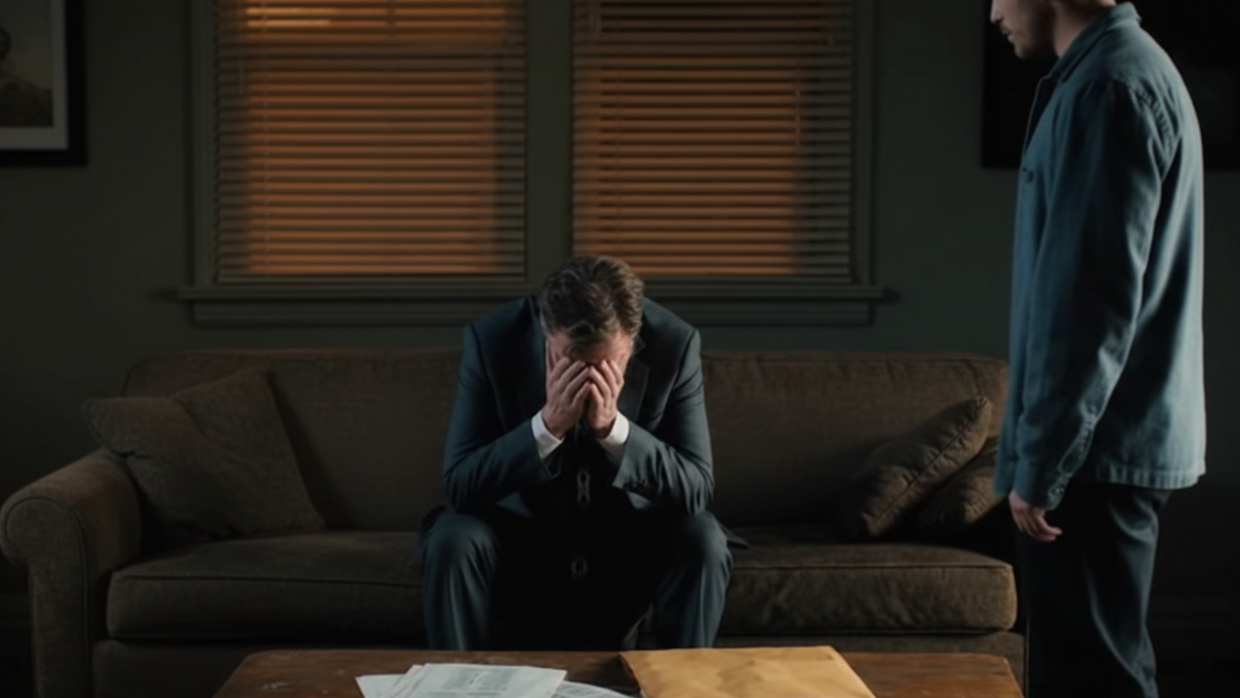
Mark sat in his apartment now, staring at the envelope. Inside were documents he’d stolen from his father’s office—proof of fraud, embezzlement, maybe worse.
His phone buzzed. Mom’s name flashed on the screen.
He declined the call.
The accident replayed in his mind constantly. Lily, twelve years old, running into the street. The car. The screaming. Mark had been watching her that day. He was seventeen.
“You were supposed to protect her,” Dad had said at the hospital.
Mom didn’t speak to him for six months.
Mark opened his laptop and uploaded the first document to a secure server. His finger hovered over the ‘send’ button—one click would send everything to the FBI.
His phone rang again. This time it was his father.
“Mark.” Dad’s voice was strained. “We need to talk.”
“About what?”
“I know what you took from my office.”
Mark’s chest tightened. “Then you know what I’m about to do with it.”
“Please. Let’s meet. Just hear me out.”
“Why would I do that?”
“Because…” Dad paused. “Because there are things about Lily you don’t know.”
Mark’s hand shook. “What things?”
“Not over the phone. Tomorrow. The house. Your mother will be there.”
The line went dead.
Mark hadn’t been home in twelve years.
The next day, he stood on the porch of his childhood home. The paint was peeling. The garden Mom used to tend was overgrown.
Dad opened the door. He’d aged badly—gray hair, deep lines around his eyes.
“Come in.”
The living room looked the same. Lily’s photo still hung above the fireplace. Mark had to look away.
Mom sat on the couch, her hands folded in her lap. She looked up at him, and for the first time in years, her eyes weren’t filled with blame.
“Sit down, Mark,” she said quietly.
He remained standing. “What’s this about?”
Dad closed the door. “We owe you the truth.”
“About your fraud? I already know the truth.”
“Not about that.” Mom’s voice cracked. “About Lily.”
Mark’s throat went dry. “What about her?”
Dad sat down heavily. “The accident. It wasn’t… we didn’t tell you everything.”
“I was there. I know what happened.”
“No.” Mom stood up, her hands trembling. “You know what we told you. What we let you believe.”
The room seemed to tilt.
“Lily didn’t run into the street because you weren’t watching,” Dad said. “She ran because I was chasing her.”
Mark couldn’t breathe.
Mom continued, tears streaming down her face. “We’d been fighting that morning. Your father and I. About money. About his business. Lily heard everything. She was upset, crying. I told her to go outside, to calm down.”
“I followed her,” Dad said, his voice breaking. “I was angry. Still angry from the fight. I yelled at her to come back inside. She was scared of me, Mark. She ran from me.”
The words hung in the air like smoke.
“The driver said he saw a man shouting,” Mom whispered. “We told him it was you. We let everyone believe it was you.”
Mark’s legs gave out. He sank into a chair.
“We blamed you because we couldn’t face what we’d done.” Dad’s face was wet with tears. “I destroyed our daughter. I destroyed you. And then I… I threw myself into work. Into making money. Into anything that would help me forget.”
“The fraud,” Mark said numbly.
“Yes. I became someone I’m not. Someone worse than I already was.”
Mom knelt in front of Mark. “We are so sorry. We have been such cowards. Such terrible parents.”
Mark looked at his mother. At his father. These people who had shaped his entire life with a lie.
“Why tell me now?”
“Because you were going to expose me,” Dad said. “And I realized—I deserve it. I deserve prison. I deserve to lose everything. But you don’t deserve to carry our guilt anymore.”
“I went to therapy last year,” Mom added. “The therapist said… she said we’d created a scapegoat. That we’d sacrificed you to avoid our own pain.”
Mark stood up. His whole body was shaking. “Fifteen years. I spent fifteen years thinking I killed my sister.”
“I know.”
“I dropped out of college. I isolated myself. I thought about ending it more times than I can count.”
“I know.” Mom’s voice was barely a whisper.
“And you just… let me.”
Dad buried his face in his hands. “There’s no excuse. There’s nothing we can say that makes this right.”
Mark walked to the window. Outside, he could see the street where it happened. Where Lily died.
“Do it,” Dad said behind him. “Send the documents. Turn me in. I’ll confess everything. The fraud, the embezzlement, all of it. And I’ll tell them about Lily too. The real story.”
Mark turned around. “You’d go to prison.”
“I should have gone fifteen years ago. For what I did to both of you.”
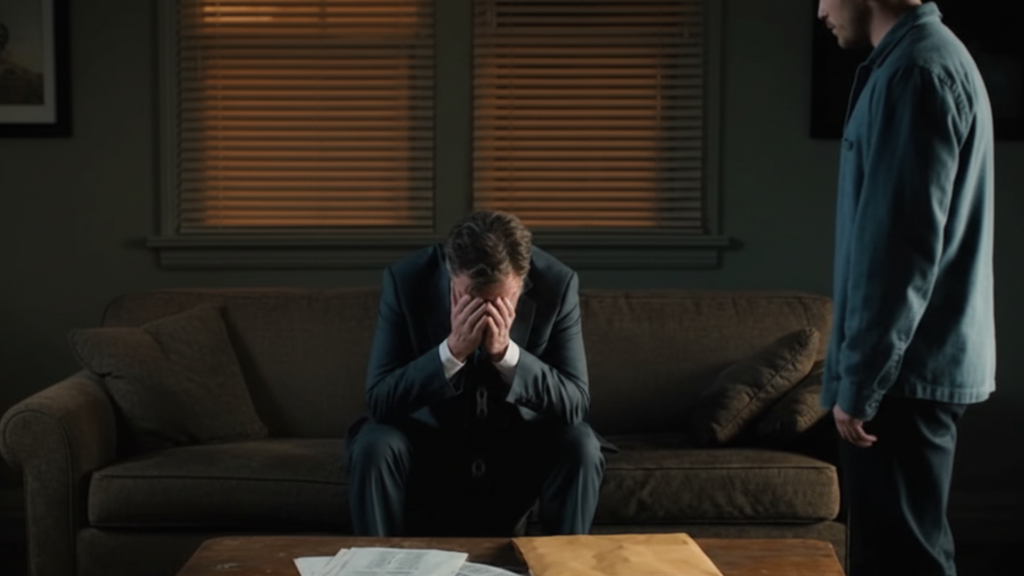
Mom stood up. “We don’t expect forgiveness, Mark. We don’t deserve it. But we want you to know the truth. And we want you to be free of this.”
“Free.” The word tasted bitter. “I don’t even know what that means anymore.”
“Then let us help you find out,” Mom said. “Please.”
Mark looked at the documents still on his phone. All that evidence. All that power.
“I need time,” he finally said.
“Take all the time you need,” Dad replied.
Mark walked to the door, then stopped. “One more thing. The driver. Does he know?”
Dad nodded slowly. “I found him last year. Told him the truth. He’d been carrying guilt too, thinking he should have stopped sooner.”
“Where is he?”
“He lives in Oregon now. I have his contact information if you want it.”
Mark took the paper Dad offered him. Michael Chen. A phone number.
“I’ll think about what to do,” Mark said. “About all of it.”
He drove straight to a hotel and called the number.
“Hello?” A man’s voice, cautious.
“Mr. Chen? This is Mark Patterson. I’m—”
“I know who you are.” A long pause. “Your father told me you might call.”
“He told you the truth? About that day?”
“Yes. I’m so sorry. I’m so incredibly sorry. I believed him when he said you were responsible. I testified about seeing someone shout at her. I thought it was you.”
“It’s not your fault.”
“I’ve lived with this for fifteen years. I have a daughter now. She’s ten. Every time I look at her, I think about your sister.”
Mark’s eyes burned. “Mr. Chen, I need to know something. In your statement, you said Lily looked terrified before she ran. Did you see who she was looking at?”
A heavy sigh. “I saw a man in a suit. Older. Angry. I assumed it was you because your parents said… but I was wrong. I’m so sorry I was wrong.”
“Would you be willing to give a new statement? The truth this time?”
Silence. Then: “Yes. Absolutely yes.”
Mark spent the next week gathering everything. Mr. Chen’s new testimony. Dad’s confession, recorded and notarized. Mom’s statement. His own account of the last fifteen years.
He also added Dad’s financial crimes. Every document, every transaction, every fraudulent deal.
Then he sent it all to the FBI, the state attorney, and three major newspapers.
The story broke on a Tuesday.
“Businessman Confesses to Decade of Fraud and Cover-Up in Daughter’s Death.”
Mark’s phone exploded with calls. Reporters. Old friends. Therapists. Lawyers.
He ignored them all except one.
“Mark?” His mother’s voice was small. “Are you okay?”
“No. But I will be.”
“Your father was arrested this morning.”
“I know.”
“The lawyer says he’ll get ten to fifteen years.”
“Good.”
Mom was quiet for a moment. “You did the right thing.”
“I did the necessary thing. There’s a difference.”
“Can we… can I see you? Before the trial?”
Mark looked out his apartment window at the city lights. “Maybe. After I’ve had some time.”
“I understand. Mark?”
“Yeah?”
“I’m checking myself into a treatment facility. For trauma and grief. The therapist says I need intensive help.”
“Okay.”
“And I’m setting up a fund. In Lily’s name. For children who lose siblings. For families dealing with grief. I’m using everything your father didn’t steal. It’s not much, but—”
“That’s good, Mom.”
“I love you. I should have said that more. I should have said it every day.”
Mark closed his eyes. “Goodbye, Mom.”
He hung up.
The trial came six months later. Mark sat in the front row as his father pleaded guilty to all charges—fraud, embezzlement, obstruction of justice, filing false statements about Lily’s death.
The judge was a woman in her sixties with sharp eyes.
“Mr. Patterson, you have destroyed your family, defrauded investors, and allowed an innocent boy to suffer for your mistakes. Do you have anything to say?”
Dad stood. He looked at Mark. “I destroyed my son’s life. I destroyed my daughter’s memory. I deserve every year of the sentence you give me. I’m sorry.”
“Fifteen years in federal prison,” the judge said. “No parole.”
Dad was led away in handcuffs. He didn’t look back.
Outside the courthouse, reporters swarmed. Mark pushed through them to his car.
But one voice stopped him.
“Mark!”
He turned. A woman in her thirties, with Lily’s eyes.
No. Not Lily’s eyes. His eyes. Their mother’s eyes.
“I’m Rachel,” she said. “Your father’s daughter. From before he married your mom.”
Mark stared at her.
“I just found out about all this,” she continued. “About you. About Lily. About everything he did. I needed to meet you.”
“I didn’t know he had another child.”
“He didn’t either until I found him two years ago. I think that’s when he started to unravel. When he realized he’d been running from consequences his whole life.”
Mark felt something shift inside him. “Did he hurt you too?”
“He wasn’t there. My mom raised me alone. But no, he didn’t hurt me the way he hurt you.” Rachel’s eyes were kind. “I’m a therapist. In Boston. If you ever want to talk. No pressure. Just… I wanted you to know you have family who isn’t broken.”
She handed him a card and walked away.
Mark sat in his car for a long time, holding the card.
Then he drove to the cemetery.
Lily’s grave was well-maintained. Mom had been visiting. Fresh flowers lay against the headstone.
“Hey, Lily,” Mark said quietly. “I’m sorry I couldn’t save you. I’m sorry I believed I was the reason you died. I’m sorry for all the years I stayed away.”
The wind rustled through the trees.
“But I’m going to be okay now. I’m going to get help. I’m going to live the life you didn’t get to have. And I’m going to make sure people know the truth about you—that you were just a scared kid who deserved better parents.”
He placed his own flowers next to Mom’s.
“I’m going to make sure Dad’s victims get their money back. I’m going to help Mom if she really gets better. And I’m going to meet my sister Rachel. The one you never got to meet.”
Mark stood there until the sun set.
Then he drove to his first therapy appointment.
Dr. Sarah Kim’s office was small but warm. She was younger than he expected, with gentle eyes.
“Tell me why you’re here, Mark.”
He took a deep breath. “Because I spent fifteen years living in someone else’s guilt. And I’m ready to let it go.”
“That’s a good start. This will be hard work.”
“I know.”
“But you’re not alone in it anymore.”
Mark felt something crack open in his chest—something that had been frozen since he was seventeen.
“No,” he said. “I’m not alone anymore.”
Six months later, Mark testified at the investor restitution hearing. He’d worked with the FBI to recover most of Dad’s hidden assets.
“Mr. Patterson,” the prosecutor said, “you could have kept this information secret. Why didn’t you?”
“Because the truth matters more than revenge. And justice matters more than family loyalty.”
The judge ordered full restitution to all victims. Dad’s estate was liquidated. The house was sold.
Mom completed her six-month treatment program. She called Mark from a sober living facility.
“I’m learning to live with what I did,” she said. “It’s the hardest thing I’ve ever done.”
“Good.”
“The facility counselor thinks I should write you a letter. A real apology. Not just words, but accountability.”
“Okay.”
“Would you read it if I sent it?”
Mark considered. “Yes. But I can’t promise I’ll respond.”
“That’s fair.”
The letter came two weeks later. Ten pages of Mom’s handwriting, detailing every failure, every moment of cowardice, every way she’d sacrificed him to protect herself from grief.
Mark read it three times.
Then he wrote back. One page.
“I accept your apology. I don’t forgive you yet. Maybe I never will. But I understand that you were broken too. I hope you heal. I’m working on healing myself.”
He didn’t sign it “love.” Just his name.
A year after the trial, Mark got a call from the Lily Patterson Foundation—the charity Mom had created.
“Mr. Patterson, we’d like to invite you to our first annual grief support gala. Your mother thought you might want to speak.”
“I don’t think so.”
“We have fifty families registered. Siblings who lost siblings. Parents who lost children. We’re creating support groups, funding therapy, building resources. Your story could help them.”
Mark closed his eyes. “I’ll think about it.”
He went.
The ballroom was full of people wearing photos of lost loved ones pinned to their chests. Mark’s stomach turned.
Mom was there, sober, older, standing by a poster of Lily.
They locked eyes across the room.
She nodded. He nodded back.
He didn’t approach her.
Instead, he talked to the families. Listened to their stories. Shared pieces of his own.
A father whose son died in a drunk driving accident: “I blamed my daughter for six years. She let him take the car. But she was just a kid too.”
A mother whose daughter drowned: “I screamed at my oldest that he should have been watching her. He was eleven. He tried to kill himself last year.”
Mark felt his chest tighten with recognition. “Is he okay now?”
“He’s in therapy. Like me. We’re learning to talk to each other again.”
“That’s good. That’s really good.”
At the end of the night, the foundation director asked Mark to say a few words.
He stood at the microphone, looking out at all these broken families.
“My name is Mark Patterson. Fifteen years ago, my sister died. And my parents blamed me for something that wasn’t my fault. They let me carry their guilt because it was easier than facing their own.”
The room was silent.
“I’m not going to tell you to forgive the people who hurt you. I haven’t fully forgiven mine. But I will tell you this: the truth is worth fighting for. Your pain is valid. Your anger is valid. And you deserve to heal, even if the people who hurt you never do.”
He paused, his voice breaking slightly.
“Lily deserved better. I deserved better. And if you’re carrying someone else’s guilt tonight—you deserve better too. Let it go. Not for them. For yourself.”
The applause was quiet but sustained.
Afterward, Mom approached slowly. “Thank you for coming.”
“The foundation is doing good work.”
“It doesn’t make up for anything.”
“No. But it helps people who need help. That counts for something.”
They stood in awkward silence.
“Your father wrote you from prison,” Mom finally said. “I have the letter if you want it.”
“Not yet.”
“Okay.” She looked at Lily’s poster. “She would be twenty-seven now.”
“I know.”
“Do you ever wonder what she’d be like?”
“Every day.”
Mom’s eyes filled with tears, but she blinked them away. “I’m proud of who you’ve become. Despite us. Despite everything.”
Mark felt his throat tighten. “I’m not doing this for you.”
“I know. You’re doing it for you. That’s exactly what you should be doing.”
She walked away, leaving Mark alone with Lily’s photo.
He looked at his sister’s frozen-in-time face. Twelve years old forever.
“I’m okay, Lily,” he whispered. “It took a long time. But I’m okay.”
Two years later, Mark opened his own practice as a family therapist, specializing in grief and scapegoat trauma.
His first client was a nineteen-year-old boy whose parents blamed him for his brother’s suicide.
“They say I should have known,” the boy said, tears streaming down his face. “They say I should have told them he was struggling.”
Mark handed him a tissue. “How old were you when it happened?”
“Fifteen.”
“You were a child. It wasn’t your responsibility.”
“But they—”
“I know what they say. I know what it feels like to carry that. And I’m here to tell you: you can put it down.”
The boy looked up, hope flickering in his eyes. “Really?”
“Really. It’s going to take time. It’s going to be hard. But yes. You can heal from this.”
Mark thought of his own journey—the exposure, the trial, the slow, painful work of therapy.
He thought of Dad in prison, finally facing consequences.
He thought of Mom, sober and trying, running a foundation that actually helped people.
He thought of Rachel, his half-sister, who’d become a real friend.
He thought of Dr. Kim, who’d taught him that healing wasn’t about forgiveness—it was about freedom.
And he thought of Lily, who never got the chance to grow up, but whose memory now funded therapy for hundreds of other kids.
The boy in front of him was still waiting, still hoping.
“Let’s get started,” Mark said.
And they did.
Justice hadn’t come from revenge. It had come from truth.
His father lost fifteen years of freedom. His mother lost her identity as a perfect parent. The investors got their money back. Mr. Chen got to clear his conscience.
And Mark? Mark got his life back.
Not the life he would have had if Lily had lived. Not the life he would have had with better parents.
But a life that was his own. Built on truth. Dedicated to helping others break free from the same chains that had bound him.
That was enough.
That was more than enough.
It was everything.