



Asha Mehta stood at the edge of her childhood bedroom, her fingers skimming the neatly folded saris in her closet. To an outsider, the room would seem perfectly ordinary—a humble space adorned with trinkets, family photos, and remnants of youthful artistry in the form of hastily painted canvases. But for Asha, it was a repository of silent battles, a battleground where her personal desires quietly clashed with the weighty expectations of her family.
Every evening, as the sun dipped below the horizon, a soft orange glow would seep into the room, casting long shadows that danced across the walls. It was during these times she would sit by her window, wrestling with the yearning to chase her dreams far beyond the suburbs of New Jersey where her parents settled years ago from Mumbai.
Asha’s parents, Rakesh and Meera Mehta, had built a life grounded in their Indian heritage while navigating the currents of American culture. They held Asha’s future with care, wanting only the best for her—a secure job, a respectable marriage, a life that would not only honor their struggles but also ensure stability in an often uncertain world.
But Asha’s heart beat to a different rhythm. The art studio downtown called to her every day, with its intoxicating mix of oil paints and possibility. She longed to be amongst the colors, creating pieces that spoke the silent languages of the soul. Yet the thought of broaching this with her parents brought a sip of fear that chilled her resolve. To them, art was a hobby, a beautiful indulgence, not a career path for their brilliant daughter.
Tension simmered beneath the surface, manifesting in quiet moments—like the way her mother would gently remind her about the cousin who had just been admitted to medical school, or the silences that filled the air during family dinners when talks of future plans drifted in. Asha would offer a polite smile, a nod, her heart a quiet tempest.
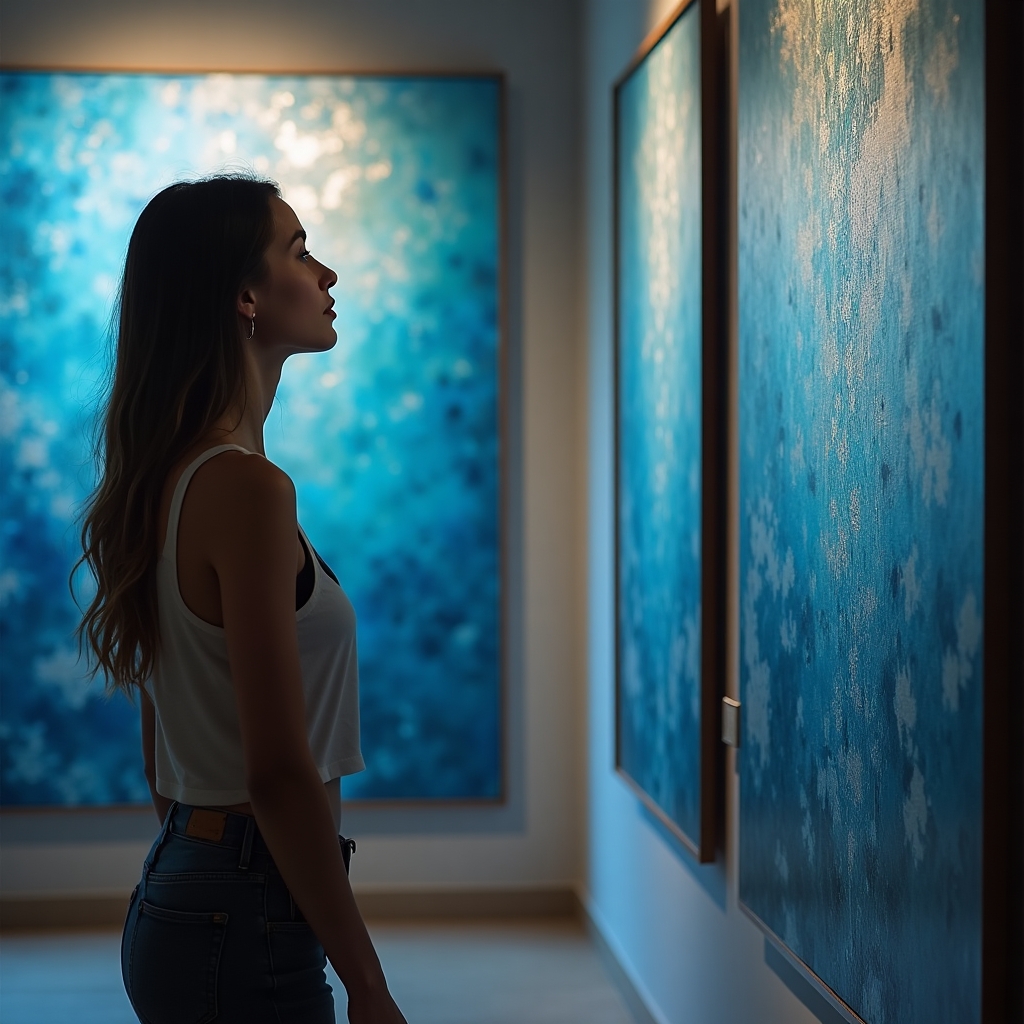
It was on a humid summer day that clarity began to unfurl within her. She had taken the train into the city to visit a gallery, a personal pilgrimage she allowed herself only occasionally. The gallery was a sanctuary, a place where dreams hung on the walls as tangible achievements. As she stood in front of a sprawling canvas of vibrant blues and silvers, emotion welled within her, tears prickling at the corners of her eyes.
In that moment, it hit her: she was living a life that was not her own. Each brushstroke on the canvas seemed to whisper truths she had been avoiding. She realized she couldn’t continue shaping her life around expectations that felt like church bells echoing around an empty cathedral.
The realization was a quiet revelation, not a thunderous epiphany. It was a seed of truth planted deep within her soul, promising growth. It was as if the art at the gallery had lent her a voice, a gentle reminder that her truth was valid, her dreams legitimate.
Returning home, the train ride was a blur of thought and silent resolve. The suburbs met her return with the same quiet streets, but Asha felt changed, a shift like tectonic plates realigning.
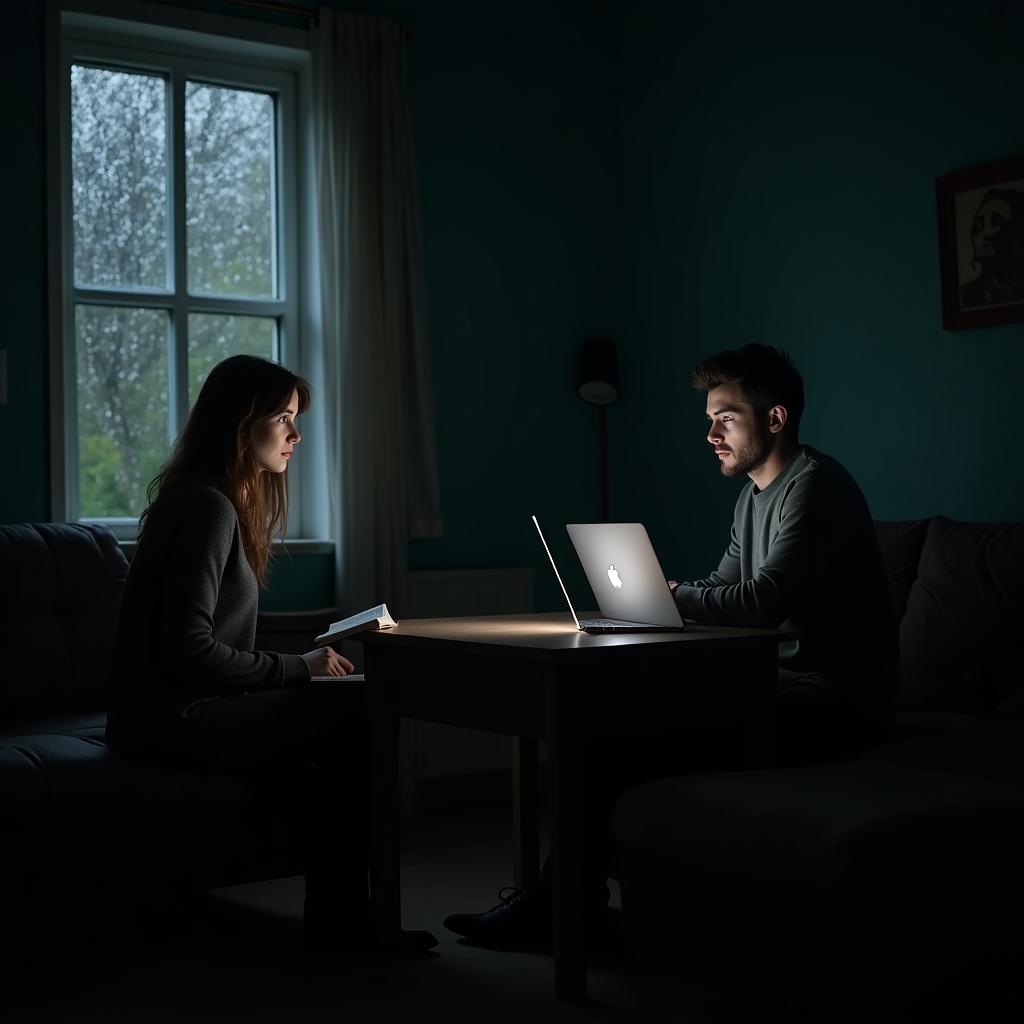
That evening, as the golden hue of twilight painted her room, Asha found her parents in the living room. They were a vision of warmth, seated together—a picture of unity and tradition. Her heart beat a rapid rhythm, but the seed of clarity she had discovered in the gallery lent her strength.
“Mom, Dad,” she began, her voice soft yet steady, “there’s something important I need to talk about.”
They looked up, smiles on their faces, unaware of the shift about to take place.
“I love you both deeply,” Asha continued, “and I understand the hopes you have for me. But I need to follow my own path. Art isn’t just a hobby for me—it’s my calling. It’s where I find my truth.”
Her parents exchanged glances, concern etched into their expressions. Yet, Asha noticed something new—an openness in their gaze, a willingness to listen.
In that moment, a bridge was quietly built, spanning the divide of expectation and individual desire. The conversation unfolded gently, each word a testament to love and understanding. Asha found herself enveloped in a warmth that came not just from familial support, but from the recognition of her own courage.
As the dusk deepened outside, Asha knew that she had begun a journey towards a life that was authentically hers. And for the first time in a long while, the burden of expectation felt lighter, replaced by the buoyancy of quiet but resolute self-acceptance.