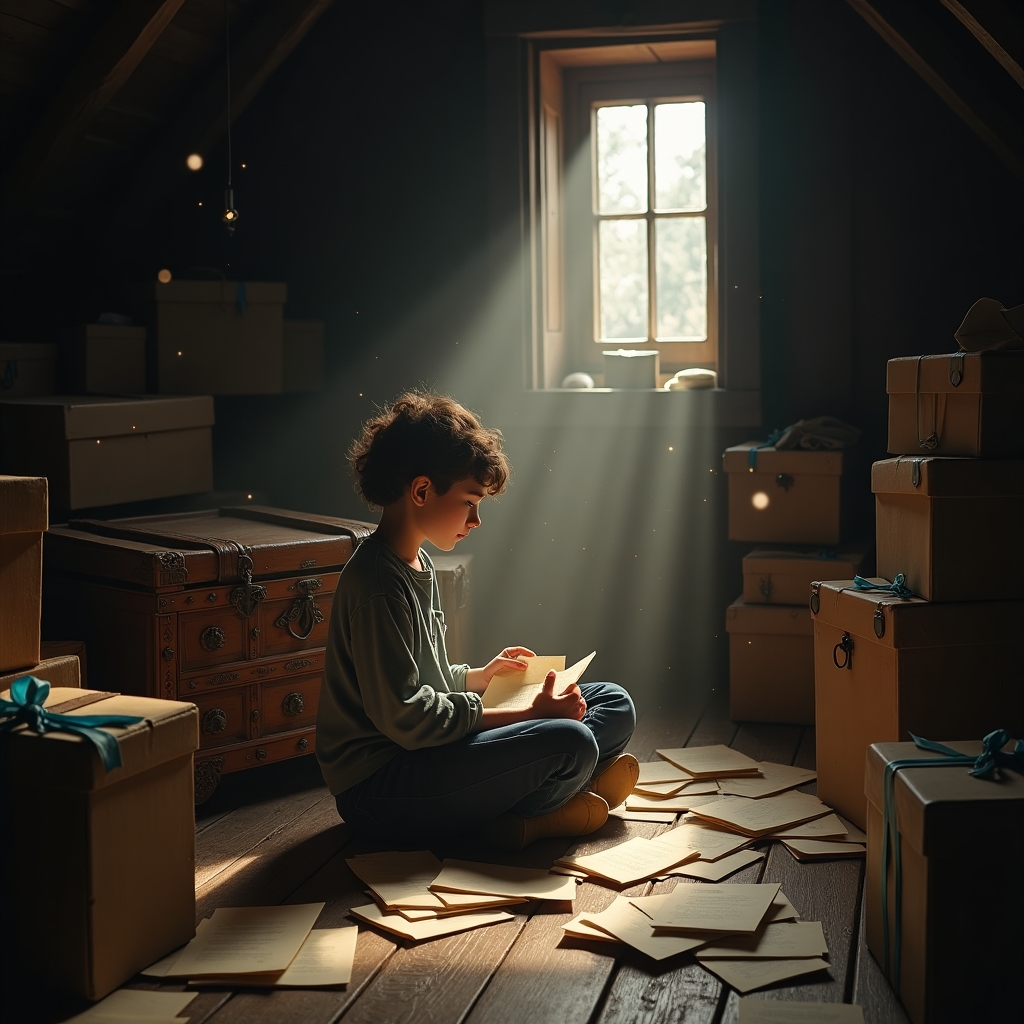





In the small coastal town of Waverly, where the ocean whispered secrets only the winds could translate, lived a young woman named Malini. At twenty-three, she was a bridge between worlds, carrying the silent weight of her ancestors’ wishes while her heart beat to its own rhythm.
Malini was the only child of a family deeply rooted in tradition. Her family owned the town’s oldest bookstore, ‘Echoes of Harmony,’ a place imbued with history where the air was thick with the scent of old paper and ink. It was expected that Malini would eventually take over the store, continuing the legacy her grandparents had started decades ago. To her family, the bookstore was more than just a business; it was a repository of their culture and memory.
Each day, Malini woke up as the sun gilded the horizon, painting the sea with hues of orange and gold. She would help her mother open the store, arranging the books with care and ensuring the place felt inviting. Customers loved her gentle demeanor and insightful book recommendations, seeing in her a reflection of the bookstore’s charm. Yet, inside, she was conflicted.
Malini’s true passion lay in art, a world where her creativity could roam freely, unbound by the constraints of expectation. She longed to capture the colors and shapes of her emotions on canvas. In secret, she would spend late nights in her attic room, painting under the moon’s gentle gaze. Her small collection of paintings was a vivid contrast to the dusty tomes downstairs, brimming with life and unspoken stories.
Her parents, especially her father, revered the past with a fervor that was as inspiring as it was suffocating. He often spoke of duty and sacrifice, themes woven into the very fabric of their family identity. Malini understood these values, yet they pressed on her like stones on the chest, heavy and unyielding.
The tension simmered quietly in her life, manifesting in small, silent rebellions. She would linger at the art supply shop longer than necessary or spend a few extra moments in the gallery downtown, absorbing the vibrant chaos of colors. In these stolen moments, she felt a bittersweet freedom that was both exhilarating and guilt-inducing.
Her internal struggle intensified during family gatherings, where the weight of expectation loomed larger. Relatives would reminisce about the store’s history, praising the continuity and unity it brought to the family. Malini listened with a polite smile, but her heart danced elsewhere, yearning for a canvas and a quiet room.
It was during one such gathering that Malini’s quiet struggle found clarity. Her grandmother, old yet sharp-eyed, pulled her aside. They sat on the porch, watching the waves crash rhythmically against the shore. Her grandmother spoke of her own dreams, long buried beneath duty and sacrifice.
“You know, I once wanted to be a teacher,” her grandmother began, her voice a gentle wave. “But life led me here, and I found my peace in the bookstore. Does your heart find peace, Malini?”
The question lingered in the salty air, a delicate balance between curiosity and understanding. Malini felt a surge of emotion, a tide rising within her. She looked at her grandmother, tears in her eyes, and whispered, “I want to paint.”
Her grandmother nodded, eyes reflecting the wisdom of years unseen. “The heart knows its own truth. Do not fear it, child.”
In that moment, the tension that had been a constant companion eased its grip. Malini realized that understanding and acceptance from even one person could light the path to her own truth. Her grandmother, with her gentle nudge, had given her the courage to embrace her dreams without relinquishing her roots.
Malini didn’t make a grand declaration to her family, nor did she abandon the bookstore. Instead, she found a way to blend her worlds. She proposed a small section in the bookstore dedicated to local artists, using the space to inspire and connect art with literature. Her parents, after some hesitation, agreed, seeing it as a continuation of their legacy rather than a departure.
Over time, Malini’s paintings found homes in the hearts of those who visited, bridging her heritage with her dreams. In doing so, she honored the past while stepping into her future, finding harmony in her dual passions.
Thus, ‘Echoes of Harmony’ continued to thrive, a place where stories of all kinds were welcomed, and Malini discovered that the truest form of loyalty was being faithful to oneself, even amidst the echoes of cultural expectation.