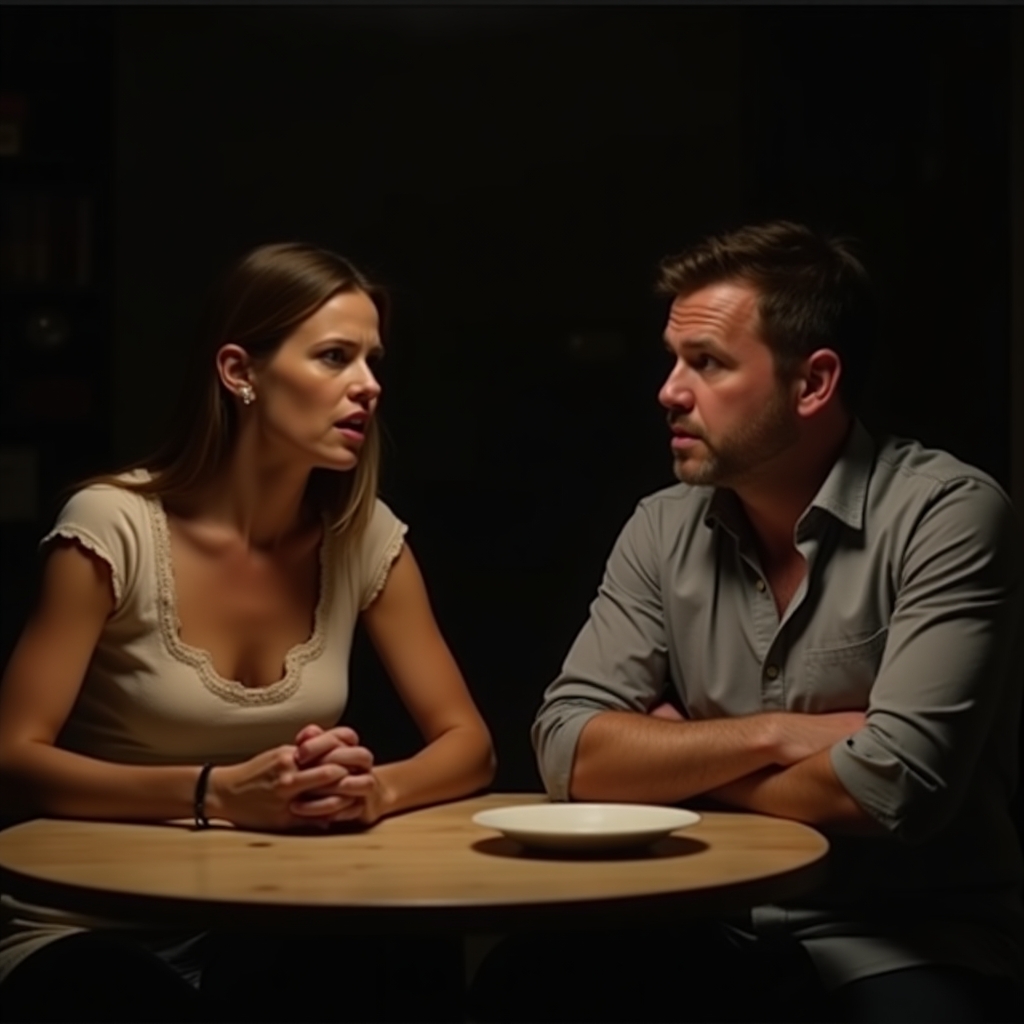





For years, she bent over backwards to please him, adopting every role he demanded—wife, mother, homemaker, confidante. But each day felt like pushing a boulder uphill, with her efforts met not with gratitude, but with expectation. Until one day, something inside her snapped.
Julia stood in their pristine kitchen, her fingers scrubbing furiously at an invisible stain on the countertop. Martin’s voice droned on from the living room, listing yet another chore for her to complete before their guests arrived that evening. “And don’t forget to iron my shirt after you’re done with everything else,” he added, as if it were a minor detail, his eyes glued to the football game.
She paused, her hands immersed in soapy water, and stared blankly at the sink. The steam from the hot water blurred her vision, but her clarity of thought had never been sharper. This life—her life—had become a series of tasks, a relentless loop of caretaking that revolved entirely around Martin’s needs and the children’s routines. Her wants and dreams lay buried beneath obligations.
“Julia!”
His voice cut through her reverie, impatient and sharp. She inhaled deeply, feeling the familiar stir of resignation in her chest, but this time it was lined with a steely resolve. “Martin, can we talk?” she asked, wiping her hands and turning to face him.
He barely glanced up. “Later, okay? I’m busy.”
“No, now,” she insisted, her voice firmer than usual.
Martin sighed heavily, clicking the mute button on the remote. “What is it?”
“I’m tired,” Julia began, choosing her words carefully. “Not just physically, but emotionally. I feel like I’m the only one putting in effort, and it’s not fair.”
He looked surprised, as if encountering an unfamiliar language. “What do you mean? I work hard every day.”
“Yes, you do,” Julia acknowledged. “But when you come home, my work doesn’t stop. I’m constantly keeping this house running, managing the kids, taking care of you. And I need you to recognize that. I need you to help me.”
Martin’s face hardened. “Are you saying I’m not doing enough?”
Julia felt the familiar sting of tears, but she refused to let them fall. “I’m saying we both need to do more as partners. I can’t keep sacrificing everything while you assume it’s just my role.”
The silence that followed was heavy, but in it, Julia felt a sense of liberation she hadn’t anticipated. It was the turning point she hadn’t known she needed—a declaration of her own worth and a challenge to Martin’s indifference.
The days that followed were a mix of awkward attempts at cooperation and tense discussions. Martin began to help with the evening meals and took the children to school in the mornings. It was small, but it was a start.
Julia’s heart felt lighter with each new day. She found time for herself, rekindling her love for painting—a passion long neglected. While their marriage remained a work in progress, standing up for herself had granted her a renewed sense of empowerment.
“We both deserve happiness, Martin,” she told him one quiet evening, as they sat side by side. “Let’s build it together.”
“Yeah,” he agreed softly, nodding. “Together.”
For the first time in years, Julia believed it might truly be possible.