
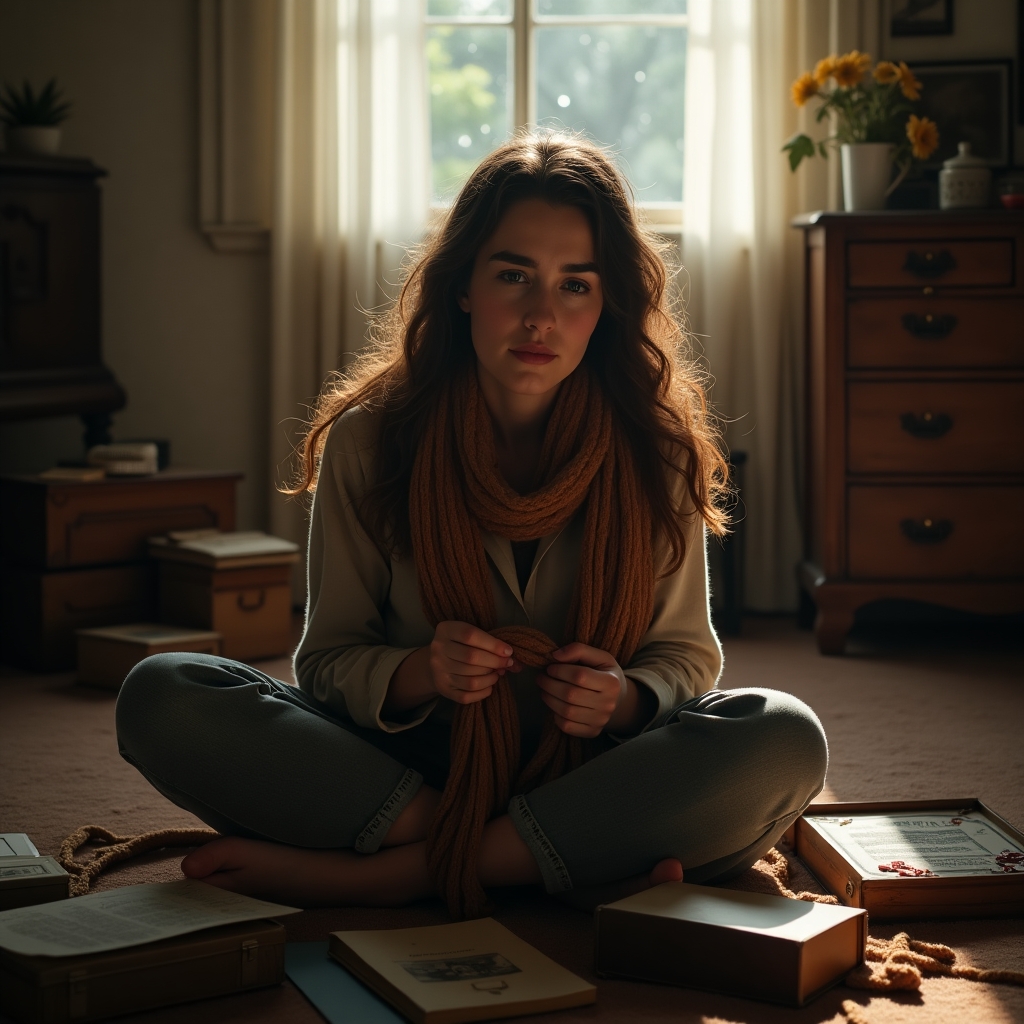


The quietude of the early morning enveloped the vineyard like a gentle embrace. Elara stood amidst the sprawling rows of grapevines, the dew from the leaves moistening her fingertips as she brushed them gently. This was her family’s legacy, a business spanning generations, each row of vines echoing with whispered stories of her ancestors.
From a young age, Elara was groomed to take over. Her father had expanded their vineyard, crafting his own blend that had become beloved by many. It was often said that the vines were a part of their very DNA, intertwining with their bloodline. Her future seemed predetermined, yet within her heart, Elara harbored dreams that conflicted with the path laid out before her.
She had always been drawn to the world of music, her soul resonating with melodies that unfurled stories as rich and complex as the wines her family produced. But the weight of expectation loomed heavily in her mind. The vineyard was not merely a business; it was her father’s life’s work, a testament to the dedication and resilience of the generations before her.
Elara found herself at a crossroad. The vineyard represented stability and familial pride, but the music spoke to her in a language that felt uniquely her own. She had pursued both as long as she could, studying oenology during the day, while allowing herself to indulge in songwriting under the cloak of night.
For years, Elara moved through this dual existence, but as her graduation approached, her father began to involve her more in the intricacies of the vineyard. He would often recount his dreams of passing on the legacy and expanding the business, his eyes filled with a glimmering hope. It was a future painted in the warm hues of the sun setting over the vast fields, a future she feared would swallow her own aspirations.
The tension within grew, though it was subtle, like the tight strings of a violin on the verge of producing a sound. She felt the quiet tremors in her chest, a pull between two identities that could not coexist. Her family was supportive in many ways, but the thought of disappointing her father, of not living up to the expectations, kept her voice silent.
One afternoon, as summer approached with its fragrant blossoms, Elara found herself sitting at the old wooden table on the terrace overlooking the vineyard. Her mother joined her, a gentle presence that seemed to understand without need for words. For a while, they sat together in silence, the rhythmic whisper of the wind through the vines a comforting backdrop.
“Elara,” her mother began softly, “you’ve been quiet lately.”
Elara nodded, her eyes fixed on the horizon where the vines met the sky.
“Is it the vineyard?” her mother probed gently.
Elara hesitated, the words tangling in her throat. “I just—I’m not sure if this is meant for me.”
Her mother’s gaze was steady, filled with a compassionate understanding. “You know, your father and I have always wanted you to be happy.”
“But doesn’t that mean continuing what you and Dad have built?” Elara asked, her voice barely a whisper.
Her mother reached for her hand, a reassuring warmth spreading through Elara’s fingers. “Your father’s hopes and dreams are his own, just as you have yours. We’ve always believed in building but that doesn’t mean you must follow in our footsteps exactly.”
The conversation lingered in Elara’s mind, providing a balm to her internal conflict. Her mother’s words were a tender reminder that the expectation she felt wasn’t an irrevocable command but perhaps more of an inherited habit.
In the days that followed, Elara allowed herself to imagine a life where she blended her passion with the legacy. She could explore music without feeling like she was betraying her family. Perhaps she could find a way to mesh both worlds, crafting a new role for herself within the vineyard while pursuing her music.
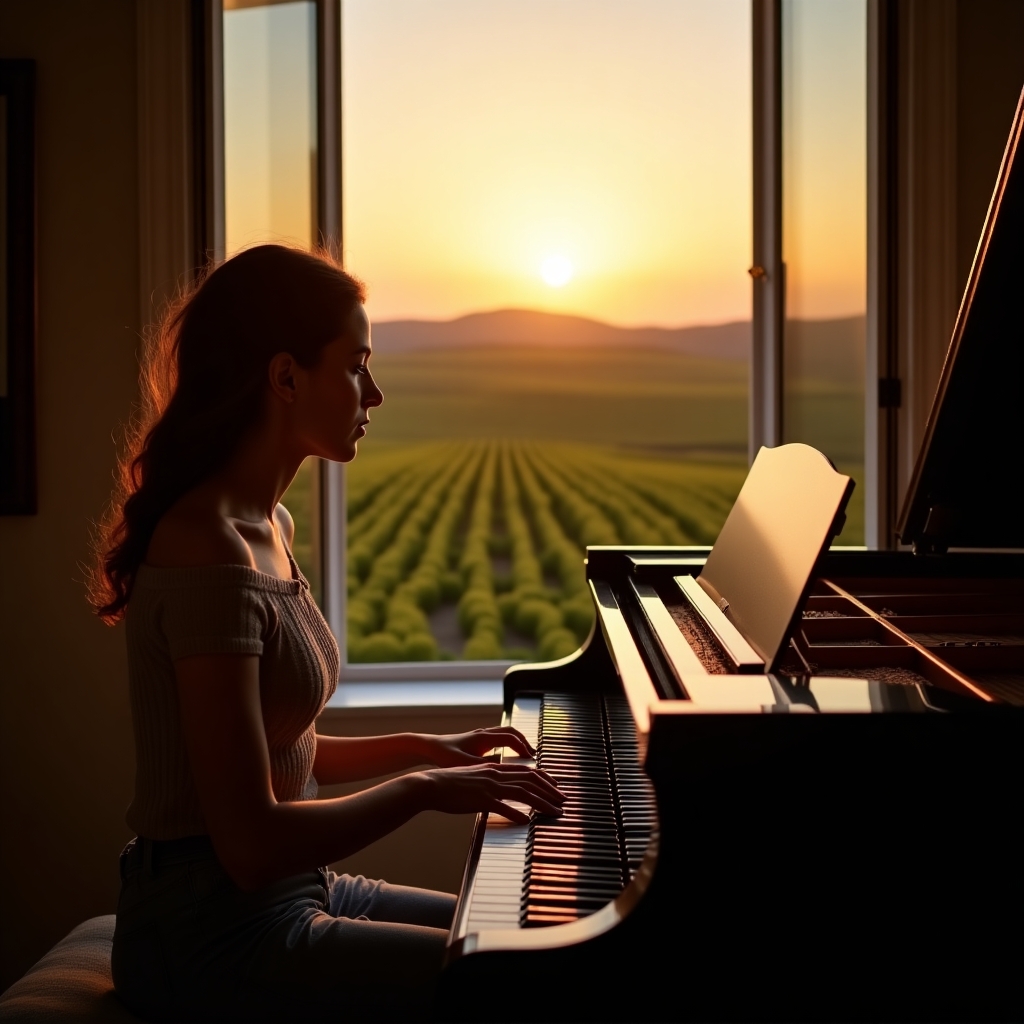
One evening, the vineyard bathed in the golden glow of the setting sun, Elara sat at the piano in the family’s living room. The notes she played drifted through the open windows, mingling with the sounds of nature. Her father entered, pausing to listen.
“That’s beautiful, Elara,” he said, his voice filled with an unfamiliar warmth.
Elara paused, turning to meet her father’s eyes. “Dad, I’ve been wanting to talk to you.”
In that instant, she understood that this was her moment of clarity. She knew the conversation would be difficult, but her heart felt lighter, buoyed by the realization that she could honor her own path while still respecting her family’s.
As she spoke, she found the courage to articulate her dreams, no longer suppressing her voice. Her father listened, his expression shifting from surprise to a quiet acceptance, and perhaps even pride as he recognized the strength in her honesty.
In the days that followed, Elara’s life began to take shape in a way she hadn’t fully envisioned. Her father, with some reluctance, began to see how her journey could be a continuation instead of a departure from the family’s legacy. And through this, Elara learned that loyalty to family did not mean the erasure of self, but rather an evolution.
The vineyard remained, its vines continuing to tell stories of the past while Elara’s music began to write new ones. Together, these narratives wove into a resonant tapestry that held both tradition and individuality in harmonious balance.