



Asha stood at the threshold of her bedroom, her eyes tracing the outlines of the walls she had known all her life. The fading light of dusk painted the room in deep, introspective shades, and she could hear the muted chatter of her family from the living room below. It was a sound that signified warmth and belonging, yet today, it felt like a distant echo, unreachable and unfamiliar.
Raised in a family of high expectations and deep cultural roots, Asha had always walked the fine line between self and duty. Her parents had charted a path for her, one paved with stability and respectability, as envisioned through their immigrant dreams. She appreciated all they had sacrificed and understood the love behind their desires. Yet, there was a voice within her, a whisper that grew louder with each passing day, urging her to break away and pursue a life of her own choosing.
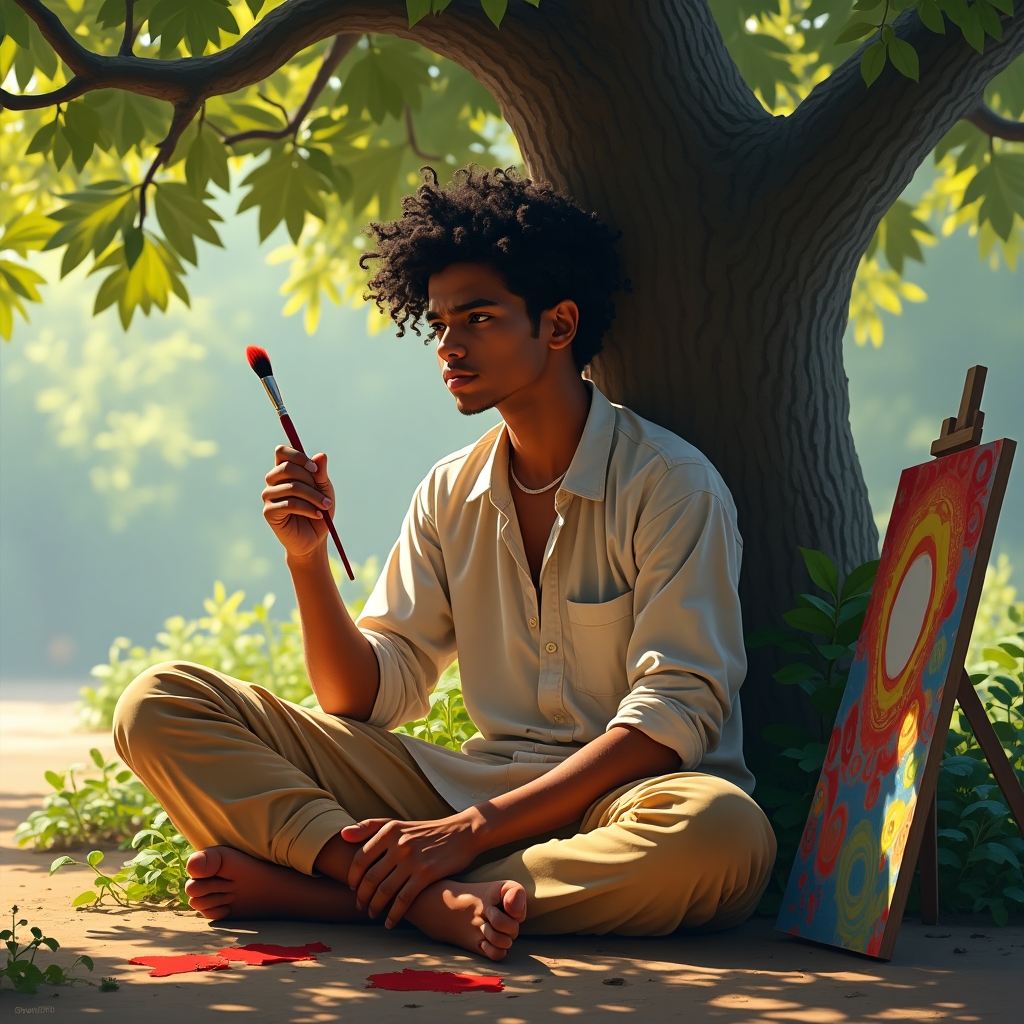
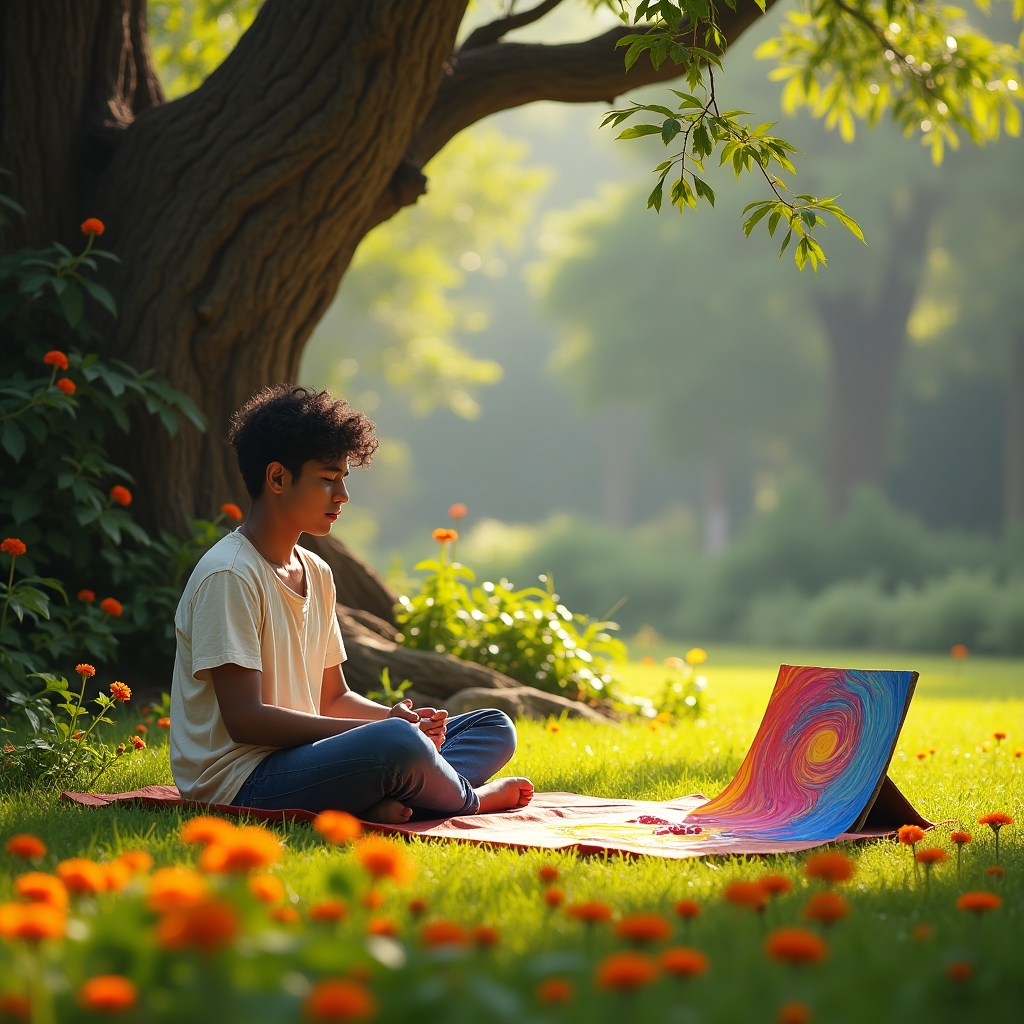
Asha’s passion lay in art— a realm of colors and emotions where she felt most alive. She had discovered this love in a high school art class, where the world was distilled into a canvas and she, the creator of her universe. Her parents, however, viewed art as a hobby, a pastime, something to be pursued only when the real work of life was done.
With a sigh, she approached her desk cluttered with sketches, each a fragment of her soul. Her latest piece lay unfinished, a testament to her internal conflict. She wanted desperately to complete it, to pour everything she felt into it, yet her father’s words from their last conversation echoed in her mind, reminding her of the family’s expectations. “Asha, you need to focus on your studies. A career in law or medicine, that’s where the future lies,” he had said with gentle insistence.
As the days turned into weeks, Asha found herself increasingly caught in this silent war between dreams and expectations. She attended lectures, diligently taking notes and participating in discussions, but her heart was elsewhere. Every evening, she would return to the sanctuary of her room and lose herself in her sketches until she fell asleep, pencil in hand. It became her secret rebellion, a quiet defiance against the life mapped out for her.
The subtle tension grew, a quiet storm beneath the surface, unseen but ever-present. She began to withdraw, her smiles less frequent, her laughter subdued. Her parents noticed but attributed it to the rigors of university life. Yet Asha knew the truth—she was slowly losing herself.
Then, on one ordinary afternoon, as she walked through the university campus, something shifted. She stumbled upon an art exhibition held by the Fine Arts department. The vibrancy of the paintings called out to her, each piece a voice of its own. As she wandered through the gallery, she felt a connection she hadn’t known before, a sense of belonging in a world she had only dared to visit in her dreams.
It was in front of a particularly striking painting—a chaotic swirl of bold colors, portraying both struggle and liberation—that clarity dawned. She saw herself in the riot of hues, a soul fighting to break free. In that moment, Asha understood that the person she was meant to be could not be confined, not by cultural expectations, nor by filial duty. The realization was gentle, like a soft breeze lifting her heart, clarifying her path.
Returning home, Asha felt an unusual calm settle over her. She knew what she had to do, even if the path was fraught with uncertainty. She approached her parents with a mixture of trepidation and newfound resolve, her heart pounding yet steady. As she spoke, her voice was firm, her words unyielding yet respectful. She explained her passion, her dreams, and her need to follow her own path. It was a conversation layered with emotion, the words woven with her love for them and her need for self-expression.
The room was silent when she finished, her parents’ faces a blend of surprise and contemplation. They hadn’t truly understood the depth of her passion until now, hadn’t realized the quiet storm that had been brewing within her.
In the quiet that followed, Asha felt a weight lift from her shoulders, replaced by a lightness that came from speaking her truth. She knew her journey ahead would be challenging, but she had taken the first step towards herself.
Her parents’ acceptance did not come immediately, but over time, they began to see her happiness and understood. It was a gradual healing, a bridge slowly built between two worlds. Asha learned that courage could be gentle, that loyalty could extend to oneself, and that healing could be a shared journey.
She found her place in the world, between tradition and self, family and individuality. And in her art, Asha found herself whole.