



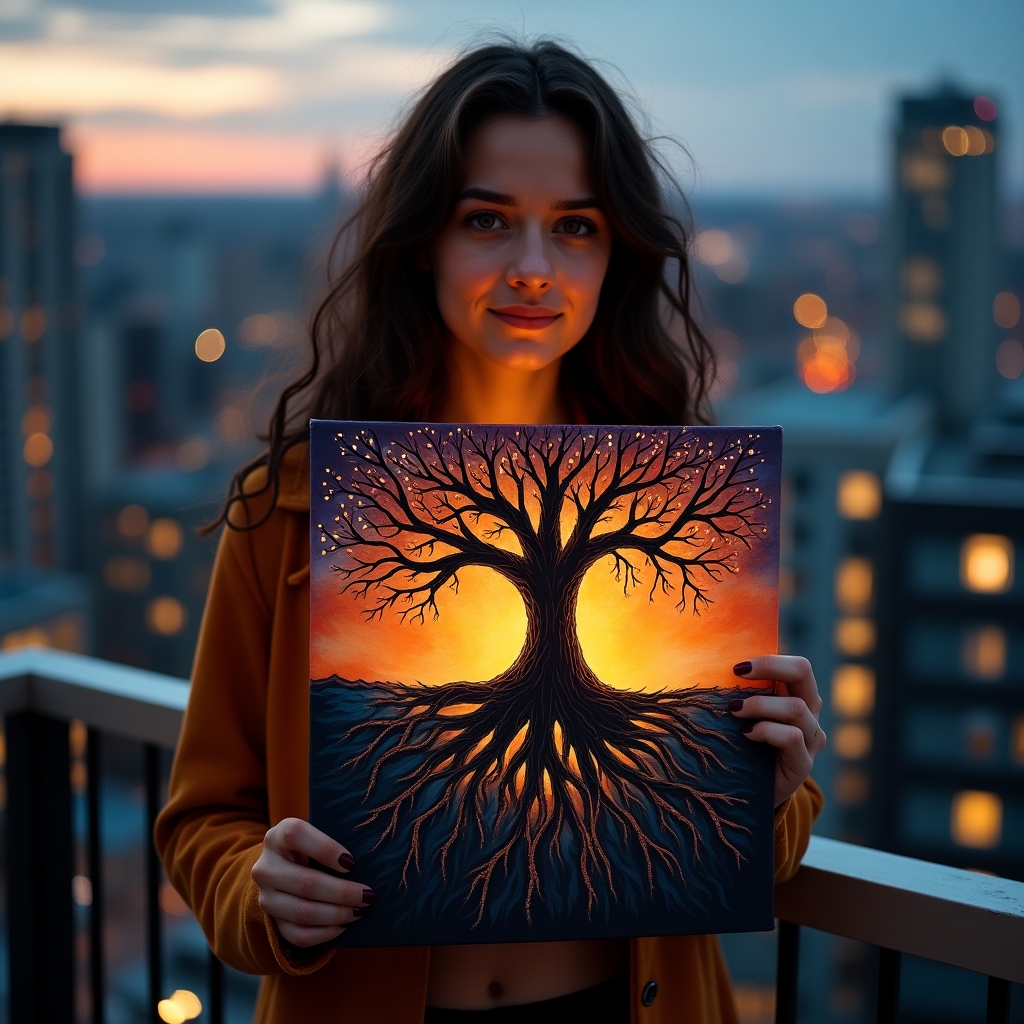
Ayesha stood on the balcony of her family’s apartment, watching the cityscape flicker to life as dusk settled over the rooftops. The air was rich with the scent of jasmine and street food, and down below, the rhythmic hum of traffic was interspersed with the distant laughter of children playing. Here, amid the familiar chaos of her urban neighborhood, Ayesha felt both anchored and adrift.
Raised in a tight-knit South Asian family in the heart of a bustling Western city, Ayesha had always been acutely aware of the cultural dance required to navigate her dual identities. Her parents often spoke of their homeland with a reverence tinged with nostalgia, weaving tales of simpler lives and generations of family unity into every family gathering. Yet, outside the walls of their home, Ayesha found herself drawn to the vibrant tapestry of cultures and ideas that her city offered.
Despite her love for her family and their traditions, Ayesha often felt a quiet, persistent tug at the edges of her heart, a longing for a deeper sense of self beyond the roles she was expected to play. Her parents, while supportive, held a vision for her future that was as clear as it was unyielding: education, a respectable career, and eventually, a marriage that would hold the lineage and values of their culture intact.
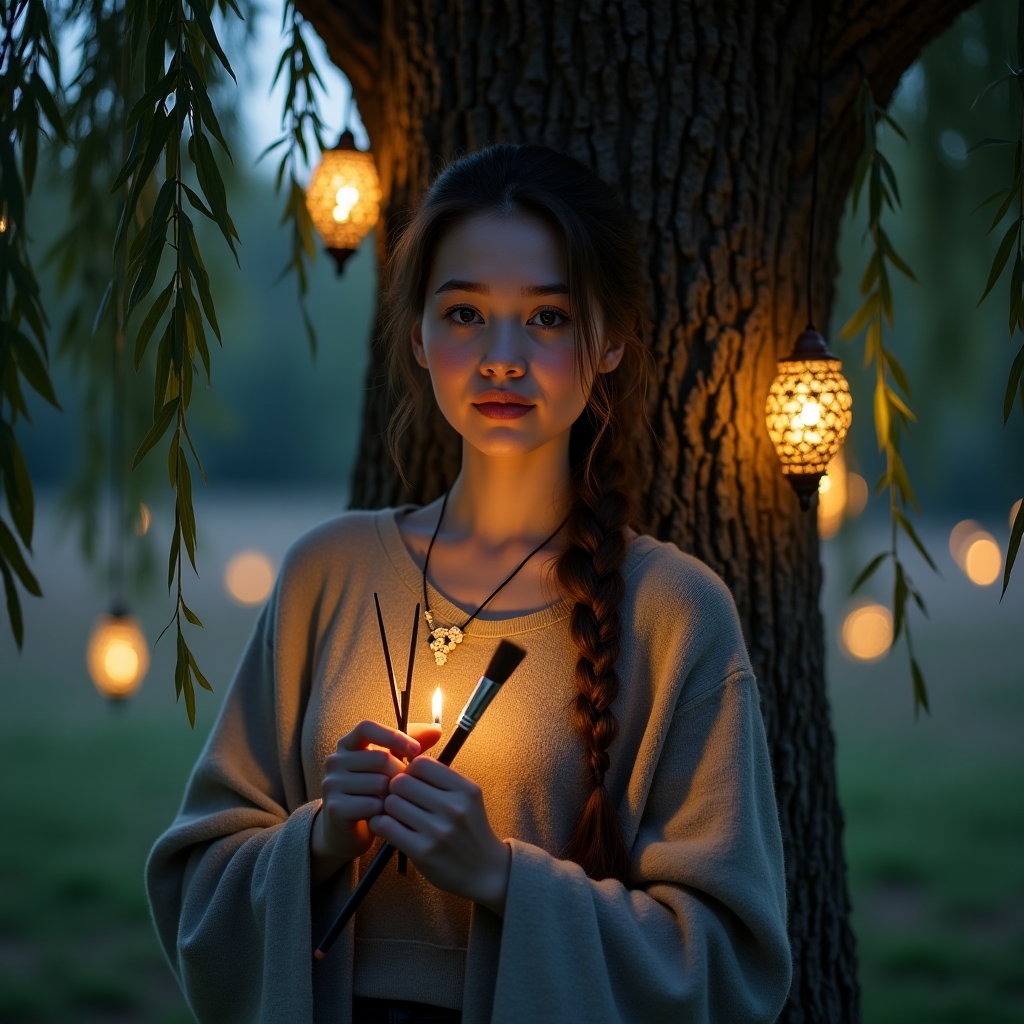
Ayesha, however, found herself dreaming of something different. She had fallen in love with painting during her last year of high school, and since then, expressing her thoughts and emotions through art had become her secret refuge. It was a world she had yet to share with anyone, a private gallery of her most honest visions.
The tension between her internal desires and external responsibilities was a constant undercurrent in her life. Each decision seemed weighted with expectations—both spoken and unspoken. Every family dinner was laden with subtle inquiries about her studies and veiled suggestions about suitable career paths. It wasn’t that Ayesha didn’t appreciate the values instilled in her; rather, she feared losing herself in the process of upholding them.
One evening, as Ayesha sat cross-legged on her bedroom floor, surrounded by tubes of paint and unspoiled canvases, she felt the familiar pull of indecision. Her father had recently arranged a dinner with a family friend who worked in finance, a clear nudge towards a future Ayesha had no desire to pursue. Yet, the prospect of disappointing her parents was a heavy burden.
Ayesha picked up a brush and let the colors flow freely across the canvas, each stroke a dialogue with herself. Her mind wandered as she painted—a swirling landscape of contradictions and dreams, of ancestral roots and personal blossomings. The act of painting was both a solace and a statement, a quiet defiance against the mold she felt she was expected to fit.
The moment of clarity came quietly, as most profound realizations do. As she added the finishing touches to her latest piece, a sensation of calm washed over her. The canvas depicted a large tree, its roots intertwined with city streets while its branches reached for the sky, a perfect metaphor for her life. She realized then that her identity didn’t have to be split between two worlds; it could be a bridge that connected them.
It wasn’t about choosing between tradition and self-discovery, but about integrating the two into a cohesive whole. Her life could be a canvas where her values and aspirations were not at odds but rather parts of a harmonious composition.
This newfound clarity lent Ayesha the courage she needed. She resolved to speak to her parents, not with the intent to rebel against their wishes, but to share her truth. She wanted them to understand that her passion for art was not a rejection of their values but a personal truth that enriched her life and, by extension, theirs.
As she stood in front of her parents’ bedroom that night, her heart pounded with apprehension but also with a newfound determination. Ayesha knew the journey ahead would be delicate, but she was ready to walk it, armed with the understanding that her truth could coexist with her upbringing. It was a step towards becoming not just their daughter, but her own person, too.