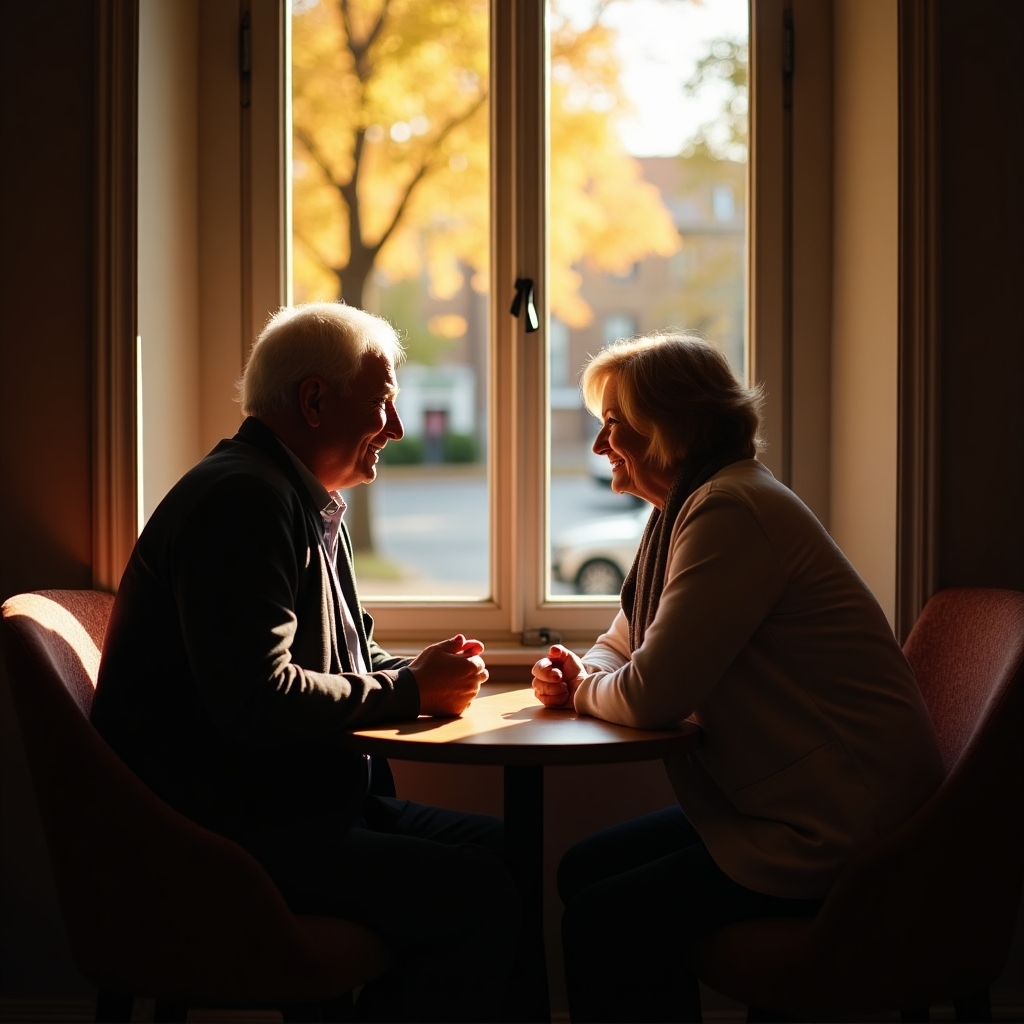

Claire sat at the kitchen table, her fingers tracing the grain of the wooden surface as if seeking answers in its patterns. It was a Sunday afternoon, the sunlight slanting through the window with an almost intrusive brightness that seemed at odds with her mood. Mark was in the garden, ostensibly trimming the hedges, though she hadn’t heard the snip of shears for some time.
It had started with small things. Misplaced keys, forgotten anniversaries—mundane, perhaps, but collectively unsettling. Claire had joked to her friends that Mark was getting forgetful, but she noticed they hesitated before laughing, as if there was an unspoken agreement that something was off.
She thought back to a week ago when Mark had come home late, his usual warm greeting replaced by a distracted nod. “Sorry, busy day,” he had mumbled before retreating into the study. The door closed with a softness that was somehow more final than a slam.
More often now, Mark seemed to drift away during conversations, his responses mechanical. Claire would ask about his day, and his stories were consistent to a fault, polished but lacking in substance, like a well-rehearsed script.
The incidents accumulated in Claire’s mind, like drops forming a puddle. One evening, she found herself alone in the living room, the TV casting flickering shadows. She had turned to ask Mark a question, only to realize he hadn’t been home for hours. She hadn’t even heard him leave.
As the days passed, her unease morphed into suspicion. She began to notice other inconsistencies: a receipt from a café they never visited, the subtle scent of a perfume not her own lingering on his clothes. When questioned, Mark’s explanations were plausible, yet left her feeling hollow.
A part of her resisted digging deeper, fearing what she might find. Yet, another part of her was driven by the need to know if their reality was as it seemed or just a façade.
One evening, after Mark had retired early claiming exhaustion, Claire found herself in his study. She stood before his desk, hesitating, the air heavy with the implications of violation. Her fingers brushed across papers, and suddenly there it was—a journal, the cover worn and edges frayed.
With a pang of guilt, she opened it. The entries started out mundane, mirroring their life. But as she delved further, they deviated into a world she didn’t recognize. There were references to meetings, places, and people she didn’t know. A name appeared frequently—Elena.
The journal chronicled a life lived parallel to hers, with emotions and events she was excluded from. Claire felt the ground beneath her shift, as if the foundation of their years together was disintegrating.
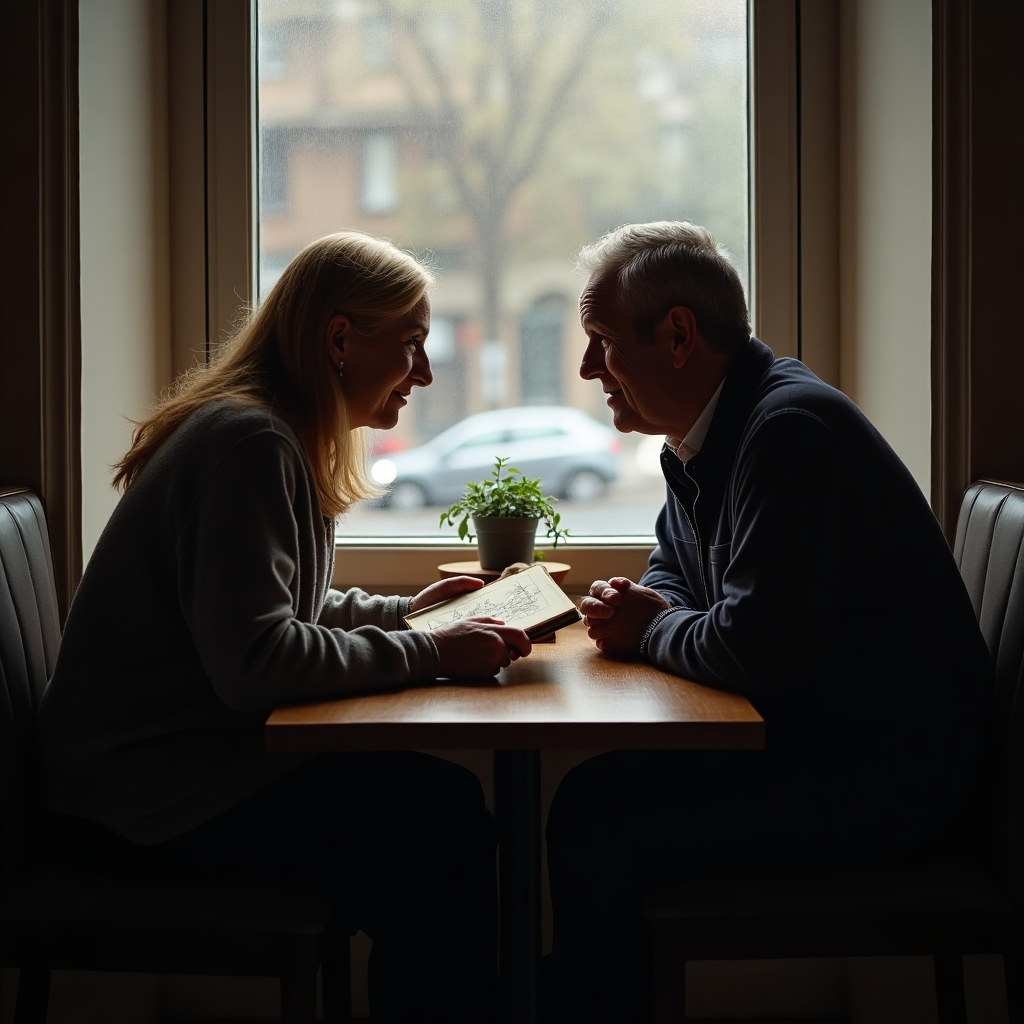
Confronting Mark wasn’t a decision made lightly. She approached him one evening as he sat in the kitchen, the room dimly lit by a single lamp. Her heart raced, a drumbeat of anxiety as she laid the journal before him.
“I found this,” she said, her voice steady but low.
Mark’s eyes flicked to the journal, and for a heartbeat, a myriad of emotions flashed across his face—surprise, fear, and something Claire hadn’t expected: relief.
“Claire,” he began, his voice tinged with resignation and a touch of sorrow. “I wasn’t sure how to tell you.”
The truth unraveled slowly, like the peeling of layers from an onion. Mark hadn’t been unfaithful in body, but in soul. Elena was a dream, an ambition, a woman who symbolized all he longed for but couldn’t voice—freedom, creativity, a self he had stifled in the pursuit of practical obligations.
The journal entries were letters to himself, an outlet for his frustrations and dreams. The gaps in his stories, the emotional silence, were manifestations of an internal struggle rather than an external betrayal.
Claire listened, her emotions swinging from hurt to understanding, betrayal to empathy. In the end, it wasn’t a choice between leaving or staying, but about what they could build from the ruins of their past.
As the weight of truth settled, they sat in silence, the air between them heavy with possibility. Maybe this was their chance to rebuild, to emerge not as fractured halves, but as partners who understood the depths within each other.
The ending was neither clearly resolved nor utterly broken. It was the beginning of an understanding that real love, like a garden, required tending, honesty, and the courage to face the unseen.