



From the outside, Eleanor Davis seemed to live an enviable life—a cozy home, a steady job, and a tight-knit family. But beneath the veneer of domestic tranquility, Eleanor felt like she was slowly fading, her true self diluted by years of subtle emotional suppression, primarily orchestrated by her mother, Margaret.
Eleanor’s days were a series of transactions that required careful negotiation of unspoken expectations. Every Saturday, Eleanor drove to her mother’s house. Her mother never overtly demanded her presence, but the guilt woven into every syllable of her voice whenever Eleanor suggested a different plan left little room for dissent.
At thirty-four, Eleanor lived alone in a modest apartment with her dog, Max. Her evenings were spent in the quiet company of books and the occasional TV show. These were the moments she cherished—the silence a refuge from the constant hum of her mother’s voice, echoing in the background of her life.
One chilly autumn afternoon, as leaves danced their final spirals to the ground, Eleanor sat in her mother’s living room. The room had an air of oppressive neatness, every picture frame and knick-knack meticulously arranged. Margaret sat across from her, knitting, her eyes occasionally darting up to scrutinize her daughter.
“You should really consider settling down, Eleanor,” Margaret remarked without looking up. “It’s just not right for a woman your age to be alone.”
Eleanor forced a smile, a well-practiced response. “I’m happy with where I am, Mom.”
Her mother sighed, a sound heavy with disappointment. “Happy? What if something happens to me? Who will you have then?”
This dialogue was a well-worn path, each word a stone Eleanor had tripped over countless times. Inside, a small part of her wished to push back, to declare her independence, but the words caught in her throat, tangled in invisible chains.
The following week, Eleanor found herself at a local bookstore, one of her safe havens. As she wandered the aisles, she stumbled upon a self-help book about boundaries and self-assertion. The title, “Your Voice Matters,” seemed to leap off the shelf. Impulsively, she purchased it.
Each night, Eleanor read a chapter before bed. The book spoke of reclaiming one’s voice, of the subtle art of saying “no” without guilt. With each passage, she felt a shift, a slight but perceptible loosening of the chains that bound her.
One evening, after finishing a particularly resonant chapter, Eleanor decided to speak to her mother about an upcoming family gathering. Margaret had already planned Eleanor’s attendance, assuming as always. But this time, Eleanor hesitated.
“Mom, I’ve been thinking,” Eleanor began, her voice tremulous. “I’d like to spend this weekend at home. I need some time for myself.”
Margaret’s knitting needles paused mid-air. “But everyone will be there, Eleanor. You can’t just not come.”
“I know, but I need this,” Eleanor replied, her voice steadier now. “I’ve been feeling overwhelmed, and I think some space would do me good.”
Margaret’s expression shifted, a flicker of confusion passing over her features. “Are you upset with me? You know I worry about you.”
Eleanor took a deep breath. “I’m not upset, Mom. I’m just trying to take care of myself.”
The conversation ended with Margaret sighing heavily, but Eleanor felt a small spark of liberation, a seed of change sown in the fertile ground of her resolve.
In the following weeks, Eleanor continued to carve out spaces of autonomy, small acts of rebellion that gradually reshaped the contours of her life. She began attending a weekly yoga class, something she’d wanted to do for years but never found the time for—or rather, never allowed herself the time for.
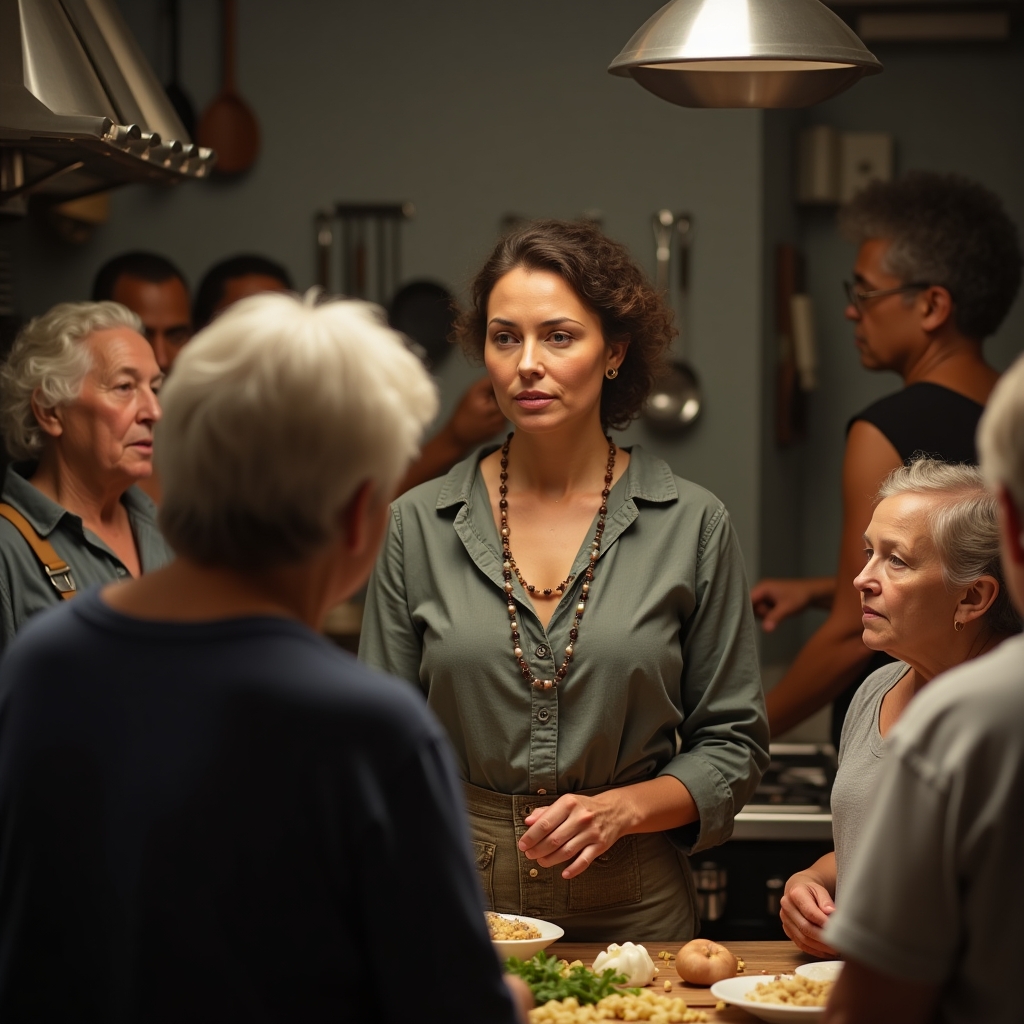
The real turning point came during a family reunion, where Eleanor was expected to help with organizing. Naturally, her mother had delegated tasks without consulting her. As she stood amidst bustling relatives, Eleanor felt the old familiar anxiety rise. It was in that moment, standing in the kitchen with bowls and utensils clattering around her, that she knew she had to reclaim herself.
“Mom,” Eleanor called, pulling Margaret aside. “I need to speak with you.”
Margaret looked up from the chopping board, surprised by the urgency in Eleanor’s tone.
“I’m stepping back from organizing this year,” Eleanor said, her voice unwavering. “I need a break, and I want to enjoy the reunion without feeling obligated.”
Margaret’s brow furrowed. “But Eleanor, everyone’s counting on you.”
“I know, but I need to count on myself too,” Eleanor replied softly but firmly.
The noise of the busy kitchen dulled to a distant hum as Eleanor and her mother stood still in the middle of it all. Eleanor’s heart raced, but her resolve was steady, her newfound strength a quiet, powerful force.
In that moment, Eleanor reclaimed her autonomy, a small act of liberation that heralded a broader transformation. She wasn’t sure if her mother understood the depth of this shift, but it no longer mattered. Eleanor was learning to trust her own voice, and that was enough for now.
The days that followed weren’t perfect, but they were hers to shape. Each decision, whether significant or trivial, became a brushstroke in the landscape of her reclaimed self.
Life continued, the ebb and flow of relationships shifting with Eleanor’s newfound boundaries. But finally, beneath the quiet waters of her existence, a vibrant current of self-determination ran strong and clear.