
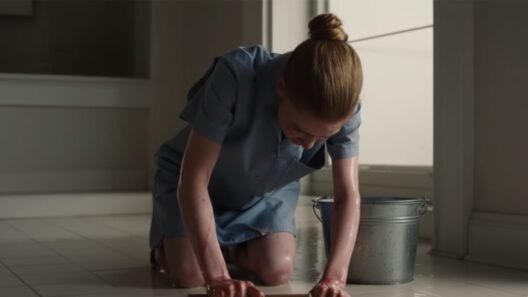
Lena sat on the worn leather sofa, the room around her still as the early autumn rain tapped softly against the windows. The house was quiet, too quiet, and it allowed her thoughts to unfurl in the silence — thoughts she’d long since learned to suppress.
“Dinner’s ready,” her husband’s voice called from the kitchen. Peter was always efficient, pragmatic, and had a way of making even the simplest of tasks sound like they were part of some grand orchestrated plan. She replied with a muted acknowledgment, her voice barely rising above the rhythmic patter outside.
The dining table was set, neat and organized, every object in its place as though curated for a catalogue. As usual, Peter had made a simple meal: grilled chicken, steamed vegetables, and a quaint salad. Sitting across from him, Lena noticed the small details; the way he’d aligned the cutlery with precision, the napkins folded just so. It wasn’t oppressive, just typical — an echo of their life together.
“How was your day?” he asked, eyes fixed on his plate. This was a daily ritual, a performance where the script neither changed nor surprised.
“It was fine,” Lena replied, knowing full well that “fine” was the safest word to use. Fine was neutral, fine didn’t draw attention or invite further inquiry.
As they ate, the rain grew heavier, a dull roar that filled the space between them. Lena listened to it, letting it drown out Peter’s voice as he talked about his latest project at work. She nodded in the right places, made the appropriate sounds of encouragement, yet inside, she was miles away.
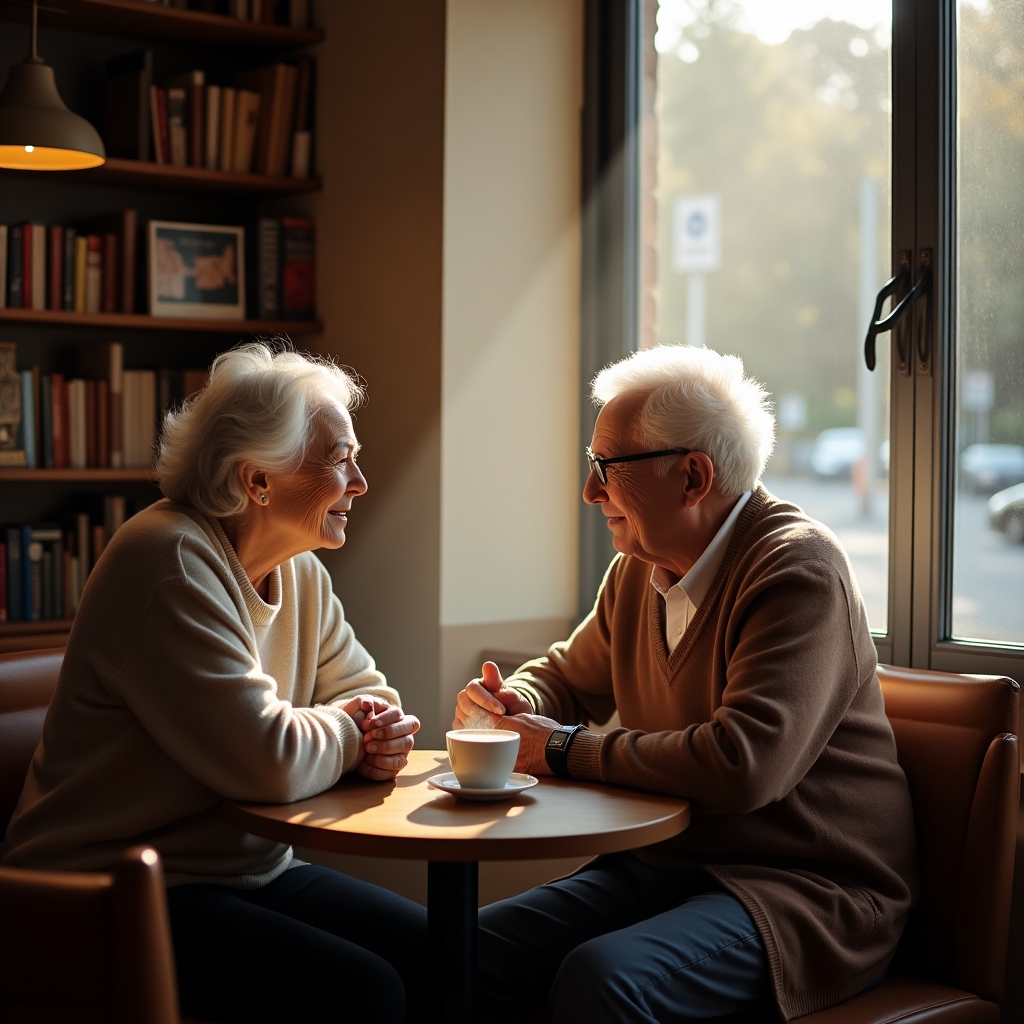
It had been her sister, Elise, who had first planted the seed of doubt in Lena’s mind. One rainy afternoon, not unlike this one, they’d been caught in town without umbrellas. They’d sought refuge in a small café, the kind with mismatched furniture and a menu handwritten in chalk. Over steaming mugs of herbal tea, Elise had leaned in, her voice gentle yet probing.
“Do you ever feel like you’re living someone else’s life?” Elise had asked, her gaze steady.
Lena had laughed it off then, dismissing it as nonsense, but the question lingered, simmering beneath the surface of her consciousness.
Tonight, as she cleared the table after dinner, Lena found herself at the kitchen sink, staring out at the dark, rain-swept garden. The glass reflected a different version of herself, one she barely recognized — a woman grown weary of being someone else’s echo.
The moment of change was subtle, almost imperceptible. Peter announced he was going to bed early, engrossed in one of his many routines. Lena nodded, watching him ascend the stairs. Alone, she lingered in the kitchen, her hand still clutching a dish towel, her heart beginning to pulse with a newfound rhythm.
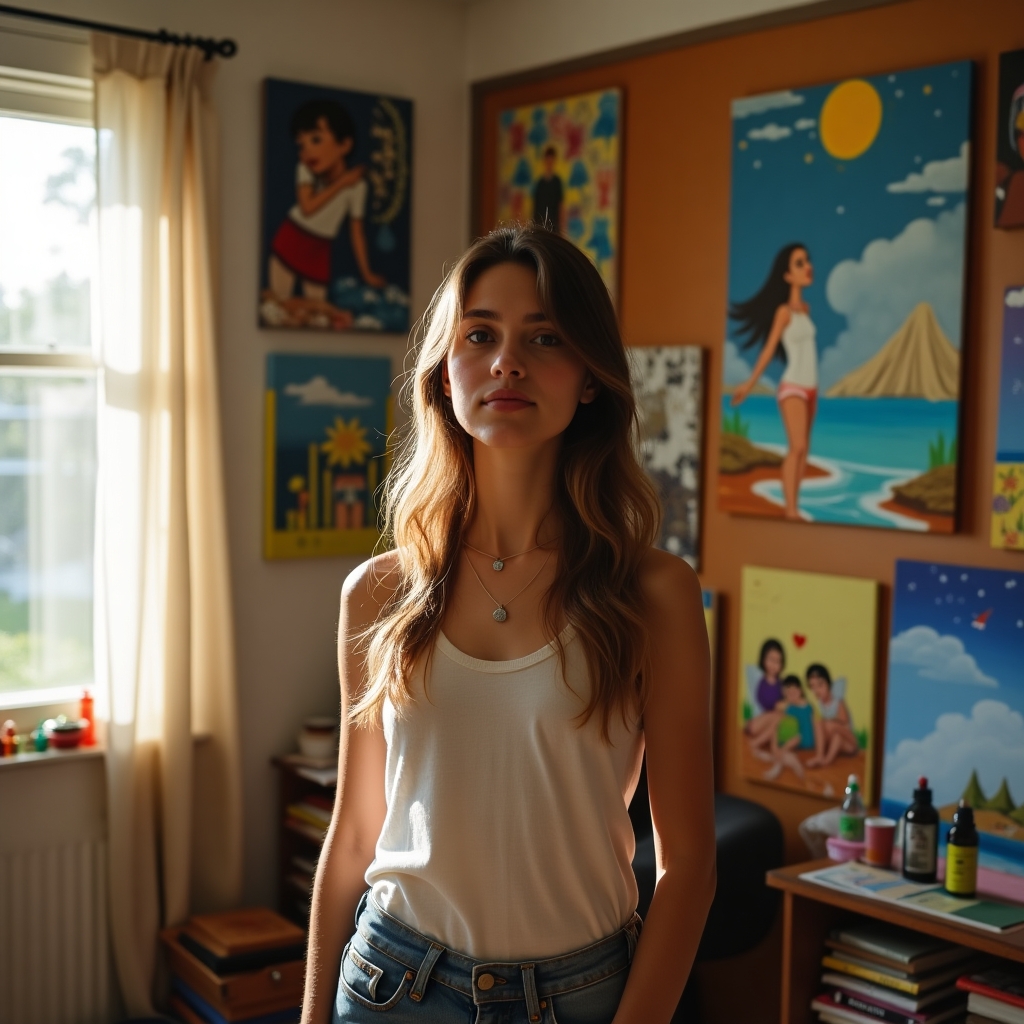
In the small drawer by the sink, beneath the usual clutter, lay an old, forgotten sketchbook. She’d bought it years ago, back when she allowed herself to dream of the bold, colorful strokes she could create. Pulling it free, she felt a spark, something she hadn’t felt in years.
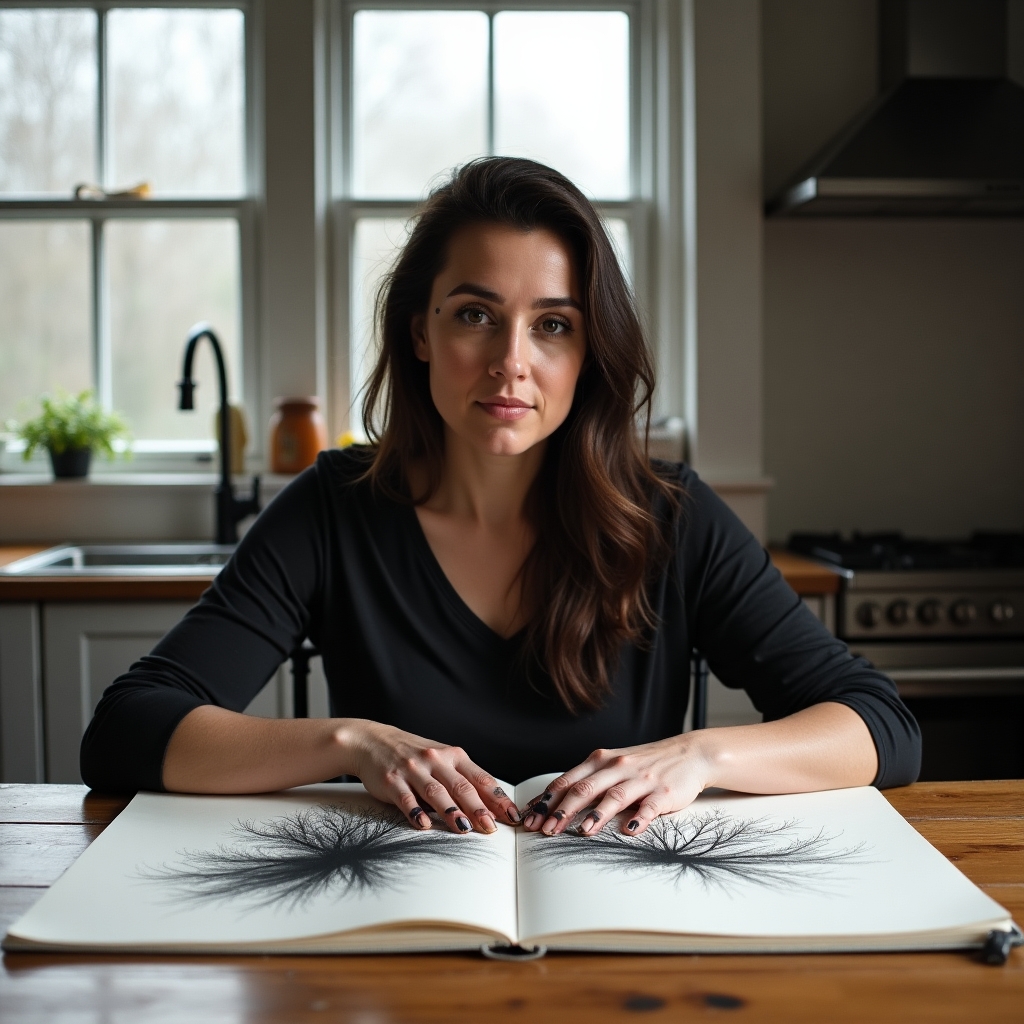
Lena turned on the radio, low enough not to disturb, and sat at the table. Flipping open the sketchbook, she marveled at the untouched pages, their stark white surfaces promising something new. Slowly, deliberately, she picked up a pencil and began to draw.
The hours slipped by unnoticed. The rain continued its symphony, now a comforting backdrop to the scratching of pencil on paper. With every line, Lena felt lighter, as though each stroke liberated a fragment of her soul trapped beneath layers of imposed identity.
When she finally looked up, the room was bathed in the soft glow of morning light filtering through the rain-streaked windows. Her hands were smudged with charcoal, her fingers aching with the satisfying burn of creativity unleashed.
Just then, Peter descended the stairs, his usual routine disrupted by the sight of her at the table, the sketchbook open and alive with images.
“What are you doing?” he asked, a mixture of surprise and confusion playing across his features.
Lena looked at him, really looked at him, and for the first time, felt no need to apologize. “I’m drawing,” she said, her voice steady, firm. “I used to draw before… before everything else.”
He nodded slowly, not quite understanding, but sensing the change in her. “Alright,” he said after a pause, and then, more gently, “Do you want some coffee?”
Lena smiled, a genuine smile that lit up her face. “I’d love some,” she replied, and as Peter moved to the kitchen, she returned to her drawing, knowing she would never stop again.
The rain had ceased, leaving behind a world refreshed, as if cleansed of its old dust and debris. In that moment, Lena knew she was free.