




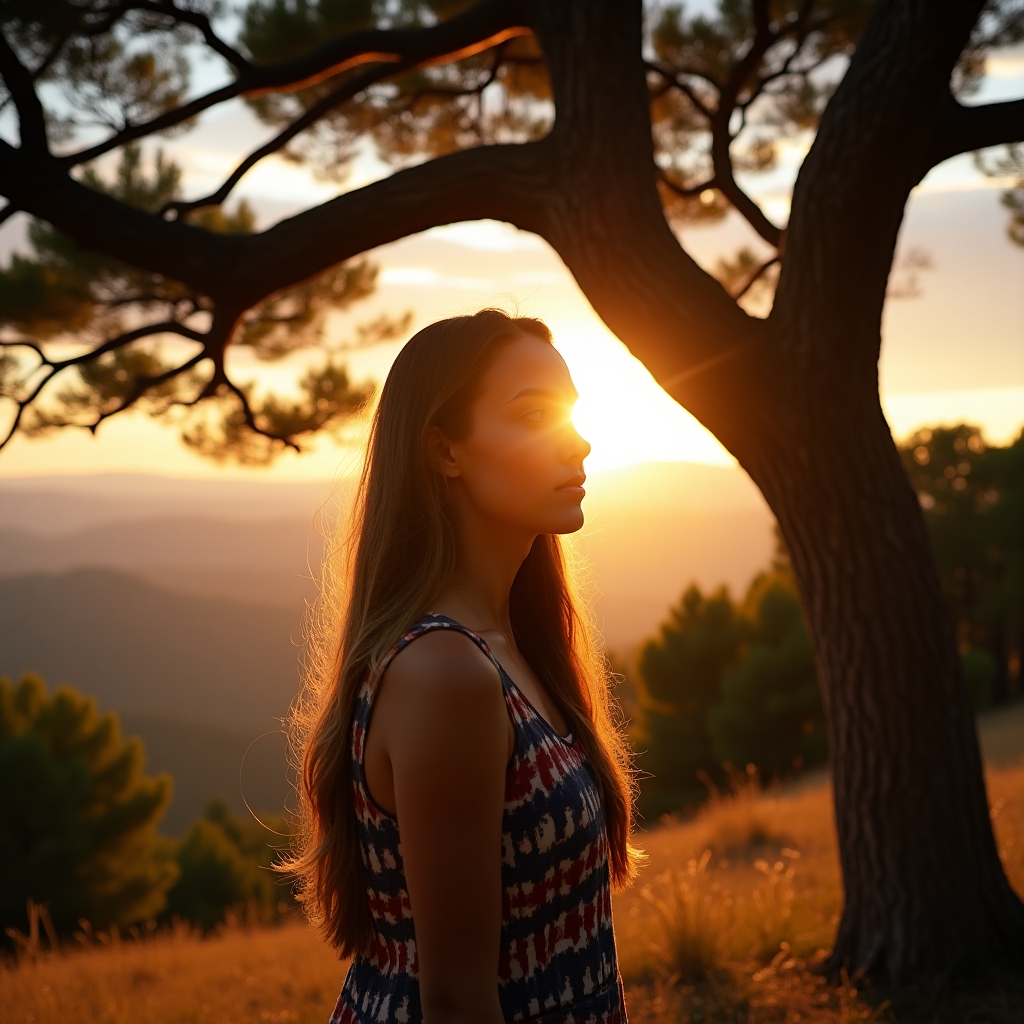
The wind whispered through the tall cedars that bordered the village, their ancient trunks standing watch over the generations that had come and gone. To Maia, these trees were both a comfort and a reminder of the roots that bound her to her family and their expectations. At twenty-two, she found herself at the cusp of a life she had dreamed of but never dared to chase.
Maia’s days were filled with the rhythms of village life, each day echoing the last. She worked diligently in her family’s small shop, weaving intricate patterns into the textiles that were a hallmark of their village. Her hands moved expertly, guided by years of practice and the quiet hope of approval, while her heart ached for the stories left unwritten, the paths untaken.
Her parents were kind but firm, their lives shadowed by the legacy they inherited and intended to pass on. Maia was expected to marry soon, to a family friend who symbolized stability and continuity. Yet, as much as she cared for him, she could not reconcile this union with the quiet yearning that spoke of a different life, one where her voice was heard beyond the gentle confines of the village.
The pressure was subtle yet omnipresent, woven into the fabric of her daily existence. Conversations were punctuated with gentle reminders of her duty, her role, her future as foreseen by others. It was as if the weight of her ancestors whispered through those cedar trees, reminding her of her place in an unbroken chain.
Maia’s refuge was the small library nestled at the edge of the village, a sanctuary of stories that transported her to worlds where she was free. It was here, amongst the pages, that she felt the stirrings of rebellion. She read of explorers and dreamers, of those who had broken with tradition to carve new paths. The library keeper, a gentle soul named Anira, often found Maia lost in thought, her fingers tracing the spines of well-loved books.
“You have a heart for more, Maia,” Anira would say, her eyes filled with understanding. Still, even Anira’s encouragement was a whisper against the roar of familial expectation.
Quietly, Maia wrestled with her desires and fears, each day a dance between compliance and authenticity. She often walked the forest paths, seeking clarity amidst the rustling leaves, her thoughts as tangled as the roots beneath her feet. There was solace in the solitude, in the slow unfolding of the seasons that reminded her of life’s constant ebb and flow.
One evening, as the sun dipped below the horizon and the world grew still, Maia climbed the hill overlooking the village. The cedar trees swayed, their murmurs a song of the past and a promise of what could be.
In this moment, a memory surfaced unbidden—her grandmother, a woman of wisdom and quiet strength, had once told her, “Our duty isn’t a cage, but a choice.” Maia’s heart quickened at the realization that her path could honor both her heritage and her own truth.
It was as if the world paused, holding its breath as she breathed deeply, grounding herself in the present. The tension within her eased, replaced by a sense of resolve. She understood then that courage was not the absence of fear, but the decision to act despite it. She would speak her truth, not in defiance but in hope of understanding.
Returning to the village, Maia felt a lightness she hadn’t known before. She was no longer merely woven into a tapestry of expectations; she was a thread with the power to weave a new story.
The next day, she approached her parents, her heart steady. “I love our family, our traditions,” she began, her voice carrying the weight of both past and future. “But I need to find my own way, in my own time.”
Her parents listened, their expressions softening as she spoke. There was a pause, a moment suspended in time where the air was thick with possibility. Then, her father nodded, a slow, deliberate gesture that spoke of understanding and release.
“We want you to be happy, Maia,” her mother whispered, her voice a balm to Maia’s soul.
The cedars swayed gently in agreement, their whispers now a song of acceptance and new beginnings. Maia felt a deep peace settle within her, a quiet assurance that she could honor her roots while growing towards the light.
In the days that followed, the village buzzed with its usual energy, yet Maia moved through her world with newfound clarity. Her steps were lighter, her heart open to the possibilities that lay beyond the familiar paths. She was not leaving; she was expanding, her journey a tapestry of tradition and transformation.
Through the cedars’ whispers, she heard her own voice clear and strong, a melody that would guide her as she dared to dream, to wander, and to return—always to those she loved.