



In the heart of a bustling city adorned with neon lights and incessant chatter, Sofia navigated through the winding alleys that led to her family’s modest apartment. She moved with purpose, her mind a tumultuous sea of thoughts that mirrored the chaos of the streets. For Sofia, every step she took was a dance between worlds—the one she was born into and the one she yearned to create for herself.
Her family had emigrated from a small village, bringing with them traditions and values as old as the hills they left behind. Sofia’s parents, particularly her mother, held onto these customs like lifelines, their fingers gripping tightly even as the world around them changed. Sofia respected this reverence, but she often felt suffocated by it.
As she entered the apartment, the familiar scent of spices enveloped her, grounding her momentarily. Her mother stood in the kitchen, a silhouette against the backdrop of peeling wallpaper and steaming pots. “Sofia, you’re late. Dinner is almost ready,” her mother said, her voice a blend of concern and the unspoken expectation that had defined Sofia’s life.
“I’m sorry, Mama,” Sofia replied automatically, her voice carrying the weight of countless similar apologies. She set her bag down and joined her mother, her hands deftly slicing vegetables while her mind continued to wander.
The evening unfolded in the usual way—dinner filled with stories of relatives and neighbors, followed by a quiet retreat into her room where Sofia would immerse herself in books, seeking escape and understanding. Books had become her refuge, a world where the possibilities were as endless as her dreams.
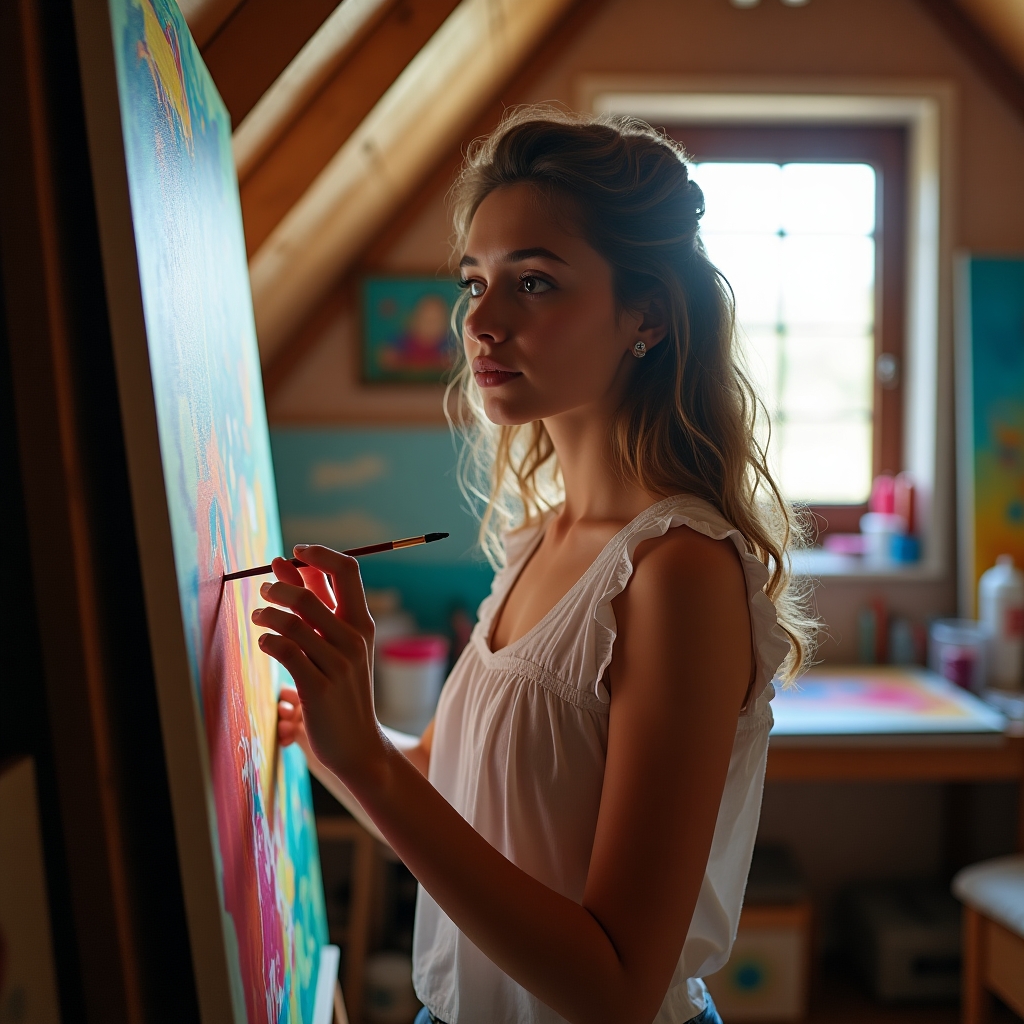
But lately, those dreams had grown restless, itching beneath her skin like an unresolved itch. She longed to study art, to breathe life onto canvases and pour her soul into the colors. Her parents, however, had a different vision for her—a stable career, a good marriage, a life that mirrored their ideals.
Sofia’s father, a man of few words, often spoke of sacrifice and duty, lessons he believed essential for survival. His eyes, dark and deep like the earth of their homeland, bore into her whenever he spoke of these things, and Sofia felt the pull of loyalty and love, a tether that both grounded and imprisoned her.
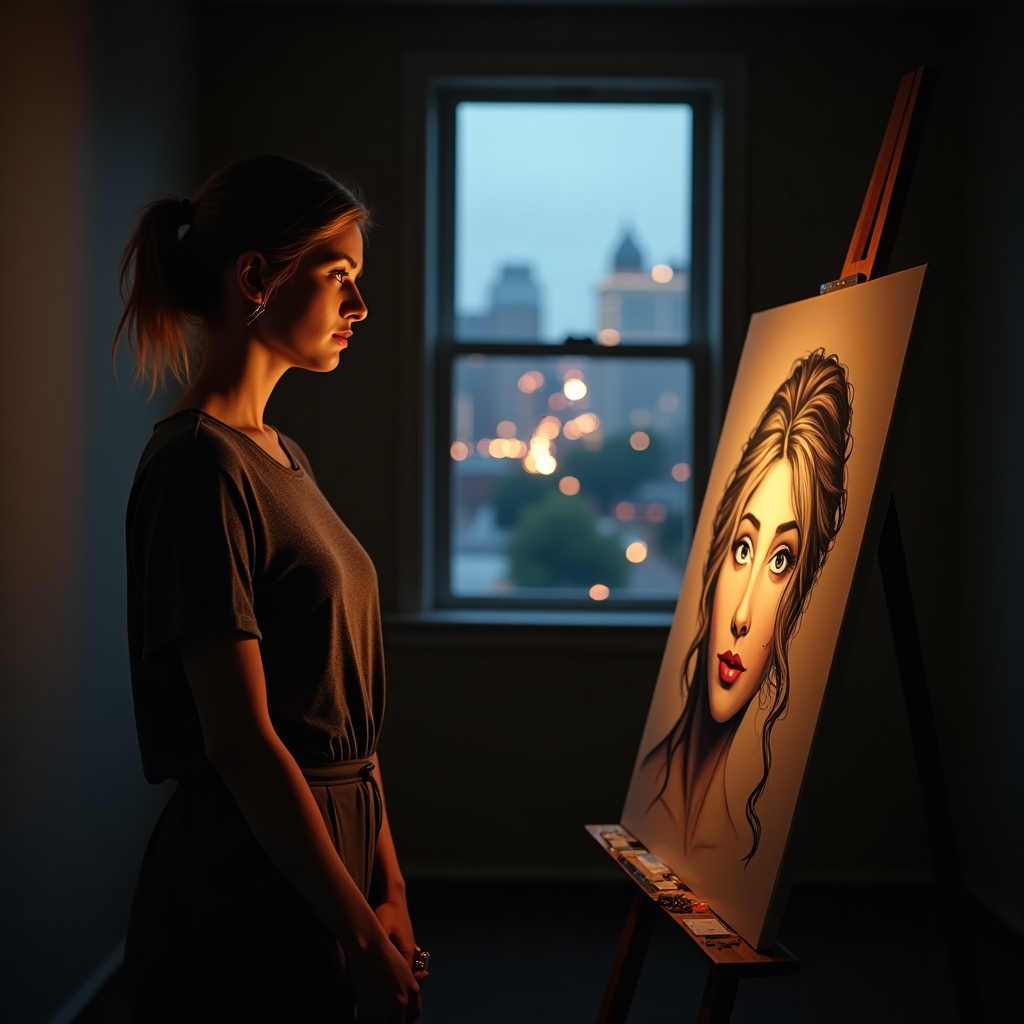
It was during one of these quiet evenings, while she was sketching by the dim light of her desk lamp, that Sofia felt the tension within her begin to unravel. The pencil in her hand moved almost of its own accord, tracing lines that were bold and defiant. She paused, staring at the emerging image—a self-portrait, not of who she was but of who she aspired to be.
The realization hit her with the force of a whispered truth—it was time to speak, to voice the dreams that had lingered in the shadows of her mind for too long. But how could she articulate this to her parents without betraying the love and respect she felt for them?
Days passed, each one a silent struggle as Sofia prepared herself for the conversation she knew was inevitable. She practiced the words in her mirror, the reflection offering no answers, only the echo of her uncertainty. Yet, even in the silence, there was a growing resolve, a quiet strength that took root in her heart.
It was a windy evening when the moment finally arrived. She found her parents in the living room, her father reading the newspaper and her mother knitting, their world a cocoon of familiarity and comfort. Sofia felt the weight of her decision like a stone in her chest.
“Mama, Baba,” she began, her voice steady despite the tremor she felt inside. “There’s something I need to tell you.”
Her parents looked up, her mother’s eyes filled with curiosity and her father’s with a guarded calm. Sofia took a deep breath, the words tumbling out in a carefully constructed symphony of hopes and fears.
“I want to study art,” she said, each word a revelation. “I know it’s not what you had planned for me, but it’s what I feel in my heart.”
The silence that followed was both deafening and liberating. Sofia watched as her parents processed her declaration, their faces a tapestry of emotions. Her mother was the first to speak, her voice soft yet firm. “Sofia, are you sure?”
“Yes,” Sofia replied, her voice carrying the quiet courage she had cultivated over years of internal struggle. “This is who I am, who I want to be.”
Her father regarded her with an inscrutable expression before nodding once, a gesture that held the weight of unspoken understanding. “We want you to be happy,” he said finally, his voice a whisper of acceptance.
In that moment, Sofia felt a shift, a release of tension that had bound her for so long. She realized that love and understanding could coexist within the complexities of change, that asserting her truth did not mean abandoning her roots.
That night, as she lay in bed, Sofia sensed the world around her expanding, each breath a testament to the possibilities that lay ahead. She knew the journey would not be easy, but for the first time, she felt equipped to navigate it with grace and authenticity.
Sofia’s story was one of quiet revolution, an intimate dance between personal truth and cultural expectation. It was a testament to the power of emotional courage and the potential for generational healing, a reminder that sometimes, the loudest dreams are whispered from the depths of the heart.