


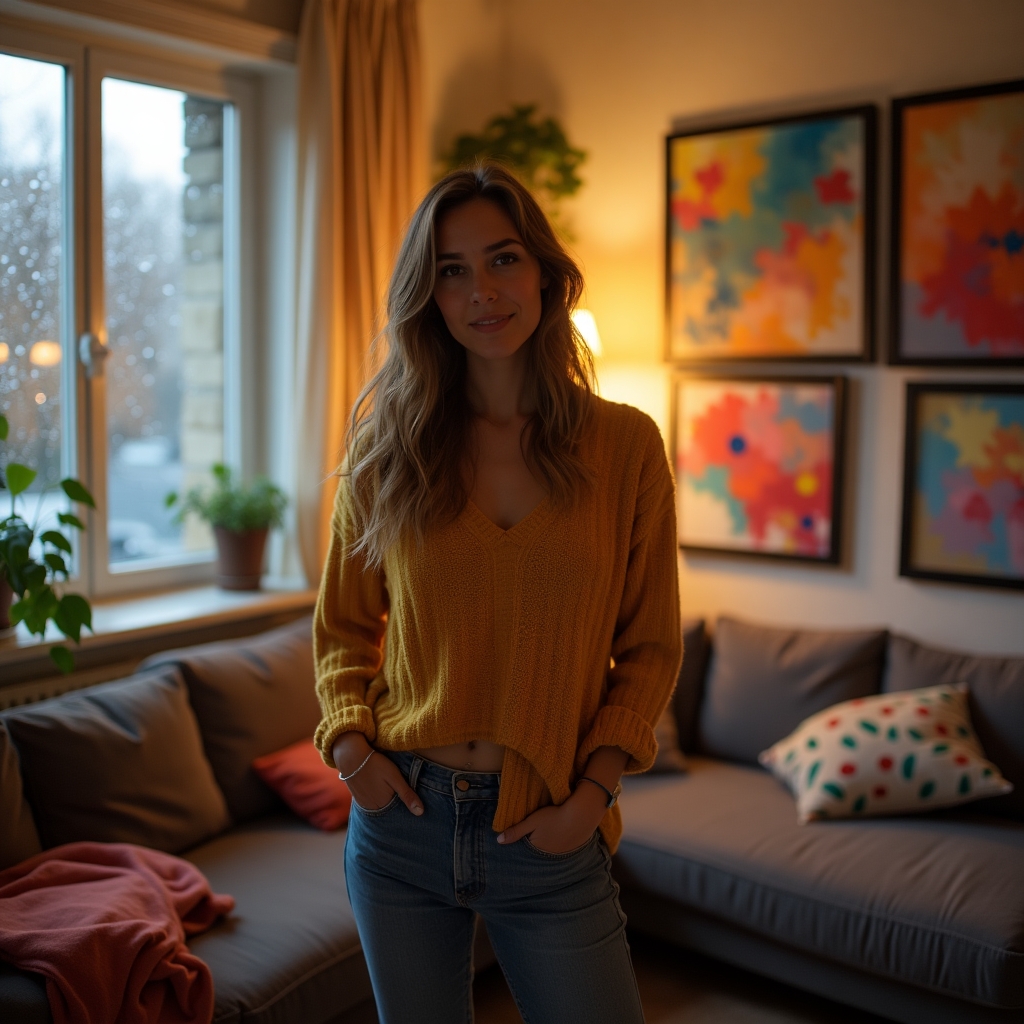
Maya stood in the kitchen, listening to the rain patter against the window. The sound was soothing, yet it underscored the silence of the house, a silence that had grown deafening over the years. Her husband, Tom, sat in the living room, engrossed in the flickering light of a football game. They rarely spoke these days unless it was about chores or what to have for dinner. Communication between them had dwindled to the bare essentials, and even those were often lost in the noise of everyday life.
Maya had always been the accommodating one, the one who made sure everyone else was comfortable. From childhood, her parents had instilled in her the importance of keeping peace at home. ‘Don’t make a fuss, Maya,’ her mother would say. ‘It’s better to let things be. Why stir the pot?’ So, she learned to silence her desires, her opinions, her self.
She rinsed the last dish and placed it on the drying rack, pausing to gaze out the window. The garden was overgrown now, much like her own neglected passions and dreams. Once, she had loved to paint, to lose herself in the colors and textures that brought her imagination to life. Now, her easel stood in the corner of the guest room, dusty and forgotten.
Tom’s voice broke through her thoughts. ‘Maya, can you get me another beer?’ he called from the couch.
‘In a minute,’ she replied softly, wiping her hands on a towel. This moment seemed like any other, but inside, something shifted. She felt a stirring, a whisper of the woman she used to be, or perhaps, the woman she had never quite allowed herself to become.
The next day, Maya visited her parents. Their home was much the same as she remembered from her childhood, tidy and orderly, with her mother bustling in the kitchen and her father buried in a book.
‘Maya, you look thin,’ her mother remarked, handing her a cup of tea. ‘Are you eating enough?’
‘I am, Mom,’ she replied automatically, though she knew it wasn’t true. She had lost weight over the months, stress and neglect taking their toll. Her mother’s concern was familiar, yet it felt invasive, as if her life was constantly under surveillance.
As they sat in the living room, her father spoke without looking up. ‘How’s Tom? Still working hard?’
‘Yes, he’s busy,’ Maya said, but her words felt hollow. Busy was an understatement. It was the excuse for every canceled plan, every missed moment.
Her mother nodded approvingly. ‘It’s good for a man to work hard, to keep the family stable.’
Maya smiled weakly, the conversation as predictable as the ticking clock on the mantel.
A week later, Maya stood in the art supply store, the hum of fluorescent lights above her. She hadn’t planned to come here, but her car seemed to have driven itself. Surrounded by canvases and brushes, she felt a familiar pull, a yearning that she had long ignored.
She picked up a set of paints, her fingers brushing over the tubes. The colors were vibrant, alive. They called to her, promising a world outside the confines of her carefully constructed life.
Back at home, she set up the easel in the living room, an act of quiet rebellion. Tom glanced up from his laptop, a crease forming between his brows.
‘What’s this about?’ he asked.
‘I want to start painting again,’ she replied, her voice steady.
He shrugged, returning to his screen. ‘As long as it doesn’t get in the way.’
Maya nodded, but inside, she felt a flicker of triumph. She had expected resistance, but now she realized that the only resistance she needed to overcome was her own.
In the following days, Maya painted whenever she could. In the early mornings before work, in the evenings while Tom watched TV, on weekends when the house was hers. The colors flowed from her brush like secrets finally shared, a language she had forgotten she spoke.
One evening, after finishing a painting that captured the stormy sky she had seen through her kitchen window, she stood back and surveyed her work. She felt a wave of emotion, something akin to pride, but deeper—a sense of returning to herself. It was as if each brushstroke had peeled back layers of dust and doubt.
Later, as she cleaned her brushes in the sink, Tom came in from the living room. ‘I have to work late tomorrow,’ he said, not meeting her eyes.
‘Okay,’ she replied, trying to mask the disappointment.
He hesitated, then added, ‘Maya, you should really think about tidying up your painting stuff. We’re adults, we should keep the house orderly.’ He gestured vaguely at the easel and supplies.
Maya paused, the brush in her hand hovering over the water. This was the moment. She took a deep breath, feeling the quiet strength of the resolve she had built with each stroke of paint.
‘You know, Tom,’ she began, turning to face him. ‘I like having my things out. It reminds me of who I am, of what I love.’
He stared at her, surprised by her assertion. ‘It’s just… different,’ he said finally.
‘I know,’ she replied. ‘And I’m okay with different. I need this, Tom. I need a space that’s mine.’
Her words lingered in the air, settling between them like a bridge. For the first time, Maya felt the weight of her own agency, her own desires acknowledged and respected—not just by Tom, but by herself.
The rain began to fall again, tapping on the windows like applause. Maya smiled softly, feeling the liberation in her chest expand. It was a small act, perhaps, but monumental in a life of silence.
She was finally painting herself into existence.