

Anna stood at the kitchen sink, her hands submerged in soapy water, and watched as the snowflakes drifted lazily past the window. It was a peaceful scene, one that belied the tension that permeated the small, tidy house. The kettle whistled sharply, breaking the quiet, and she turned off the stove, letting the steam rise like a small ghost caught in the morning light.
“Anna, where’s my blue tie?” Paul’s voice carried from the bedroom. It was an everyday question, wrapped in expectation.
“In the second drawer, where it always is,” she replied, a practiced patience in her tone.
She dried her hands on a faded dish towel, the edges worn from years of use, and moved to set the table for breakfast. The clatter of dishes echoed softly against the hardwood floors. Anna caught a glimpse of herself in the hallway mirror — her face pale and drawn, framed by dark, tired eyes. She turned away, focusing on the task at hand.
Paul emerged dressed for work, his expression as unreadable as always. “Thanks,” he said, knotting the tie with quick, efficient movements. “I’ll be home late tonight. Meeting over dinner.”
Anna nodded. “I’ll leave a plate in the fridge.”
He kissed her cheek — a brief, mechanical gesture — and left without further words. The front door closed with a dull thud, leaving silence in its wake.
Weeks bled into each other, a seamless loop of routine and unspoken words. There was comfort in the predictability, yet it chafed, like a woolen sweater worn too long. Each day was much the same, but recently, Anna had begun to feel a quiet stirring beneath the surface, a restless energy she couldn’t quite name.
One evening, as she sat on the couch with a book, she found herself rereading the same paragraph over and over. Her attention slipped, drawn instead to the quiet pulse of dissatisfaction that had settled in her chest. She closed the book with a soft thud and stood, moving restlessly to the window.
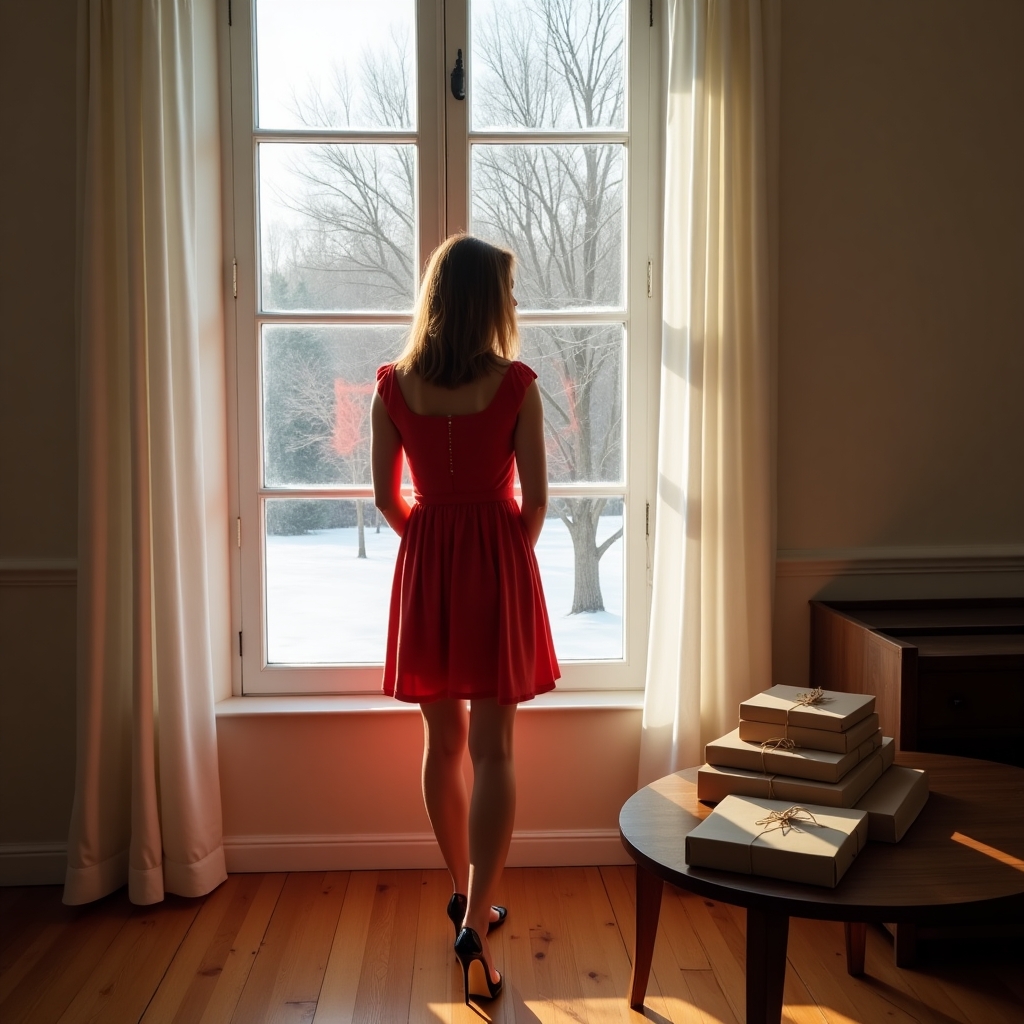
Outside, the world was a riot of winter colors — grey sky, white ground, bare branches etched black against the falling dusk. She watched for a long moment, her breath fogging the glass, before turning away.
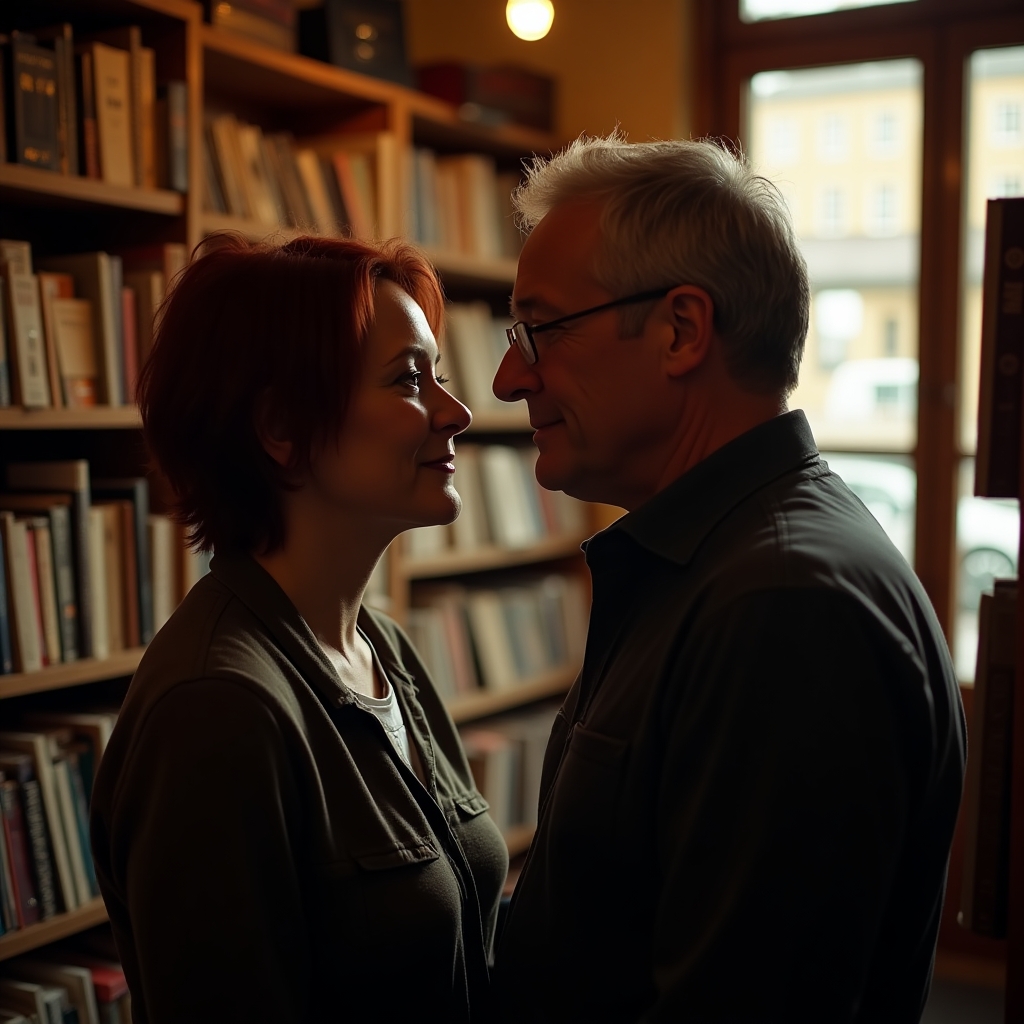
In the days that followed, her restlessness grew. She took long walks, letting the cold bite into her cheeks, and found herself wandering further each time. On one such walk, she stumbled upon a small, independent bookstore tucked between cafes on a quiet street. Drawn by the warmth and the scent of new pages, she stepped inside.
The owner, a kindly older woman with a halo of white hair, greeted Anna with a smile. “Looking for anything in particular?”
Anna hesitated, then shook her head. “Just browsing.”
“Take your time,” the woman said, returning to her stool behind the counter.
Anna wandered the aisles, her fingers brushing lightly over the spines. She selected a book at random, and then another, until she held three volumes against her chest. At the counter, the woman rang up her purchase, wrapping each book in brown paper.
“It’s nice to see someone appreciating a good book. They’re like little pieces of freedom,” the woman remarked, handing over the bag.
Anna smiled, feeling a flicker of warmth at the words. “Thank you.”
The walk home was brisk, the snow crunching beneath her boots. Later, curled up on the couch with one of the books, she felt a sense of calm settle over her, an unfamiliar, welcome sensation.
In the weeks that followed, Anna returned to the bookstore often, each visit a small rebellion against the confines of her routine. She savored the moments of solitude, the quiet joy of losing herself in stories.
The changes were subtle at first — a new shade of lipstick, a different hairstyle — but they felt monumental to Anna. Slowly, she began to reclaim parts of herself that had been tucked away, hidden beneath layers of expectation and responsibility.
One morning, as she prepared breakfast, Paul breezed into the kitchen, as usual, reaching for his coffee. “Have you seen my—”
He paused mid-sentence, finally noticing the changes — the brighter eyes, the confidence in her stance. “You look different,” he said, a hint of surprise in his voice.
Anna met his gaze, steady and unwavering. “I suppose I am.”
It was a small statement, but it reverberated through the room like a bell, clear and decisive. In that moment, Anna felt a shift, a loosening of the tight bands that had held her for so long.
She watched Paul leave for work, felt the familiar thud of the door, and knew that the world had tilted, even if only slightly. She was still Anna, still bound to her responsibilities and roles, but there was space now — space for change, for growth, for the autonomy she had nearly forgotten.
That morning, she picked up a brush and painted her nails a bright, defiant red, each stroke a quiet act of liberation.