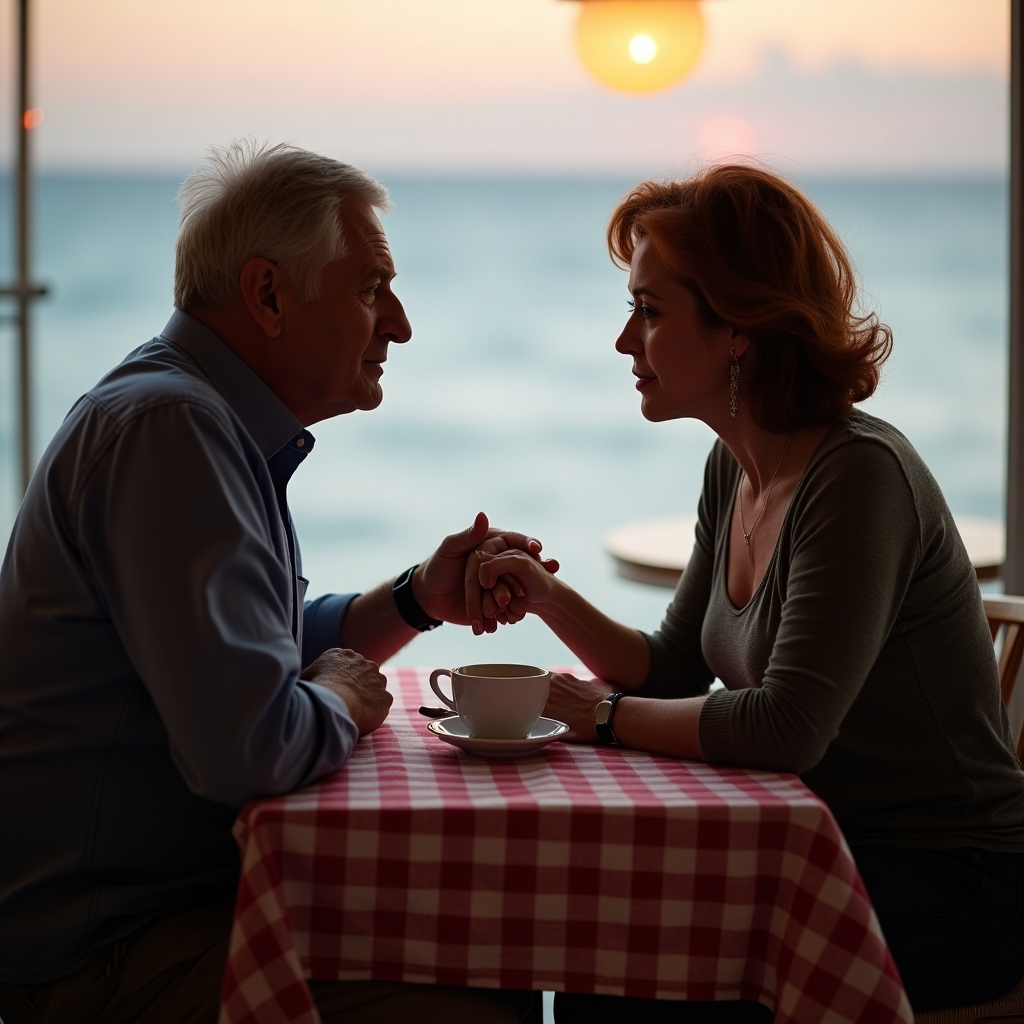


Jenna stood by the kitchen sink, her hands submerged in warm, soapy water. She watched the suds drift and pop, losing herself in their fragility. She could hear the faint hum of the television in the living room—her husband, Mark, predictably watching a rerun of some detective series, his presence a constant shadow over the household. It was a Tuesday evening, indistinguishable from any other evening in the Parker household, a fact that weighed heavily on her chest.
For years, Jenna had lived under the comforting yet stifling routine that had settled over her life like an old, familiar quilt. Mark, a man of habit, took solace in predictability. And Jenna, seeking peace, had slowly folded her desires and dreams into small, tucked-away corners where they gathered dust.
“Jenna,” Mark called from the living room.
“Yes?” she replied, her voice steady, almost mechanical.
“Did you book the appointment for my car’s service?”
“I’ll do it first thing tomorrow,” she said.
In that momentary pause before Mark’s response, Jenna felt the usual tug of resentment pull at her. Why was it her job to remember everything? To arrange the minutiae of their lives while her own wishes remained unnoticed, unfulfilled? She sighed and returned to scrubbing the dinner plates.
Later that night, as rain pattered against the window, Jenna lay awake in their bed. The rhythm was soothing, a natural lullaby, yet her mind was restless. She remembered how she used to love the rain—how it made her crave the outdoors, the feel of droplets on her skin, the smell of earth swallowing the water. “When did I stop listening to myself?” she silently wondered.
The next morning, Jenna woke early, the sky still a soft gray. She sat at the kitchen table with a cup of tea, staring at the rain-washed garden. It was overgrown, wild—much like her forgotten ambitions. Her fingers traced the steam rising from her cup as if rediscovering a sense of self in the mundane.
“Morning,” Mark grunted, shuffling into the kitchen.
“Morning,” Jenna replied, her voice calmer than she felt. She watched as he reached for the cereal box, everything about him deliberate and unchanging.
She wanted to say something, something profound that would disrupt this monotonous cycle. But words eluded her, and she found herself trapped in that familiar silence.
Later, as she walked into town to run errands, she stopped by a small bookstore—a place she’d often pass by but never entered. The bell tinkled softly as she stepped inside, the scent of old pages and possibility enveloping her instantly.
The shopkeeper nodded a quiet hello. Jenna wandered through the aisles, her fingers brushing over spines with titles she didn’t recognize. Her eyes landed on a book about gardening. She picked it up, drawn by the vibrant cover depicting a riot of flowers in a sunlit garden.
“You like gardening?” the shopkeeper asked, his voice gentle.
“I used to,” Jenna replied, surprised by the ache in her chest as she spoke. “I just… haven’t found the time.”
“Well, it’s never too late to start again,” he said, smiling kindly.
Jenna left the shop with the book pressed against her chest, the weight of it a comforting reminder of something just within reach.
As weeks passed, Jenna began spending mornings in the garden, coaxing life back into neglected beds of soil. She found solace in the dirt under her nails, the sweat on her brow. It was her space, untouched by the demands of others, a small yet profound reclamation of herself.
One evening, as she returned to the house, she found a letter from her sister, Emily. Jenna’s relationship with her family had always been a tightrope walk of expectations and unspoken words. Emily’s letter was a vibrant contrast—a candid recount of her own struggles and triumphs.
“I realized I was living for everyone else,” Emily wrote. “It was hard, but I had to start saying no, had to start listening to my own heart.”
Jenna read the letter three times, each word echoing her own buried thoughts. She felt something shift inside her, a small but powerful click into place.
The following Saturday, Jenna was in the garden when Mark called out.
“Jenna! I can’t find my tie,” he yelled from the bedroom.
She felt the familiar pull, but this time, she paused. Her hands were covered in dirt, the air alive with the scent of blossoms. She looked around at the vibrant colors she had nurtured back to life.
“Mark,” she called back, her voice steady, “You’ll have to find it yourself. I’m busy.”
The silence from the house was heavy but liberating. Jenna smiled softly, returning to her flowers—each bloom a testament to her rediscovered autonomy.