



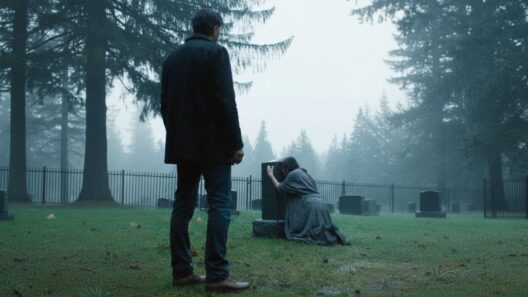

In the quiet town of Willow Creek, nestled between rolling hills and whispering woods, lived a young woman named Emilia. She was twenty-three, with eyes the color of storm clouds and a heart that yearned for the freedom of unburdened skies. Emilia’s family, the Rosas, had lived in Willow Creek for generations, rooted deeply in traditions that were as unyielding as the ancient oaks surrounding their home.
From childhood, Emilia was taught the importance of family honor, cultural rituals, and the expectations that came with being a Rosa. Her mother, Elena, was a gentle yet firm matriarch, whose life revolved around maintaining the delicate balance of status and respect within the community. Her father, Carlos, was a man of few words, but his silence spoke volumes about the weight of his expectations.
Emilia’s days were filled with lessons in etiquette, familial duties, and the subtle art of diplomacy. She was expected to follow in her mother’s footsteps, to blend seamlessly into the tapestry of community that had been woven over centuries. Yet, within her, there stirred a quiet rebellion — a desire to step beyond the narrow paths carved by her ancestors and find her own way.
As the seasons changed, so did the quietude of Emilia’s internal world. She found solace in the woods, where she could breathe freely and let her thoughts wander. It was there, among the whispering leaves and babbling brooks, that she allowed herself to dream of a life unencumbered by the weight of others’ expectations.
Emilia’s conflict was not loud or dramatic; it simmered beneath the surface, a silent storm that only she could feel. She loved her family dearly, and the thought of disappointing them was a burden she carried heavily. Yet, the more she tried to conform, the more she felt a piece of herself fade away, like a shadow retreating from the sun.
One summer evening, as the sky blazed with the colors of twilight, Emilia found herself at a family dinner, surrounded by relatives whose conversations danced around plans for her future — plans that didn’t include her dreams of art and travel, of forging her own path.
Her aunt, Rosa, turned to her with a knowing smile. “Emilia, have you thought about what comes next? I hear there’s a young man in town, a good match,” she said, her voice tinged with a warmth meant to prod rather than comfort.
Emilia forced a smile, her fork pausing halfway to her lips. “I’ve been thinking, yes,” she replied, carefully choosing words that didn’t reveal the full extent of her inner turmoil.
Underneath the table, her hands clenched together, a silent battle of old expectations versus new aspirations waging within her heart. She was adrift in an ocean of competing emotions, waves of guilt and longing crashing against each other.
As the evening wore on, Emilia remained quiet, her thoughts elsewhere. She excused herself early, whispering the customary goodnight before retreating to the sanctuary of her room.
That night, as the house settled into the hush of slumber, Emilia lay awake, staring at the ceiling, the shadows casting intricate patterns that mirrored the complexity of her emotions. She knew she had to make a choice — to live by the script handed down through generations, or to write her own.
The moment of clarity came unexpectedly, like a sudden gust of wind breaking the stillness. Emilia saw herself not as an outlier, but as a new thread in the tapestry of her family’s legacy. She understood that asserting her truth didn’t mean discarding her heritage; it meant weaving her dreams into the fabric of her life, creating a pattern uniquely her own.
The next morning, she woke with a sense of calm resolve. As she joined her family for breakfast, the familiar buzz of conversation enveloped her. Emilia took a deep breath, her heart steady, and spoke with a quiet strength that belied her years.
“Mama, Papa,” she began, meeting their eyes across the table. “I’ve decided to pursue my art and travel. It’s what I truly want.” Her voice was steady, her gaze unwavering.
A silence followed, thick and expectant. Her parents exchanged a glance, their expressions mixed with surprise and a hint of sadness. Yet, beneath it all, there was an understanding, a mutual acknowledgment of Emilia’s courage.
Elena, her hands folded neatly on the table, nodded slowly. “Your happiness is what matters most, Emilia,” she said softly, a gentle smile touching her lips.
Carlos, who had remained silent, looked at his daughter with a depth of emotion that words could not capture. His nod was subtle, but it carried the weight of acceptance, a silent blessing passed from one generation to the next.
In that moment, Emilia felt the tension within her dissolve, replaced by a newfound sense of freedom. She realized that honoring her family didn’t mean sacrificing her dreams. Instead, it meant carrying their legacy forward in a way that was true to herself.
The path ahead was uncertain, but Emilia embraced it with open arms, ready to weave her own story into the rich tapestry of her family, one that blended tradition with personal truth, creating a new legacy for future generations.