He called them “a burden” and abandoned five newborns in 1995… Thirty years later, they answered the door as successful professionals.
The year was 1995.
In a small house made of sheet metal and adobe, nestled in a rural village in the state of Oaxaca, five newborns cried simultaneously, their voices a chorus of hunger and confusion.
Isabel Hernández had just given birth to quintuplets.
The doctor had warned her the pregnancy was dangerous. At thirty-two, malnourished and living in poverty, carrying five children to term was nothing short of miraculous. But miracles, she would learn, were often brutally complicated.
She was extremely thin, her skin almost translucent from blood loss. Weak. Trembling. And worst of all—she had no food.
Her husband Raúl Méndez stood in the doorway of their cramped home, staring at the five small bodies wrapped in threadbare cloth. His face twisted, not with joy, but with raw fury.
“Five?!” he shouted, his voice cracking with rage. “Five, Isabel?! FIVE?!”
Isabel flinched, instinctively drawing two of the babies closer to her chest.
“We can barely support ourselves!” he continued, already stuffing clothes into an old backpack with violent, jerking movements. “With five more mouths, we’ll starve to death! Is that what you want? For us to starve?”
“Raúl, please,” Isabel pleaded, her voice breaking. She was still bleeding, still in pain from delivery, but desperation forced the words out. “Don’t leave us. Help me. We can get through this together. We’re stronger together.”
He didn’t respond to her plea. Instead, he shoved past her toward the bedroom—toward the loose floorboard where Isabel had hidden every peso she’d saved for emergencies.
“What are you doing?” she asked, her voice small.
“Taking back my life,” he said coldly.
He pried up the floorboard and pulled out a cloth pouch. About three hundred pesos. Money Isabel had set aside over months—money meant for milk, for diapers, for keeping the babies alive.
“Raúl, that money is for the children!” she cried, trying to stand, but her legs gave out. She collapsed back onto the mattress, five babies now crying around her.
He held the pouch up, his jaw clenched. “It’s the price for the misery you’ve made me live through. Thirty-two years old, and this is my life? A house that’s falling apart? A wife who can’t even keep her body under control?”
“I didn’t choose this,” Isabel whispered. “The doctor said the odds—”
“I don’t care what the doctor said!” His voice rose to a shout. “I wanted a different life! I wanted success! I wanted to matter! And you… you’ve destroyed any chance of that.”
He turned toward the door, the backpack slung over one shoulder, the money clutched in his fist.
Isabel reached out one last time. “Please. Don’t do this. Don’t leave us alone.”
Raúl paused at the threshold. For a moment, Isabel thought he might reconsider. She saw something flicker in his expression—a moment of hesitation, perhaps even regret.
But then his face hardened.
“They’re a burden,” he said flatly. “All five of them. They’re a curse on this family, and I won’t spend my life paying for it.”
He took a step outside.
“These children are not a burden!” Isabel screamed, finding strength she didn’t know she had. “Raúl! Our children are not a burden!”
But he was already walking toward the dirt road that would take him to the bus station in the next town.
He didn’t look back.
He didn’t hear the screams of five newborns crying in unison.
He didn’t see Isabel collapse, her body shaking with sobs.
He only thought of himself—of the life he believed he deserved, the success that was waiting for him in Mexico City, the version of himself that didn’t include a wife and five hungry mouths.
He took the 6 p.m. bus to Mexico City.
By nightfall, Isabel was alone.
ALONE FACING ADVERSITY (1995–2005)
That first night was the longest of Isabel’s life.
She lay on the mattress, five babies sleeping fitfully around her, and she didn’t close her eyes once. Every time one of them stirred, she held her breath, terrified that this small sound meant sickness, starvation, death.
The silence of Raúl’s absence was suffocating.
No footsteps in the next room. No sound of him moving around the kitchen. No voice, however cruel it had become. Just silence—a silence so heavy it seemed to physically press down on the walls of the house.
Around 2 a.m., the first baby woke hungry, crying with the desperate intensity that only newborns possess. Then another. Then all five, their cries overlapping until Isabel couldn’t tell one voice from another.
She had no formula. They had never had money for formula.
With shaking hands, she heated water on the small stove, added a pinch of salt, and mixed in some crushed rice she found in a jar. It wasn’t nourishing. It wasn’t enough. But it was all she had.
She fed each baby in turn, cradling them and offering the warm water mixture from a spoon. Some of it dribbled down their chins. Some they spit out. But enough went in to quiet their cries, at least temporarily.
When all five were fed and sleeping again, Isabel sat alone in the darkness and allowed herself to cry.
Not from weakness. From terror.
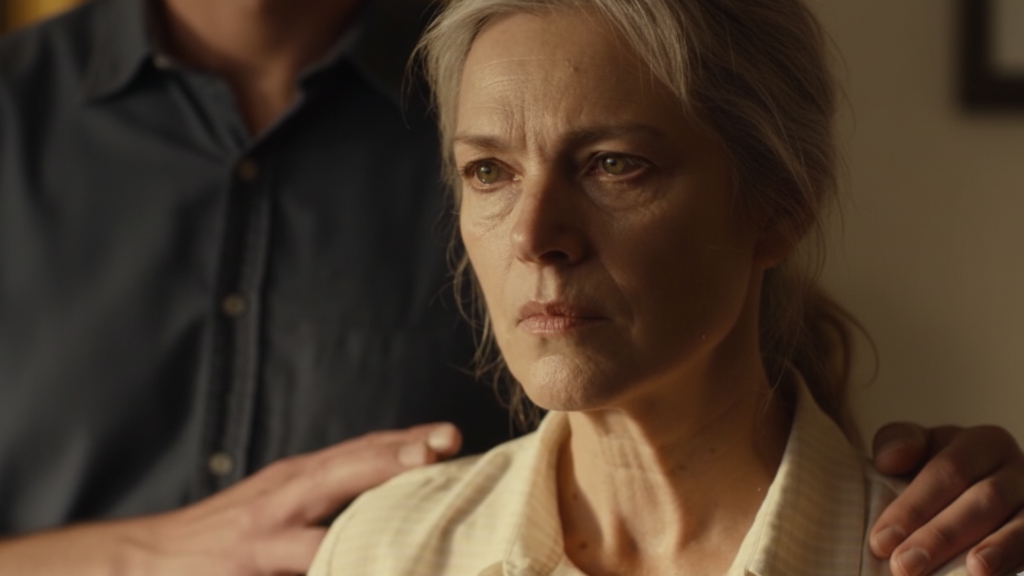
The following days were a blur of survival.
The neighbors began to talk almost immediately. In a village where everyone knew everyone, the abandonment was impossible to hide. Worse, it became a kind of spectacle—a tragedy that people felt entitled to comment on.
“Five at once,” one woman said to another, loud enough for Isabel to hear as she struggled to carry water from the well. “That’s not natural. That’s a punishment from God.”
“She must have done something,” another voice replied. “Something to anger the saints.”
“Poor Raúl,” a man said, shaking his head. “Trapped with five bastards that aren’t even his. No wonder he left.”
Isabel heard it all. Every word cut deeper than the last.
One afternoon, as she was washing clothes in the river—work she’d returned to just days after giving birth, her body still bleeding, still in pain—an older woman sat down beside her.
“You should give one away,” the woman said, not unkindly. “Take one to the orphanage in the city. At least one of them would have a chance.”
Isabel’s hands stilled in the water.
“They were born together,” she said, her voice steady despite the way her heart was breaking. “They came into this world together, and they will live together. All five of them.”
The woman shook her head sadly. “You’re condemning them to poverty.”
“I’m giving them a mother,” Isabel replied.
The work was relentless.
Isabel washed clothes for families who could afford to pay her, cleaned houses for women who wrinkled their noses at her poverty, harvested vegetables in the fields for wages that barely covered a single meal.
She did all this while her body was still recovering from one of the most traumatic pregnancies and deliveries possible.
There were days when she felt like her bones were made of glass, days when the pain in her abdomen was so intense she could barely stand, days when her vision blurred and she thought she might collapse into the field and simply disappear.
But she didn’t collapse. She couldn’t.
Five small faces depended on her.
Every peso she earned was divided by six. What should have been one meal became six portions of nothing. What should have been new clothes became patches for worn cloth. What should have been hope became a daily negotiation with hunger.
The babies grew slowly—not as quickly as healthy children should, but they grew. Their cries became slightly less desperate. Their skin took on a bit more color.
And every night, no matter how exhausted Isabel was, she would sit with them before they slept and speak into the darkness:
“You are not a burden. Do you hear me? You are not a curse. You are my strength. You are the reason I wake up in the morning. You are the reason I will never give up.”
She wasn’t sure if they understood. They were too young. But she needed to say it anyway—needed to speak it into existence, as if her words could form a shield around them against the shame the world was trying to place on their shoulders.
Years passed.
The children’s names were Miguel, Sofía, Daniel, Luis, and Elena.
Miguel had his mother’s eyes—dark and intelligent, always watching, always thinking.
Sofía had a hunger for stories, for knowledge. She would sit for hours looking at picture books, her finger tracing the words as if she could absorb meaning through her skin.
Daniel drew constantly—pictures of their house, of the village, of his mother’s face. Each drawing was a small act of love.
Luis had his father’s practical mind, but without his father’s cruelty. He could fix anything with his hands—broken toys, leaking pots, anything that broke in their fragile home.
Elena had a voice. When she sang, even at three or four years old, something shifted in the air. People would stop what they were doing and listen. It was as if an angel had briefly descended into their dusty village.
THE YEARS OF SACRIFICE (2005–2015)
When the children turned ten, everything changed again.
It was a Tuesday morning. Isabel had returned from washing clothes at the river, and she was preparing the evening meal—a thin broth with some vegetables and a piece of chicken that had cost her two days’ wages.
She was standing at the stove when the world suddenly tilted.
The pain came first—a crushing sensation in her chest, radiating down her left arm. Then her vision began to darken at the edges. She tried to call out for the children, but her voice wouldn’t work.
She fell.
The children found her on the floor of the kitchen, unconscious, her skin cold and clammy.
“Mamá!” Miguel screamed, the first to reach her. “Mamá, wake up!”
They thought she was dead. Ten-year-old Miguel thought his mother was dead, and for a moment—a terrible, infinite moment—the world as he knew it was ending.
A neighbor heard the screaming and called for help. Isabel was rushed to the clinic in the nearest town. The doctor said it was a heart attack—stress-induced, brought on by years of physical labor, malnutrition, and the constant, grinding pressure of trying to keep five children alive alone.
“She’s lucky,” the doctor said to the neighbor who’d brought her in. “Another minute and she wouldn’t have made it.”
Isabel survived, but barely. It took her weeks to recover enough to leave the clinic. And when she came home, it was clear that her body had changed. She was weaker. Her chest would sometimes seize with pain. The doctor warned her that she needed to rest, to reduce her workload, to take care of herself.
But there was no one to take care of the children if she rested.
So the children took care of themselves. And each other.
Miguel, the eldest and the smartest, became a kind of small adult. He organized the household, made sure his siblings did their chores, and started attending school with a fierce determination that made his teachers sit up and take notice.
Sofía began to tutor the younger children in the evenings, sharing everything she learned at school.
Daniel used his art to create signs for local businesses—small, hand-painted advertisements that earned the family a few extra pesos each month.
Luis, at just ten years old, began helping a local mechanic in exchange for money and food.
And Elena—Elena started singing at the church, where the priest quietly slipped her family donations disguised as payment for her “performance.”
After school, the children would fan out across the village like small workers in a vast, invisible factory. They sold fruit at the market. They carried bags and hauled goods. They cleaned stalls and helped with harvests. Every coin they earned went into a jar that sat on the kitchen table—a physical representation of their collective love for the mother who had refused to abandon them the way their father had.
The other children in the village had more. They had shoes without holes. They had notebooks for school. They had fathers who came home at night. But Miguel, Sofía, Daniel, Luis, and Elena had something else: they had each other, and they had a mother who had looked at poverty and said no.
THE EDUCATION YEARS (2010–2018)
There was a teacher named Señora Martínez who changed everything.
She taught fifth-grade mathematics, and when Miguel walked into her classroom, something shifted in her understanding of what poverty meant. She saw a child whose hunger was intellectual, not just physical—a boy who solved problems in his head before she’d finished writing them on the board, who asked questions that made her reconsider what she thought she knew.
She kept Miguel after class one day.
“Your family has money for additional tutoring?” she asked gently.
Miguel shook his head. “No, señora. My mother works. My siblings and I also work after school.”
Señora Martínez made a decision that day. She would advocate for all five of them—for scholarships, for educational opportunities, for a way out of the cycle that had claimed so many children in their village.
She wrote letters. She made phone calls. She brought books to their house and sat with them in their small kitchen while Isabel served tea made from herbs grown in their backyard.
“Your children are extraordinary,” she told Isabel one afternoon. “They should be in a better school. They should have opportunities.”
“I can’t afford—” Isabel began.
“No,” Señora Martínez interrupted. “I can. Not me personally, but there are foundations, government programs. Let me help.”
And she did.
Through her advocacy and connections, the five children received scholarships to attend a better school in the next town. It meant taking a bus each morning, arriving home late in the evening, exhausted. But it also meant better teachers, better resources, better prospects.
Miguel excelled in mathematics and science. By his mid-teens, he was already helping tutor other students, earning money that he contributed to the household.
Sofía devoured every book in the school library. She began writing stories, essays, poetry. Teachers recognized her gift and encouraged her to pursue teaching.
Daniel’s art became more sophisticated. He began creating illustrations for local businesses, designing simple logos and advertisements. His work was good—actually good, not just good for a poor village, but genuinely talented.
Luis’s practical skills combined with business sense. He began a small handyman service, fixing things for people in the village and neighboring towns. He was seventeen when he started; by nineteen, he had employees.
Elena’s voice was trained by the church choir director, who recognized her potential and insisted she take formal lessons despite the cost. At eighteen, she auditioned for a regional youth orchestra and was accepted. Eventually, she would be accepted into a prestigious music conservatory in the capital.
Every achievement was a rebellion against the shame Raúl had tried to place on them. Every success was proof that they were not a burden, not a curse, not the “disasters” their father had called them as he walked out the door.
But they never forgot where they came from.
Before each child left for school each morning, Isabel would remind them:
“It doesn’t matter where you go. It doesn’t matter how successful you become. Never forget where you come from. Never forget who sacrificed for you. Never forget that you have the power to lift others up the way others have lifted you.”
The children would nod, and they meant it. They understood, in a way that children raised with privilege could never understand, that their success was not individual—it was collective. They were five parts of a single story, and the story belonged to their mother.
THE RETURN (2025)
Thirty years after he abandoned them, Raúl Méndez returned.
He had never forgotten the day he left. That shame, that anger, that sense of entitlement—it had festered in him for three decades.
He had gone to Mexico City with dreams of becoming a businessman, of building an empire, of escaping the poverty that had defined his early life. And for a while, it seemed like it might work. He found a job in a factory, saved money, started a small business buying and reselling goods.
But every decision he made seemed to fail. Partnerships dissolved. Investments crumbled. The wife he married in Mexico City left him when his prospects dried up. The friends he’d accumulated abandoned him when there was nothing left to extract.
By 2025, at sixty-two years old, Raúl Méndez was a broken man.
He had nothing. No family. No savings. No prospects. His body was deteriorating—his heart was weak, his lungs damaged from years of stress and poor health, his mind clouded by regret and rage at the life he’d been “forced” to live.
Doctors warned him that he needed surgery, medications, rest, care. But Raúl had no insurance, no money, and no one who cared enough to help him.
For the first time in three decades, he thought about Isabel.
He remembered her voice that night: “Don’t leave us alone. Please, Raúl. Don’t do this.”
He remembered walking away, not looking back, convincing himself that he didn’t care what happened to them.
But he had cared. That was the torment. He had cared the entire time, and he’d spent thirty years trying not to care, trying to pretend that leaving five newborns to die of starvation was a reasonable choice, that it was Isabel’s fault, that he was the victim.
The realization, when it finally came, nearly destroyed him.
One cold morning in February 2025, Raúl took a bus back to Oaxaca.
He looked like a ghost. He was thin, skeletal, bent over a cane. His clothes hung off him. His eyes were hollow with decades of regret.
He found the village. He found the house—but it was different now. The sheet metal and adobe had been replaced with actual brick and mortar. The roof was solid. There were flowers planted in front, and the windows had glass, not cardboard and tape.
His heart sank. Could this be the right house?
He approached slowly, each step painful.
He raised his hand to knock, and for a moment, he couldn’t do it. How could he face what he’d done? How could he ask for forgiveness for abandoning five newborns?
But he had nowhere else to go.
He knocked.
The door opened almost immediately.
Isabel stood there.
She was sixty years old. Her hair was gray, her face lined with the accumulated weight of three decades of hard work and sacrifice. But her eyes—her eyes were still the same. Still kind, still intelligent, still full of a strength that Raúl had never possessed.
For a moment, neither of them spoke.
Then Isabel’s expression shifted. She recognized him.
“What do you want?” she asked quietly. There was no anger in her voice, which somehow made it worse. There was only a kind of weary recognition, as if she’d always known this moment might come and had long since made peace with it.
Raúl’s legs gave out. He would have fallen if the doorframe hadn’t been there to catch him.
“Help me,” he whispered. “I have no one. I’m dying, and I have no one. I… I need…”
He couldn’t finish the sentence.
Isabel stepped back, and Raúl saw movement in the shadows behind her.
Five adults emerged from the darkness of the house into the afternoon light.
Miguel, forty years old, wearing the uniform of an engineer, his posture confident and capable.
Sofía, also forty, with the bearing of someone who had spent her life in education, her eyes intelligent and assessing.
Daniel, forty, his clothes clean and well-tailored, his hands bearing the calloused strength of someone who created beautiful things.
Luis, forty, with the bearing of a businessman, his eyes sharp and shrewd.
Elena, forty, her presence somehow larger than life, her bearing that of someone whose voice carried weight and authority.
All five of them were beautiful. All five of them were successful. All five of them stood together, a united front of human achievement born from sacrifice and love.
“Who is this man?” Luis asked, his voice cold.
Isabel took a breath.
“Your father,” she said simply.
THE RECKONING
Raúl looked at them, really looked at them, for the first time in thirty years.
These were not the helpless infants he’d called a curse. These were not the burdens he’d run away from. These were extraordinary human beings—engineers, teachers, artists, entrepreneurs, musicians. They had taken the worst circumstances imaginable and transformed themselves into people of consequence and value.
And they had done it without him.
The realization hit him like a physical blow.
He collapsed fully, his body sliding down to sit against the doorframe, his cane clattering to the ground beside him.
For several minutes, he couldn’t speak. He could only look at them—at the proof of his failure, at the evidence that he had been wrong about everything.
Finally, he spoke, his voice breaking: “I was wrong. Oh God, I was so wrong.”
Miguel stepped forward, his expression hard. “You called us a burden. You said we were a curse.”
“I know,” Raúl whispered.
“You left our mother alone,” Sofía added, her teacher’s tone sharp with barely contained anger. “You took the money meant to feed us. You abandoned five newborns.”
“I know.”
“You don’t deserve anything from us,” Daniel said quietly. “You don’t deserve forgiveness. You don’t deserve help.”
Luis nodded in agreement.
Elena, the youngest, looked at him with an expression of such profound pity that it seemed to break something in Raúl that hadn’t already been broken.
Isabel stepped forward and placed a hand on Elena’s shoulder.
“But that’s not who we are,” she said quietly, looking at her children. “That’s not what we became.”
“Mamá,” Luis said, his voice harsh with protective anger. “After what he did—”
“I know what he did,” Isabel interrupted. “I lived through it. I bled through it. I starved through it. I nearly died because of what he did.”
She paused, gathering herself.
“But when I was lying on that floor after my heart attack, and you children surrounded me, trying to keep me alive… do you know what I realized? I realized that none of this—none of my suffering, none of my sacrifice—was about him. It was about you. It was about your lives, your futures, your potential.”
She looked at Raúl directly.
“You tried to define us by your abandonment. You tried to make us a burden. But we refused. We became something else entirely.”
Raúl wept—not gentle tears, but the violent sobbing of a man whose life had been a catastrophic waste of a second chance he’d never appreciated.
Miguel exchanged looks with his siblings. Then, without speaking, they reached a silent agreement.
Miguel knelt down beside Raúl.
“We will help you,” he said. His voice was not kind, but it was firm. “Not because you deserve it. Not because you are our father. But because we learned from our mother what it means to be human. What it means to care for others even when they have hurt you.”
Luis nodded. “We will pay for your medical care. We will find you housing. We will ensure you don’t die alone on the street.”
“But you will never be forgiven,” Sofía said clearly. “You will live knowing what you destroyed and what you lost.”
“And you will live knowing what we became despite you,” Elena added, her voice carrying the weight of all those years of sacrifice, all those nights of hunger, all those days of work.
Raúl looked at them, and the weight of that knowledge crashed over him like a wave.
THE TRUTH REVEALED
That night, after the children had set Raúl up in a small room they rented for him, after they’d made appointments with doctors and begun the process of getting him the care he needed, Isabel sat beside him in the darkness.
Raúl was different now. The anger had burned out, leaving only ash. What remained was a kind of hollow regret, a man who had spent thirty years running from something that had never stopped chasing him.
“Do you know what saved me?” Isabel asked him quietly.
Raúl didn’t respond, so she continued.
“Responsibility,” she said. “Every single day for thirty years, I woke up because five lives depended on me. Not because I wanted to live. Not because I had hope or dreams or any sense that things would turn out this way. I woke up because if I didn’t, my children would starve.”
She let that sink in.
“You lived only for yourself, Raúl. Your wants, your needs, your sense of what you deserved. And do you know where that took you? To an empty room in a hospital clinic, dying alone, with nothing and no one.”
Raúl’s face was contorted with pain.
“I didn’t know,” he whispered. “When I left, I didn’t know what would happen. I thought… I thought you would figure it out. That you would find someone else, or your family would help, or… I don’t know. I didn’t think. I only felt angry.”
“I know,” Isabel said. “That’s what makes it worse. It wasn’t even a deliberate cruelty. It was a thoughtlessness so profound that it nearly killed five innocent people.”
She stood to leave, then paused at the door.
“They will help you because they are better than you. They will help you because they are better than me, even, in that way. They have the capacity to forgive what I could never quite manage to forgive.”
“Will you ever forgive me?” Raúl asked, his voice small and broken.
Isabel considered this for a long moment.
“No,” she said finally. “But I can live with the fact that you exist. That’s something.”
She left him alone in the darkness.
THE FINAL TRUTH
Over the following weeks, Raúl underwent heart surgery. The children paid for it. He recovered in the small room they’d rented for him, and during his recovery, he began to understand, truly understand, what his departure had cost them.
Miguel visited him one afternoon and told him about the scholarship he’d had to turn down because the family needed money immediately. About the university program he’d deferred for two years.
Sofía came and described the teaching job she’d taken at a small school in their village instead of pursuing a PhD at a university in the capital, because she couldn’t leave her mother and siblings alone.
Daniel talked about the commissions he’d turned down, the opportunities he’d sacrificed, because every moment had to count, had to earn money, had to contribute to survival.
Luis shared how he’d started his business at age ten, how he’d never had a childhood, how he’d carried the weight of supporting a family when he should have been playing, learning, exploring.
Elena wept as she described giving up a musical conservatory scholarship because someone had to stay home and take care of their mother after her heart attack. A year of her life, lost to caregiving.
Each revelation was another stone placed on the weight Raúl was already carrying.
He tried to apologize. The children accepted his apologies with the distant politeness of people absolving someone of a burden, not because they had forgiven, but because they had moved beyond the need for apologies.
“I am not your villain,” Miguel said to him one day, his voice carrying the authority of a man who had learned to lead without cruelty. “You are your own villain. You are the consequence of your own choices. We don’t need your suffering to feel validated.”
One evening, about two months after Raúl’s return, the entire family gathered in Isabel’s kitchen—the same kitchen where Raúl had once stood, stealing money meant for his starving children.
Isabel had prepared a meal. It wasn’t fancy, but it was abundant. There was food, real food, prepared with care and shared with love.
As they ate, Raúl looked around the table at the five extraordinary humans he had tried to destroy with his abandonment.
&
Raúl nodded, unable to speak.
That night, as he lay in the small room they’d rented for him, Raúl slept peacefully for the first time in thirty years.
Not because he was forgiven.
Not because he had been welcomed back into the family.
But because, finally, he understood the truth: his children had not failed. They had succeeded despite him. They had taken his rejection and transformed it into fuel for extraordinary lives.
And that knowledge was both his salvation and his eternal punishment.