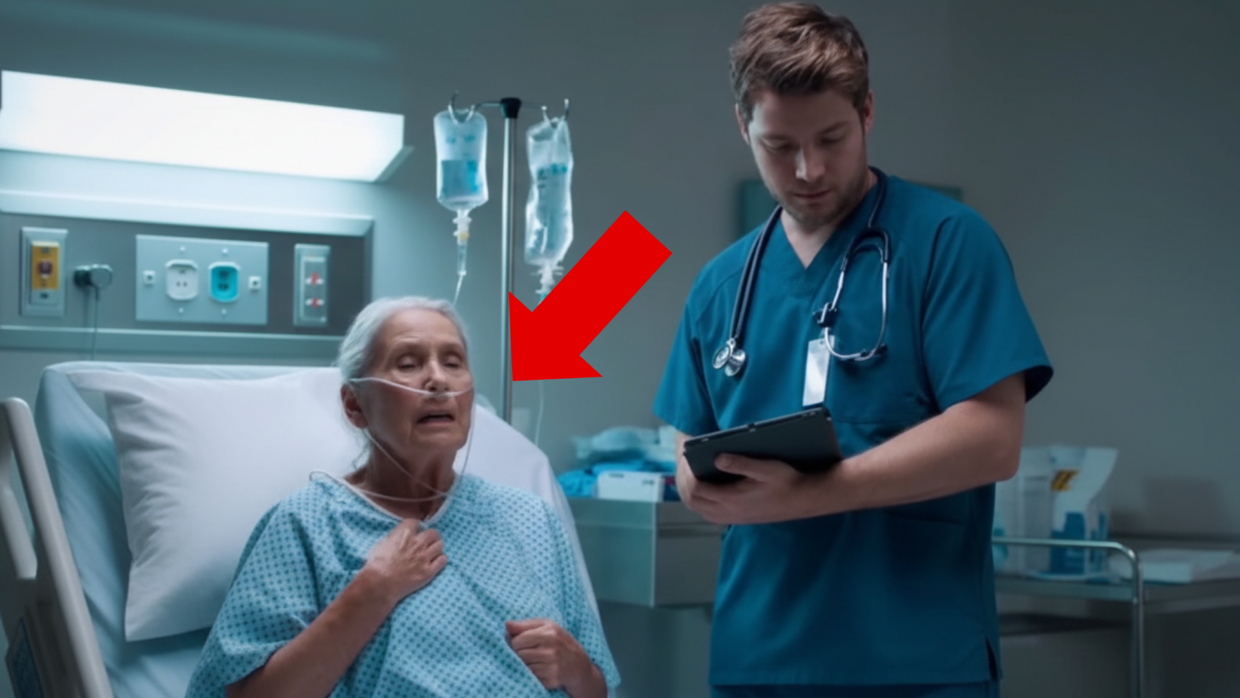
An arrogant ER doctor dismisses an elderly woman’s chest pain as anxiety… Then she codes and he reads her chart—she’s the dean who almost expelled him from med school.
Dr. Brad Thornton didn’t even look up from his tablet when the nurse brought in the new patient.
“Seventy-six-year-old female, chest discomfort, shortness of breath,” Sarah, the night nurse, recited.
Brad waved his hand dismissively. “Probably heartburn. These elderly patients come in here for everything.”
The woman sat on the gurney, her silver hair perfectly styled, her posture erect despite the pain etched on her face. She watched Brad with sharp, intelligent eyes.
“Doctor, I’ve been having crushing chest pain for the past hour,” she said calmly. “Radiating to my left arm. Accompanied by nausea and—”
“Yeah, yeah,” Brad interrupted, finally glancing at her. “You’ve been Googling symptoms again, haven’t you? Everyone thinks they’re having a heart attack these days.”
Sarah shifted uncomfortably. “Dr. Thornton, maybe we should run an EKG—”
“I’ll decide what tests we run, Nurse.” Brad’s voice was sharp. He turned to the patient with barely concealed irritation. “What’s your name?”
“Margaret,” she said softly.
“Well, Margaret, you’re fine. This is probably just anxiety or maybe indigestion. Have you been stressed lately?”
Margaret’s lips pressed into a thin line. “I’m quite familiar with the difference between stress and cardiac symptoms, Doctor.”
Brad rolled his eyes. “Sure you are.” He made a note on his tablet. “I’m going to prescribe you some antacids and recommend you follow up with your primary care physician. We need these beds for actual emergencies.”
Two nursing students stood in the corner, their body cameras recording everything as part of the hospital’s new training program. Brad had forgotten they were even there.
“Doctor Thornton,” one student spoke up hesitantly. “Shouldn’t we at least—”
“Did I ask for your opinion?” Brad snapped. “You’re here to observe, not practice medicine.”
Margaret watched the exchange with growing concern. She’d seen this before—arrogance masquerading as confidence, impatience disguised as efficiency.
She’d hoped she was wrong about him.
“Please,” Margaret said, her voice strained now. “Just run the EKG. I’m telling you something is very wrong.”
Brad laughed, actually laughed. “Listen, lady, I’ve been doing this for three years. I think I know a panic attack when I see one. You elderly women always—”
The alarms screamed.
Margaret’s eyes rolled back. Her body seized, then went completely still.
“Code blue!” Sarah shouted, slamming the emergency button. “Code blue, Trauma Bay Three!”
Brad’s tablet clattered to the floor. “What the—no, no, no!”
The room exploded into controlled chaos. Nurses rushed in from every direction. Brad’s hands shook as he started chest compressions.
“Get the crash cart! Someone bag her!” His voice cracked with panic. “How did this—she was fine!”
“She told you she had chest pain!” Sarah snapped, hooking up the defibrillator pads. “She told you it was radiating!”
“Shut up and charge to 200!”
The defibrillator whined as it powered up. Brad continued compressions, sweat already beading on his forehead.
“Clear!” He shocked her once. Nothing. “Again! Charge to 300!”
Sarah grabbed Margaret’s chart to check for allergies before administering medication. Her face went white.
“Oh my God,” she whispered.
“What? What is it?”
“Dr. Thornton… do you know who this is?”
“I don’t care if she’s the Queen of England, just help me save her!”
Sarah’s voice was barely audible. “It’s Dr. Margaret Chen.”
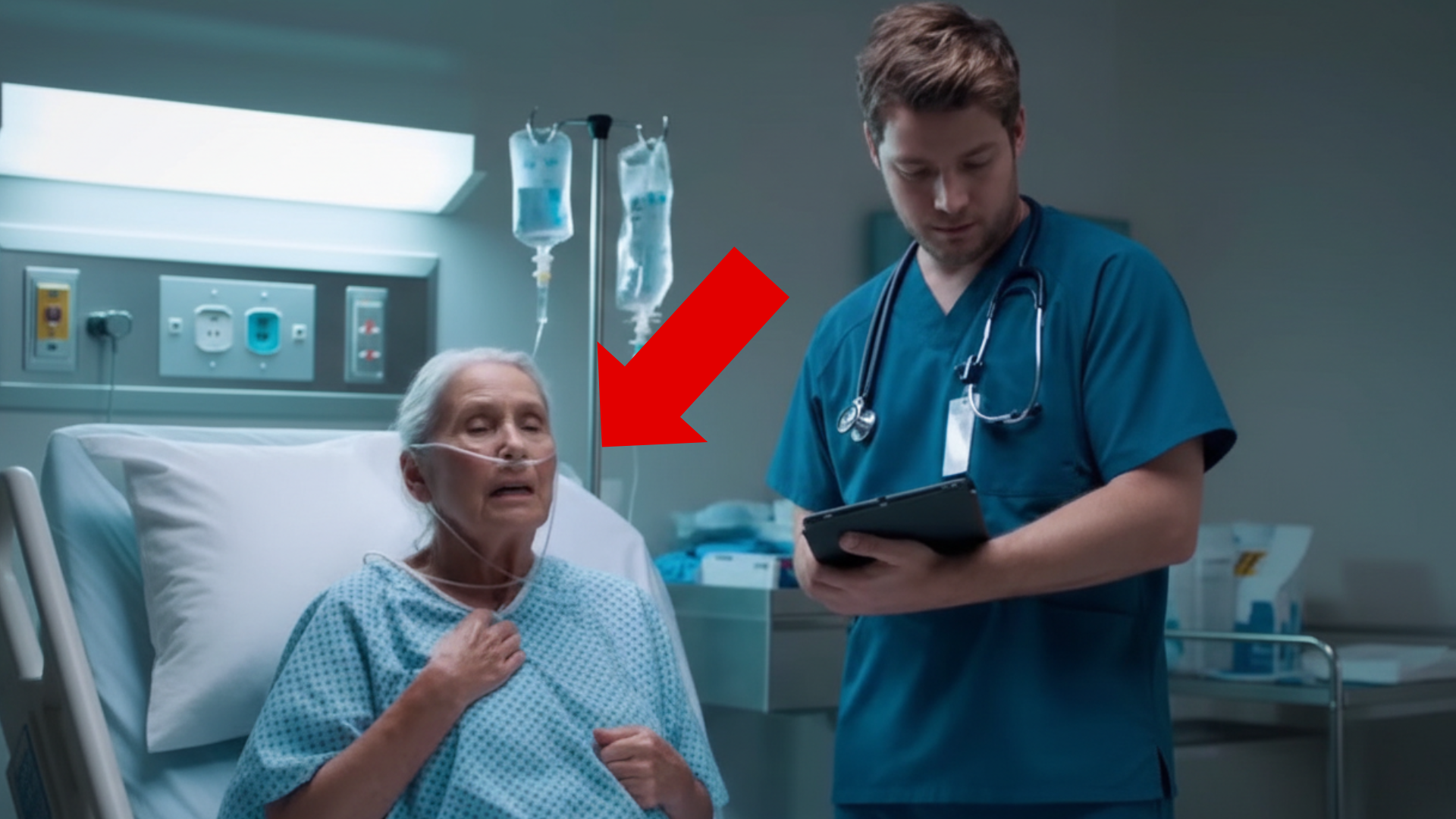
Brad’s hands froze mid-compression. “What did you say?”
“Dr. Margaret Chen. The Dean of Medicine. Your dean, Dr. Thornton.”
The room seemed to tilt. Brad looked down at the woman’s face—really looked at her for the first time. Recognition slammed into him like a freight train.
Eight years ago. The cheating scandal. The academic integrity hearing.
She’d been the only one who’d voted to give him a second chance.
“No,” he breathed. “No, no, no—”
“Dr. Thornton, compressions!” Another nurse yelled.
Brad snapped back, resuming CPR with desperate intensity. “Come on, Dr. Chen. Come on!”
“Rhythm check,” Sarah called out. “We’ve got a shockable rhythm. Charging.”
“Clear!”
Margaret’s body jerked. The monitor beeped—slow, but steady.
“We have a pulse!” Sarah announced. “Pulse is weak but there. BP 80 over 50.”
“Start a dopamine drip,” Brad ordered, his voice hollow. “And get Cardiology down here NOW. Tell them it’s a STEMI.”
“Already paged,” Sarah said quietly.
Dr. Rahman from Cardiology burst through the doors three minutes later, his team right behind him. He took one look at the patient and his eyes widened.
“Is that—”
“Yes,” Brad said numbly. “It’s Dr. Chen.”
Rahman immediately took over. “Pupils?”
“Equal and reactive,” a nurse reported.
“Good. We’re taking her straight to the cath lab. This is a massive MI.” Rahman fixed Brad with a hard stare. “What happened?”
“I…” Brad’s mouth went dry. “She presented with chest pain and I—”
“You what?”
Sarah stepped forward, her voice steady. “He told her it was anxiety. Dismissed her symptoms. Refused to run an EKG.”
Rahman’s jaw clenched. “You did what?”
“The nursing students recorded everything,” Sarah added quietly. “Body cameras.”
Brad felt his stomach drop through the floor.
“We’ll discuss this later,” Rahman said tersely. “Right now, we save her life.”
They rushed Margaret toward the elevators. Brad stood frozen in the empty trauma bay, staring at his shaking hands.
One of the nursing students approached cautiously. “Dr. Thornton? Are you okay?”
“Get out,” Brad whispered.
“But—”
“GET OUT!”
The students fled. Brad sank onto the gurney where Margaret had been lying. The same gurney where he’d almost let her die.
The surgery took four hours. Dr. Chen had a 95% blockage in her left anterior descending artery—the “widow maker.” Another ten minutes and she would have been dead.
Brad waited in the surgical wing’s hallway, unable to leave, unable to do anything but wait.
When Rahman emerged, still in his surgical scrubs, his expression was grim.
“She’s alive,” he said. “Barely. Another few minutes…” He shook his head. “How could you miss this, Thornton? Seventy-six-year-old woman, classic presentation, and you diagnosed anxiety?”
“I didn’t think—”
“That’s exactly right. You didn’t think.” Rahman stepped closer. “That woman revolutionized cardiac care protocols in this hospital. She’s trained half the physicians on staff. And you treated her like garbage.”
“It was a mistake—”
“It was negligence. And those body cameras caught all of it.” Rahman’s voice dropped. “Hospital administration has already been notified. Dr. Patel wants to see you tomorrow morning. Nine AM sharp.”
Brad nodded mutely.
“One more thing,” Rahman said. “She’s awake. And she’s asking for you.”
Brad’s legs felt like lead as he walked to the ICU. Through the glass window, he could see Dr. Chen, intubated but conscious, monitors beeping steadily around her.
He pushed open the door.
Her eyes tracked to him immediately—clear, focused, devastatingly aware.
A nurse was adjusting her IV. “Just a few minutes,” she warned Brad. “She needs rest.”
When they were alone, Brad approached the bed slowly. “Dr. Chen, I… I’m so sorry. I didn’t realize—”
She held up one hand weakly, stopping him. The breathing tube prevented her from speaking, but she pointed to the notepad on her bedside table.
Brad handed it to her along with a pen.
Her handwriting was shaky but legible: “You didn’t recognize me.”
“No, I… I’m sorry. It’s been eight years, and I—”
She wrote again: “I recognized you immediately.”
Brad’s blood ran cold. “You knew? You knew who I was when you came in?”
She nodded slowly, then wrote: “Wanted to see what kind of doctor you became.”
The words hit him like a physical blow. “This was a test?”
She shook her head firmly and wrote: “Real emergency. Real heart attack. But I knew who you were. Said nothing.”
“Why?”
Her pen moved across the paper: “Curious if I made the right choice 8 years ago. Saving your career.”
Brad felt tears burning his eyes. “Dr. Chen—”
She wrote one more sentence: “I have my answer now.”
The next morning, Brad sat in the hospital administrator’s office. Dr. Patel, the Chief of Staff, sat across from him. Next to her was Linda Morrison from HR and the hospital’s legal counsel, David Chen (no relation to Margaret).
“We’ve reviewed the body camera footage,” Dr. Patel said, her voice ice-cold. “All of it.”
She turned her laptop around. Brad watched himself on screen—dismissive, arrogant, cruel.
“You elderly women always…” His recorded voice dripped with condescension.
Dr. Patel paused the video. “Dr. Thornton, do you understand the severity of what occurred?”
“Yes. I made a terrible mistake—”
“This wasn’t a mistake,” Linda interjected. “This was a pattern. We pulled your patient complaint records. In the past six months alone, you’ve had twelve formal complaints about dismissive behavior. Twelve.”
Brad’s mouth went dry. “I didn’t know—”
“You didn’t know because you never bothered to check,” Dr. Patel said. “You were too busy being brilliant, weren’t you?”
The legal counsel leaned forward. “Dr. Thornton, what you did constitutes gross negligence. Dr. Chen presented with textbook MI symptoms and you not only failed to diagnose her, you actively refused testing and berated her for wasting your time.”
“She could have died,” Dr. Patel added. “In fact, she very nearly did. Only the immediate response of Nurse Sarah Williams prevented a fatality.”
Brad’s voice was barely a whisper. “What happens now?”
Dr. Patel’s expression was granite. “Effective immediately, you are suspended without pay pending a full investigation. Your hospital privileges are revoked. We are reporting this incident to the state medical board, who will conduct their own review.”
“You’re firing me?”
“We’re following protocol for medical negligence,” Linda said. “The board investigation will determine if your medical license is suspended or revoked entirely.”
“But I—I saved her! I did the code, I—”
“You saved her from the emergency YOU created by ignoring her!” Dr. Patel stood abruptly. “Dr. Thornton, Dr. Margaret Chen is the reason you even have a medical license. Eight years ago, when you were caught cheating on your pharmacology final, the academic review board voted 4-1 to expel you. Do you know who that one vote was?”
Brad nodded, his throat tight.
“Dr. Chen stood alone in that room and argued for you. She said everyone deserves a second chance. She said you had potential, that you just needed guidance and maturity.” Dr. Patel’s voice shook with anger. “She put her reputation on the line for you. And last night, you repaid her kindness by nearly killing her through sheer arrogance.”
“I didn’t know it was her—”
“It shouldn’t have mattered! Every patient deserves the same standard of care, whether they’re a homeless person or the Dean of Medicine!” Dr. Patel took a breath, composing herself. “We’re done here. Security will escort you out. You have one hour to clean out your locker.”
Three days later, Brad received a certified letter from the state medical board. His license was suspended pending a formal hearing. The earliest available date was six months away.
His apartment felt empty. His phone stayed silent. Former colleagues wouldn’t return his calls.
On the fifth day, his doorbell rang. Brad opened it to find Dr. Rahman standing there.
“Can I come in?”
Brad stepped aside numbly. Rahman entered, looking around the sparse apartment.
“You look like hell,” Rahman observed.
“Thanks.”
“Dr. Chen asked me to give you this.” He handed Brad an envelope.
Brad stared at it. “Why would she—”
“Just read it.”
With shaking hands, Brad opened the envelope. Inside was a single sheet of hospital letterhead.
Dr. Thornton,
I am writing this from my hospital bed, where I continue to recover from the myocardial infarction you failed to diagnose.
Eight years ago, I gave you a second chance because I believed in redemption. I believed people could learn from their mistakes and become better. I was wrong about you.
Your actions in the ER that night revealed not a young doctor who made an error in judgment, but a physician who has lost sight of why we do this work. You treated me—and based on the complaints we found, many others—with contempt and dismissiveness. You allowed your ego to override your medical judgment.
The body camera footage has been submitted to the medical board. I have also provided a detailed statement of my experience as your patient. I want to be clear: I am not doing this out of revenge. I am doing this because you are a danger to patients.
However, I remember who you were eight years ago—a scared student who made one bad choice. That person had potential. I don’t know if he still exists inside you.
If you wish to practice medicine again, you will need to do more than apologize. You will need to completely rebuild who you are as a physician. This will take years. It will be humbling. It may ultimately be impossible.
But if you choose to do the work—real, deep, transformative work—my door is open for one conversation. One. And only after you’ve demonstrated genuine change.
The second chance I gave you eight years ago, you squandered. I will not give you a third.
I wish you clarity in whatever comes next.
Dr. Margaret Chen
Brad read the letter three times, tears streaming down his face.
“She wants to destroy me,” he whispered.
Rahman’s voice was sharp. “She wants to protect future patients from you. There’s a difference.”
“I lost everything.”
“You lost what you never really earned.” Rahman moved toward the door, then paused. “For what it’s worth, Dr. Chen fought to keep your suspension from being a full revocation. The board wanted you banned from medicine permanently. She argued for the suspension instead.”
Brad looked up, stunned. “Why?”
“Because she still believes in second chances. Even for you.” Rahman opened the door. “Don’t waste it this time.”
Two weeks later, Dr. Margaret Chen was discharged from the hospital. She was greeted by the entire cardiology department and dozens of staff members lining the hallway, applauding as she walked out.
She smiled, waved, and made her way to the waiting car.
The next morning, she walked into the Chief of Medicine’s office, where Dr. Patel was waiting.
“Margaret, you should be resting—”
“I’ve rested enough.” Margaret sat down, her movements still careful but determined. “I’m here to accept.”
Dr. Patel blinked. “Accept?”
“The board asked me three months ago to come out of semi-retirement and serve as temporary Chief of Medicine while they search for Dr. Harrison’s replacement. I said no then.” Margaret’s eyes were steel. “I’m saying yes now.”
“Margaret, you just had a major cardiac event—”
“Which revealed catastrophic failures in our ER protocols.” Margaret pulled out a folder. “I’ve spent the last week reviewing patient complaint records, quality metrics, and body camera footage from our physician competency program. We have a serious problem, Sarah. And it goes far beyond Dr. Thornton.”
Dr. Patel leaned forward. “What did you find?”
“Eighteen physicians with patterns of dismissive behavior toward elderly patients, women, and minorities. Dozens of missed diagnoses. And a culture that prioritizes speed over thoroughness.” Margaret opened the folder. “I want to overhaul the entire ER. New protocols, mandatory bias training, real accountability measures.”
“That’s a massive undertaking—”
“I nearly died because a doctor thought he knew better than his patient. I’m not letting that happen to anyone else.” Margaret’s voice was firm. “I have six months before my cardiologist will let me work full-time. I want to start immediately, part-time basis.”
Dr. Patel studied her friend’s face—the determination, the fire that had never dimmed.
“When can you start?”
“Tomorrow.”
Six months later, Brad Thornton sat in the medical board hearing room. His lawyer sat beside him. Across the table was a panel of five physicians, including Dr. Margaret Chen.
She looked healthier now, her color good, her posture strong. She’d returned to work three months earlier and had already transformed the hospital’s ER protocols.
The board chair cleared his throat. “Dr. Thornton, you’ve completed the required remedial training and submitted evidence of 200 hours of supervised clinical work. The question before us now is whether to restore your license or make the suspension permanent.”
Brad’s hands were clenched in his lap. “I understand.”
“Dr. Chen, as the affected party, you have the right to address the board.”
Margaret stood, gathering her papers. Brad couldn’t meet her eyes.
“Six months ago, Dr. Thornton’s negligence nearly cost me my life,” she began. “His actions were indefensible. His attitude was reprehensible. And his subsequent punishment was entirely justified.”
Brad closed his eyes.
“However,” Margaret continued, “I’ve reviewed his remedial work. All 200 hours. I’ve spoken to his supervising physicians at County General, where he’s been working as a volunteer in their free clinic.”
Brad looked up, surprised.
“The reports describe a completely different physician. Humble. Thorough. Patient-centered.” Margaret’s gaze met his. “Dr. Thornton submitted a portfolio of patient testimonials. Homeless individuals, elderly patients, immigrants—people he would have dismissed six months ago. They describe a doctor who listened. Who cared. Who saved lives by paying attention.”
The room was silent.
“I cannot—and will not—forgive what he did to me. But I can acknowledge what he’s done since. The work speaks for itself.” Margaret sat down. “My recommendation is conditional license restoration. Two years of supervised practice, mandatory quarterly evaluations, and one year of continued service at a community clinic.”
The board chair nodded. “Thank you, Dr. Chen.” He looked at Brad. “Dr. Thornton, do you have anything to say?”
Brad stood, his voice steady. “I almost killed the woman who saved my career. I can never take that back. All I can do is spend the rest of my career making sure I never become that person again.” He looked directly at Dr. Chen. “I don’t deserve your recommendation. But I won’t waste it. Not this time.”
Margaret’s expression remained neutral, but she gave a single, slight nod.
After twenty minutes of deliberation, the board returned.
“Dr. Thornton, your license is restored under the conditions Dr. Chen outlined. You will remain under supervision for two years, minimum. One misstep and you’re done. Permanently.”
Brad exhaled shakily. “Thank you. Thank you.”
As the room cleared, Brad approached Dr. Chen. She was gathering her papers, moving slowly.
“Dr. Chen, I—”
She held up a hand. “Dr. Thornton, I didn’t do this for you. I did it because those patients at County General deserve a good doctor. The testimonials convinced me you might become one.”
“I will. I promise.”
“Promises are easy. Consistency is hard.” She looked at him directly. “You have one chance to prove the last six months weren’t an act. Don’t waste it.”
She walked past him without another word.
Brad watched her go, then looked down at his restored medical license.
One chance. He wouldn’t need another.
EPILOGUE:
Two years later, Dr. Brad Thornton completed his supervised practice period with perfect evaluations. He chose to stay at County General’s free clinic permanently, turning down multiple offers from prestigious hospitals.
Dr. Margaret Chen served as Chief of Medicine for three years, revolutionizing ER protocols across the entire hospital system. Patient complaints dropped by 73%. Missed diagnosis rates fell to nearly zero.
She never spoke to Brad again outside of professional contexts.
She didn’t need to.
The hundreds of patients whose lives he saved—the elderly, the dismissed, the ignored—spoke for her.