



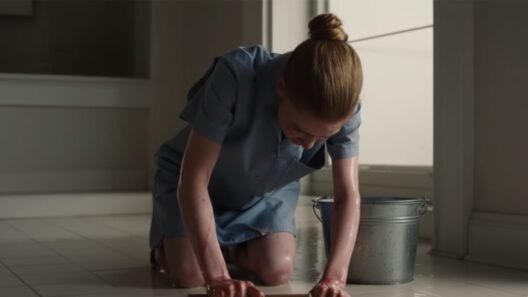
Martha sat at the kitchen table, the ticking clock her sole companion as late morning sunlight streamed through the faded lace curtains. Her gaze drifted across the cluttered table, her life distilled in the mundane objects scattered before her: a half-empty coffee cup, a grocery list scribbled on the back of an old receipt, and a damp dish towel. Each item seemed to hold her in place, a gentle but persistent reminder of responsibilities and routines.
“Did you pick up the dry cleaning?” her husband Richard called from the living room.
“I’ll do it later,” Martha replied, her voice barely above a whisper. She knew the question masked a subtle criticism, a habitual probing of her worth tethered to the completion of small tasks.
She rose from the table, every movement deliberate, as if her limbs were bound by invisible strings. The weight of expectation pressed down on her shoulders, echoing the familiar refrain of her mother’s voice, always urging compliance over conflict. “Smile more, dear. Be agreeable.”
Her family had woven a web of silence around her, each thread spun from thin strands of judgment and unspoken rules. At every juncture where dissent might have blossomed, she found herself stifled, her needs pruned away in favor of harmony.
After breakfast, Martha wandered into the backyard. The garden had always been her refuge, a place where silence felt sacred and self-imposed rather than enforced. She knelt by the rose bushes that lined the fence, her fingers brushing petals as soft as newborn skin. Here, she could breathe unencumbered by expectation.
“Mar, I need the keys!” Richard’s voice shattered the tranquility, pulling her back into the orbit of her obligations.
“They’re on the table!” she called back, suppressing the sharp edge of her frustration.
She watched as he retrieved them, his footsteps retreating into the house like a tide pulling away from the shore. Left alone, Martha lingered, the sun warming her back like a kind word. Her eyes fell on a single rose blooming defiantly amid a cluster of wilted buds. It stood tall and unyielding, a silent anthem to resilience.
Later that day, as evening approached, Martha found herself seated across from her sister Claire in a bustling café. The air was heavy with the scent of roasted coffee and freshly baked pastries—a comforting contrast to the unease knotted in her stomach.
“How have you been?” Claire asked, a question drenched in genuine concern.
Martha hesitated, the familiar urge to placate rising within her. “I’ve been busy,” she replied, the words tasting hollow.
“Busy doesn’t mean good, Martha,” Claire pointed out gently. “You seem… distant.”
The truth of the statement pierced Martha’s defenses, her composure fracturing under the weight of her sister’s gaze. “I feel like I’m fading, Claire,” she admitted, voice trembling like a brittle leaf clinging to its branch.
Claire reached across the table, her hand a lifeline. “You’re still here. You just need to find yourself again.”
Martha nodded, tears blurring her vision. She knew somewhere within her lay the seeds of change, waiting only for the courage to plant them.
After their conversation, Martha walked home along familiar streets bathed in twilight’s gentle glow. Each step felt like an affirmation, a quiet promise whispered only to herself.
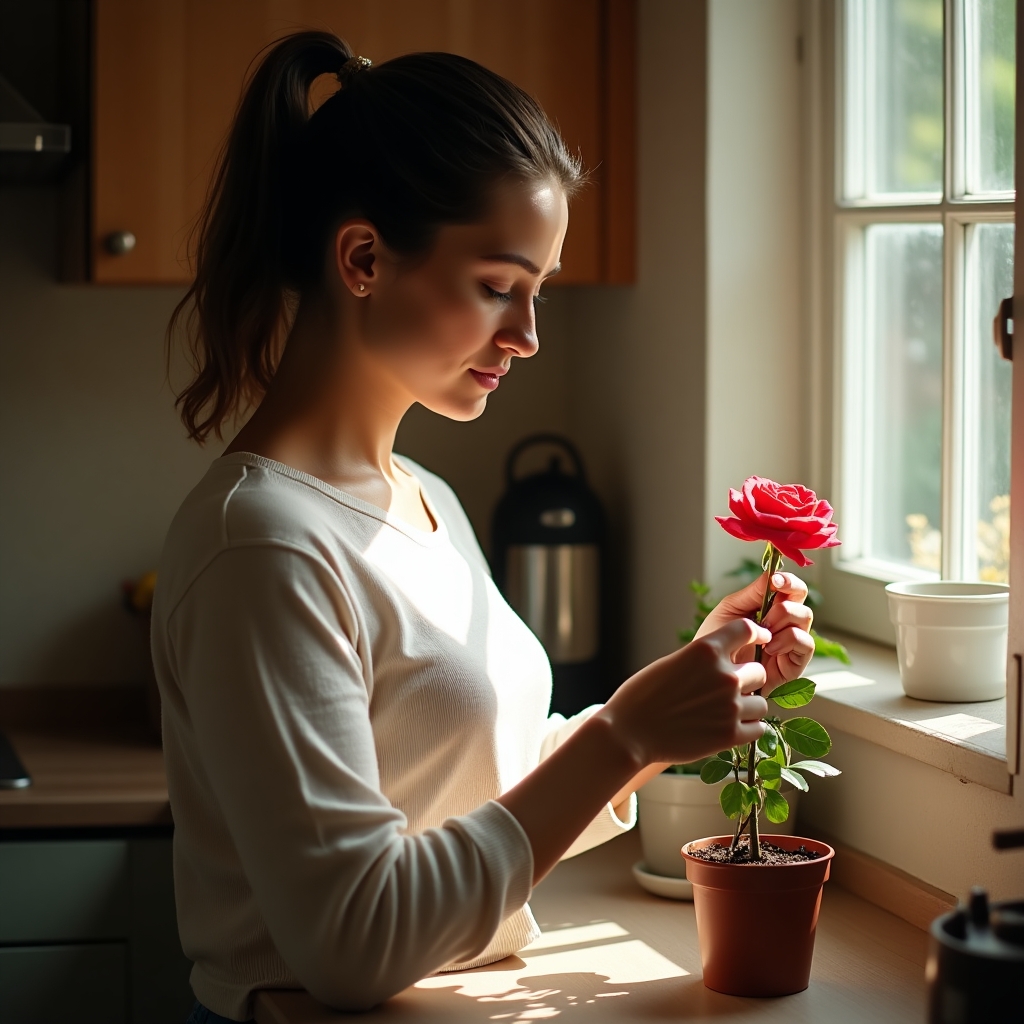
The next morning, she stood in the kitchen, bathed in early light. Richard was gone to work, and the house was hers, a rare sanctuary. She placed a small pot of soil on the windowsill, pressing a single rose cutting into the earth. Her fingers were steady, her resolve growing roots as real as the plant she nurtured.
Martha stepped back, a soft smile curling her lips. The act was small but potent, a symbol of her intention to cultivate more than survival. She wanted to thrive, to reclaim spaces within herself that had been colonized by acquiescence and silence.
As the days passed, the cutting began to grow, thriving under her care. Every time she watered it, she felt a piece of herself unfurling, each leaf a testament to her autonomy reclaimed.
That evening, as she sat at the dinner table with Richard, the usual hum of evening conversation enveloped them. But beneath the surface, something had shifted. Martha felt a burgeoning strength, a foundation built not on compliance but choice.
When Richard began to criticize the way the dishes were stacked, she didn’t retreat. Instead, she met his gaze, her voice steady and clear. “I like them this way.”
The room fell silent, a seed of change planted in the pause. Richard blinked, taken aback by this subtle defiance, yet Martha remained rooted, anchored in the truth of her own agency.
And so, with each passing day, Martha tended to her garden and herself, nourishing both with newfound care. The rose cutting on the windowsill thrived, a silent testament that from small acts, great transformations grow.