

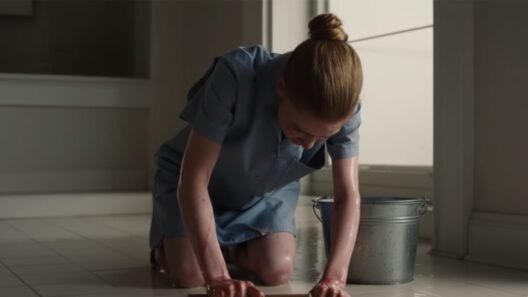

Anna stared out the window, her eyes tracing the path of a solitary leaf as it danced through the wind, its movements dictated by the invisible forces around it. It was a metaphor she knew too well—how often had she moved at the whim of others, her own desires an afterthought?
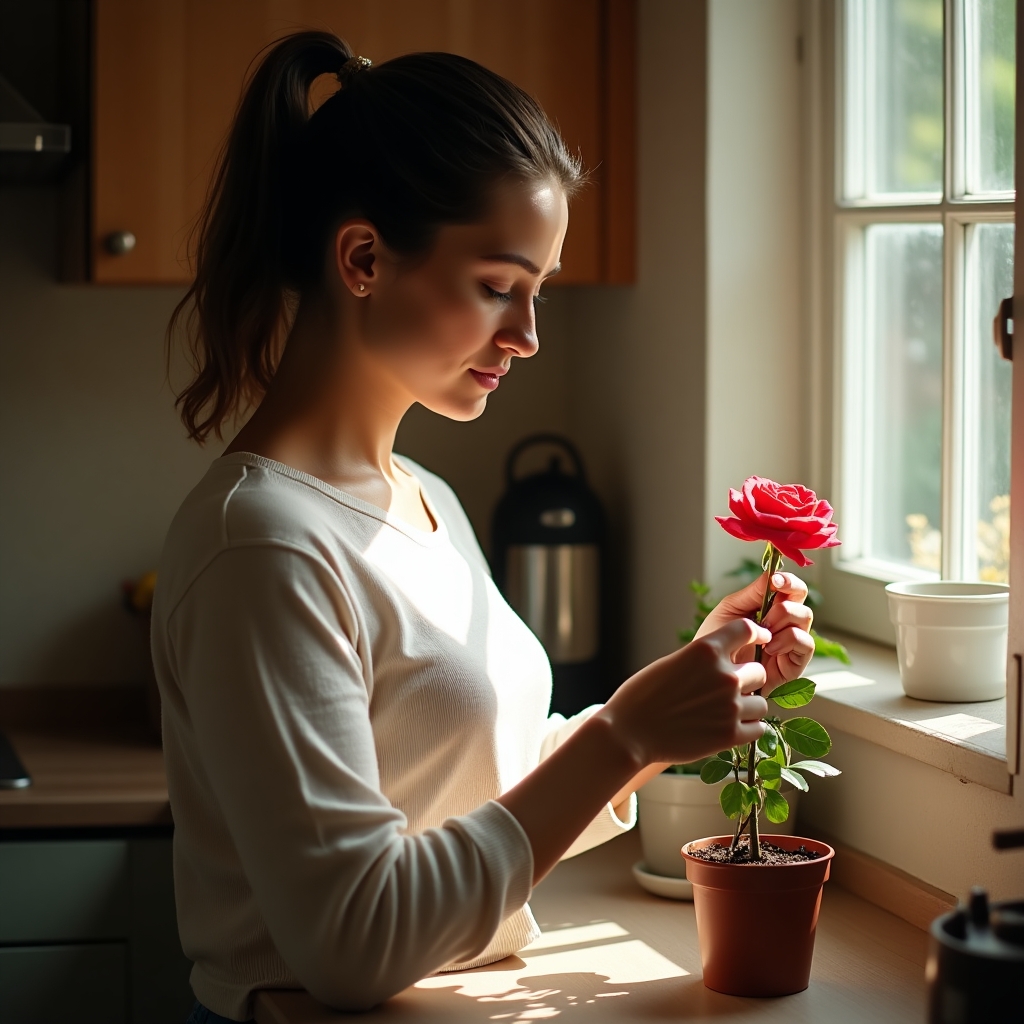
The morning sun, muted by thick clouds, cast a gray light into the small kitchen that she methodically tidied every morning. The clinking of porcelain cups and the scent of brewing coffee grounded her in routine, a comforting, if stifling, ritual that had defined her days for years.
“Anna, where’s my blue shirt?” David’s voice, though not harsh, carried an edge that was sharper than she liked. She turned to see him standing at the kitchen doorway, a hint of impatience lining his brow.
“In the laundry basket,” she replied, keeping her voice even.
He sighed, a sound dense with unspoken criticism, and left the room. Anna’s hand paused mid-wipe of the counter, her knuckles white against the sponge as she took a slow, deliberate breath.
Growing up, her mother had often told her that keeping peace was more important than being right. In their small suburban town, niceties masked deeper truths and whispered disappointments. Anna had absorbed this lesson well, smoothing over disruptions, minimizing her own needs to keep the delicate balance intact.
Yet, something inside her had begun to shift. It was subtle at first, like the quiet rustle of leaves in a barely perceptible breeze. She found herself questioning, in those quiet moments before sleep or when the house was empty, what lay on the other side of her “peace.”
One afternoon, while rearranging the living room—a small rebellion of hers that went unnoticed—she stumbled upon an old sketchbook. Dust motes danced in the air as she flipped through it, her eyes skimming over drawings she barely remembered creating. Each page was a testament to a different part of herself, a girl who once believed that her dreams of art were valid. The memory of charcoal under her nails, the smell of the paper—it filled her with a yearning she could no longer push aside.
“David, I’m thinking of taking a drawing class at the community center,” she mentioned casually over dinner that evening, her eyes focused on her plate.
“Do you really have time for that?” he replied, barely looking up from his phone.
Her heart sank, but she simply nodded, falling silent. The habitual discouragement was like a well-worn path; easy to follow, hard to divert from.
That night, haunted by the echoes of her own silence, Anna found herself unable to sleep. The sheets felt heavy, the air too stifling. She slipped from the bed carefully, leaving David undisturbed, and padded softly into the living room.
The old armchair by the window called to her, and she sank into it, pulling her knees to her chest. She watched the moonlight paint shadows on the floor and let herself think.
Anna considered her life, not in the familiar terms of others’ expectations, but from a place she had long avoided—her own heart. It was time, she realized, to reclaim her voice, to assert her presence in a life that seemed to drift, unmoored.
The decision felt monumental, yet as simple as a breath. It was akin to the leaf she had watched that morning, finally choosing its own path in the wind.
Her chance came the following weekend. David was supposed to be away on a business trip, but a sudden change of plans left him home. Anna had already signed up for the drawing class, her mind set on attending it. She found him in the living room, his focus on the game blaring from the TV.
“I’m going to the class,” she informed him, her voice steady, her eyes meeting his.
He paused, remote mid-air, surprise flickering across his face. “But I thought—”
“I need this, David,” she interrupted gently, firmly. “It’s important to me.”
He fell silent, his objection unspoken, and she nodded, taking his quiet acceptance as permission.
The walk to the community center was transformative. The wind felt different now, not an adversary but a companion, encouraging her forward. Anna arrived with a sense of purpose, her heart in her throat and her hands tingling with anticipation.
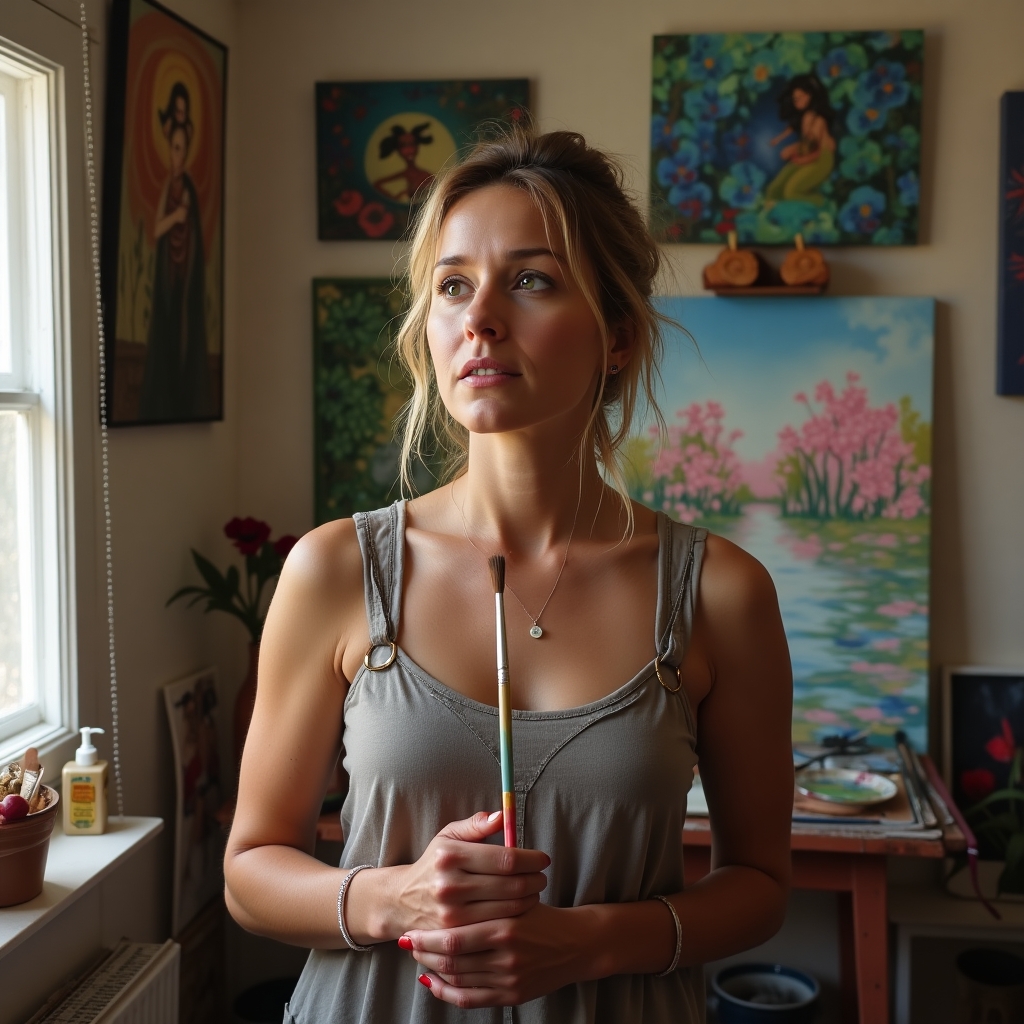
The studio smelled of paint and paper, the tables cluttered with supplies and surrounded by people just like her, seeking something more. She found a seat by the window, the light spilling onto the blank page before her like a promise.
As Anna picked up a pencil, she felt a surge of something she hadn’t experienced in years—joy, unadulterated and liberating. The pencil moved, the lines forming under her hand with each stroke gaining confidence. Each mark was a testament to her choice, her small but profound act of liberation.
In this act, she found herself again, and it felt like coming home.