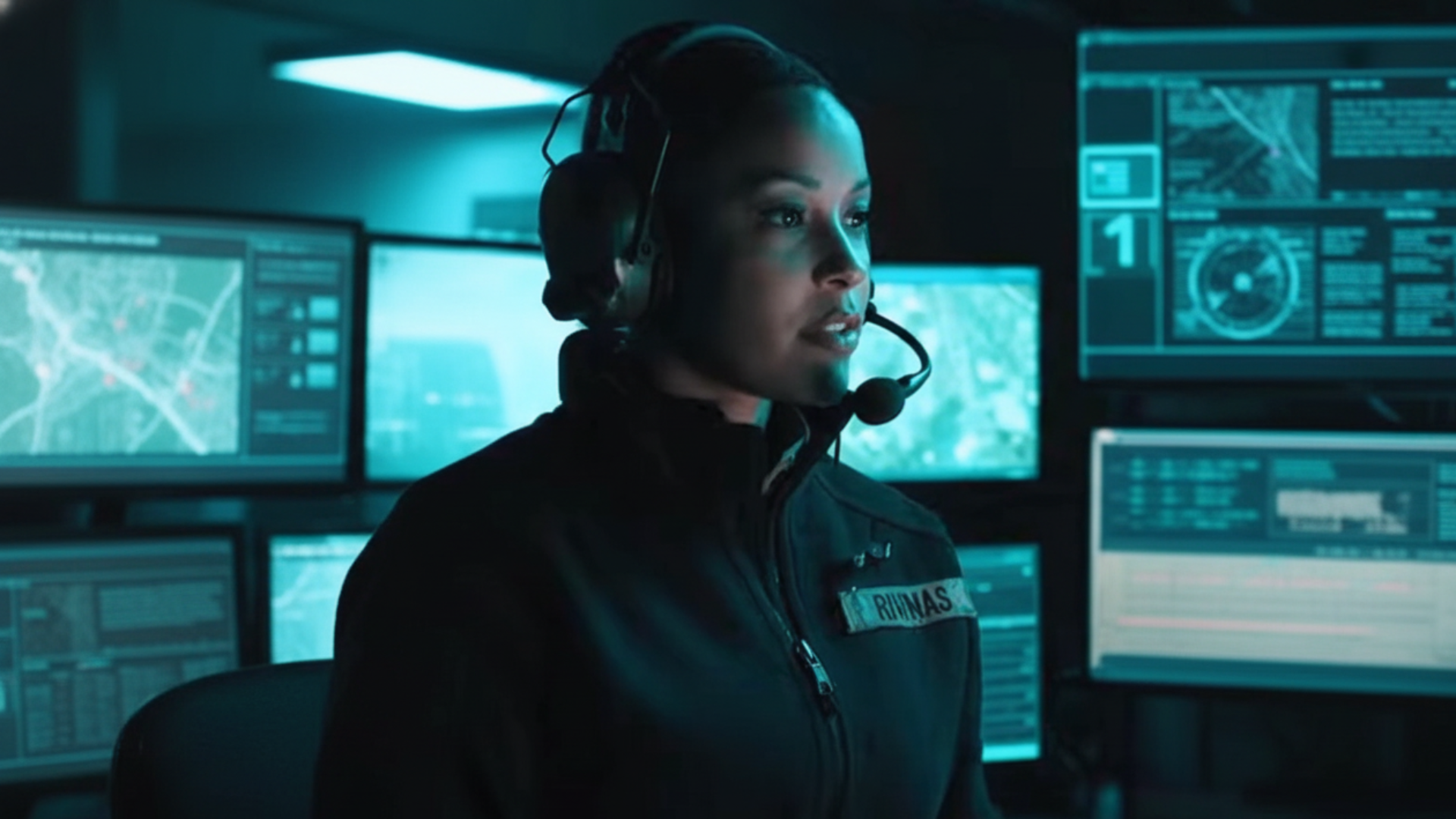
He said I was only there to “make the slides look pretty.”
By sunrise, the same man was on his knees in the dirt, begging the “admin girl” to get him out alive.
“You’ll handle coffee, slides, and note‑taking. Real work stays with the operators.”
That was my welcome speech.
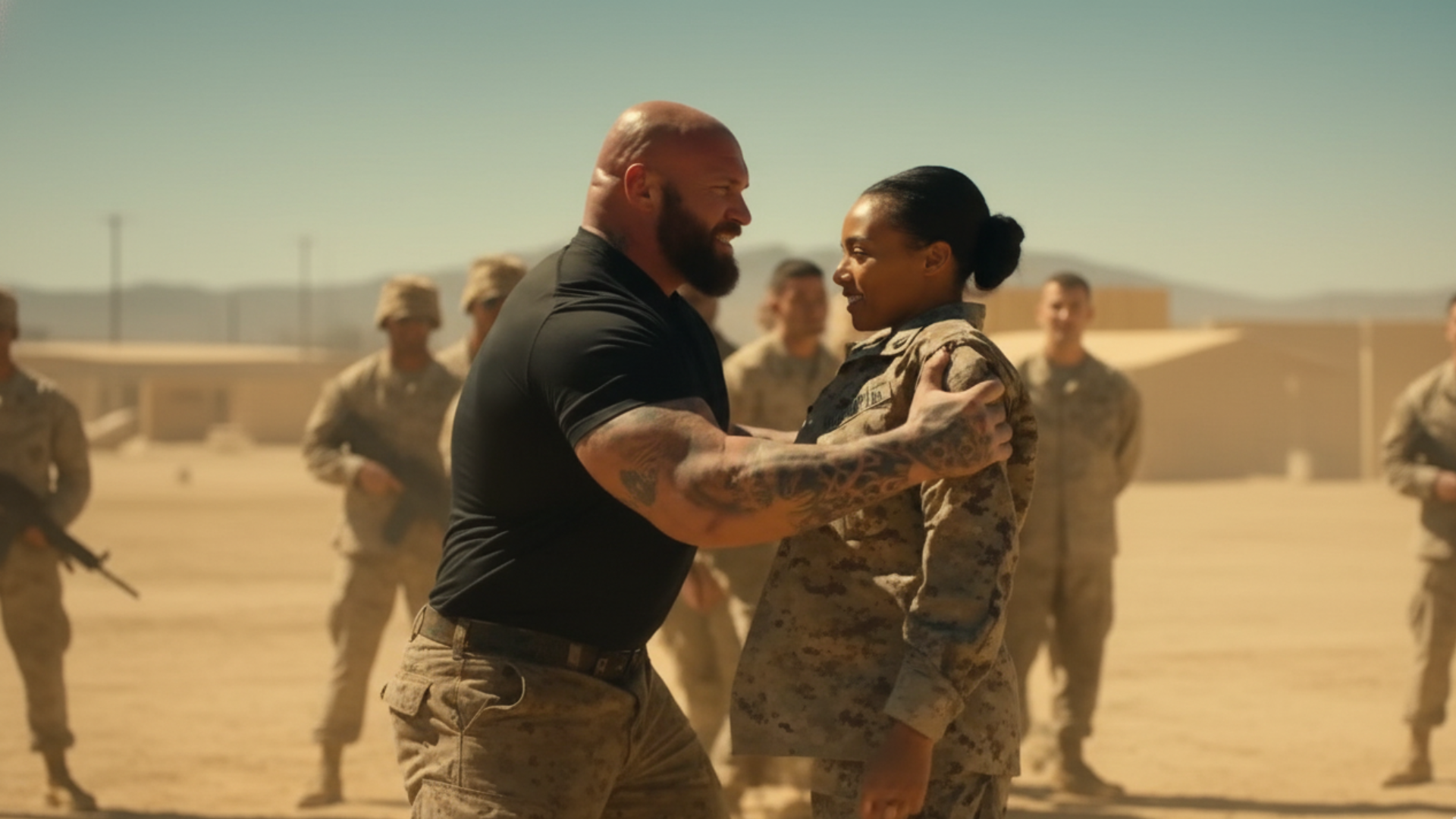
Lieutenant Commander Hayes stood at the front of the classroom, forearms like railroad ties, trident glinting on his chest. Fifty special operators—SEALs, Rangers, Raiders, and a scattering of foreign SOF—crowded the rows of metal chairs, half‑bored, half‑curious. I stood by the whiteboard with a stack of folders pressed to my vest like a shield.
He didn’t even bother to look at my rank.
“Copy that, sir,” I said quietly.
Someone in the back snorted. Another voice whispered, not as quietly as he thought, “Diversity hire.”
The projector hummed to life. On the screen: “JOINT URBAN RESCUE EXERCISE – NIGHTFALL.”
Hayes pointed his laser at the words like he was aiming a rifle. “This is a 24‑hour full‑mission profile. You screw up, you don’t just fail a course—you demonstrate you’re not fit for high‑risk hostage work. Careers end in this building.”
He swept the room with his gaze, then stopped on me again.
“And that includes support staff who forget their place.”
A few men laughed. Most stared straight ahead, doing the math in their heads: new course chief, new rules, new person to fear.
My name is Captain Elena Rios, United States Marine Corps. I have led a 14‑person special operations team through three cities that no longer exist on a map. I’ve coordinated gunships over streets that turned into fire, called medevacs for men whose names still wake me up at 03:17, and once held off forty fighters with six rifles, one broken radio, and a prayer I didn’t believe in.
But to Hayes, I was the girl with the laptop.
“Sir,” I said, keeping my voice even, “my orders list me as an instructor, not a secretary.”
He turned slowly, as if my words had physically struck him.
“You think because some colonel signed a piece of paper, you’re one of us?” His smile was small and sharp. “Relax, Captain. This is a lethal rescue course, not HR training. Try not to trip over a cursor.”
Laughter again. Louder this time. My ears rang, but my face stayed neutral. I’d learned a long time ago that the most dangerous thing in a room full of predators wasn’t teeth. It was silence.
“Understood, sir,” I said.
What I didn’t say was: You’ve already lost, and you don’t even know the battlefield yet.
Phase I started at 1800.
We moved from the classroom to the “city”—a maze of concrete shells, rebar, and stacked shipping containers sprawled across the training range. Floodlights threw harsh cones of white into the gathering dark; beyond their reach, the world fell off into black desert. Loudspeakers crackled with distant gunfire and recorded screams.
Hayes split the class into three mixed‑service teams. He put me in Team Three, then immediately tried to bury me.
“Captain Rios, you’re operations support,” he announced. “You’ll stay in the command shack monitoring feeds. No weapon, no kit, no tactical decisions. If we need a PowerPoint, we’ll call you.”
He turned to the others. “Gentlemen, she is not part of your solution set. Clear?”
My future teammates shifted uncomfortably. A bearded Air Force JTAC looked at me with something like apology. A British commando just stared, unreadable. No one spoke up.
I’d seen that look before. Sangin, Marjah, Mosul—it wore different uniforms but always the same expression: I’m sorry, but I’m not sorry enough to stand between you and the man with the power to end me.
“Roger that, sir,” I said.
Inside, another voice that sounded like my old team sergeant whispered, Let him underestimate you. It’s free camouflage.
By 2200, the exercise was in full swing.
On the screens in the command shack, helmet cams jittered through narrow alleys and stairwells. Muzzle flashes strobed white in night vision. Instructors triggered role‑players, pyrotechnics, moving obstacles. The whole thing was designed to break plans and expose egos.
Team One hit their target building in textbook fashion and still lost half their “hostages” to a secondary site they never cleared.
Team Two got bogged down when their lead tried to micromanage every corner. The clock bled out while he argued on the net.
And Team Three—the team I was supposed to be “supporting”—sat on the staging line, waiting for orders that never came.
“Sir,” I said, glancing at the timer on the wall. “Team Three’s step‑off window is closing. We’re going to lose the scenario.”
Hayes didn’t look up from his tablet. “They’ll move when I tell them to move.”
“With respect, sir, the hostage execution inject is at—”
He snapped his head toward me. “Did I ask for your input, Captain?”
“No, sir,” I said.
“Then sit there, watch your cameras, and take notes. You can debrief your own performance afterward.”
My jaw tightened. On screen, I watched the red countdown digits eat themselves: 00:08:32… 00:08:31…
A memory rose up, uninvited.
Not a screen this time, but an actual alley in an actual city, choked with smoke and the metallic taste of fear. The timer then had been on my wrist, counting down the time until an IED belt detonated on three teenagers zip‑tied to a chair in a basement. The man on the net had told me to wait for clearance.
I hadn’t.
“Captain?” my comm chief had asked, eyes wide.
“If we wait,” I’d said, “we’re not rescuing hostages. We’re collecting pieces.”
I’d taken the team against direct orders. I’d earned a reprimand, three dead insurgents, and three boys whose mother still sends me pictures every year on the date no one celebrates.
The timer on the wall hit 00:06:00.
“Sir,” I said quietly, “request permission to assume local control of Team Three comms for scenario integrity.”
He laughed without humor. “Scenario integrity? Listen carefully, Captain: there is no scenario more important than the chain of command. If they fail, they fail. Maybe that’ll teach them not to rely on an admin officer.”
The room felt suddenly too small. My pulse thudded in my throat. Outside, over the speakers, simulated gunfire climbed into a frenetic rattle.
00:04:45.
The JTAC from Team Three’s stack channel crackled in my headset, his voice clipped. “Command, this is Valkyrie Three‑One, holding on Phase Line Bravo, still no go order, be advised—”
His audio cut. On my screen, his camera feed spasmed, went black, came back with a shaky view of concrete.
A red indicator blinked on the base map. ROLE‑PLAYER ENEMY CONTACT: AMBUSH.
Hayes cursed. “Who authorized that inject?”
“It’s in the master scenario, sir,” I said. “If they hold past eight minutes, the OPFOR counter‑attack triggers. They’re in it now.”
He stabbed a finger at the console. “Freeze the lane. Kill the inject.”
“Can’t, sir.” I tapped the keyboard. “Once a live role‑player move is triggered, it has to play through. Safety protocol. We can terminate if someone calls ‘knock it off,’ but—”
“But then the lane is a wash,” he finished.
“Yes, sir.”
00:03:29.
“Team Three is about to get wiped,” I said.
He leaned over me, close enough that I could smell coffee and mint gum on his breath. “Let them. Maybe then you’ll understand what happens when people don’t listen.”
He straightened and folded his arms, watching the screens like they were entertainment instead of lives, even simulated ones.
On the feed, I saw shapes moving fast down an alley toward my stalled team. The JTAC’s view was still off‑kilter, half‑blocked by a dumpster. Another operator’s camera showed muzzle flashes lancing out of second‑story windows.
Instinct overrode training.
I reached for the spare headset hanging on the rack, snapped it on, and keyed into Team Three’s frequency.
“Valkyrie Three, this is Overwatch,” I said. “Break, break, taking emergency local control. Ambush inbound from your east. You are danger close to a kill box you don’t know about.”
Hayes’s head whipped around. “Rios, stand down!”
I met his eyes for a fraction of a second, then looked back at the screens.
“Three‑One, do you copy?” I pressed.
There was a burst of static, then the JTAC’s strained voice. “Overwatch, Three‑One, we copy you. Who the hell is this?”
“Your best friend for the next three minutes,” I said. “Shift your stack north to the alley with the blue truck. You’ve got a side entrance to Objective Bravo that isn’t on your target packet.”
“That wasn’t in the brief,” he protested.
“Because the brief is wrong,” I said. “Move now or you lose your whole lane. Trust me later.”
There was a heartbeat of hesitation. Sweat prickled at the back of my neck.
Then: “Roger, moving.”
On the wide shot replay screen, I watched Team Three peel away from the kill zone just as the ambush cell poured fire into the space they’d been occupying seconds before. Hits registered on the HUD system—virtual kill shots that would have ended their run.
They slipped into the side alley. My cursor tracked them around the blind corner.
00:01:42.
“Three‑One, you’re thirty meters from a secondary door with a rusted awning,” I said. “That door goes straight to stairwell two. Hostages are two floors up in a bathroom with no windows. You breach from there, you cut OPFOR’s angles in half.”
“How do you know this?” he demanded, breathing hard.
“Because I designed that portion of the city two years ago,” I said. “On the other side of that wall is where my team took real fire. Don’t argue with my ghosts. Stack on the door.”
Behind me, Hayes hissed into my ear, “If they pull this off because of you, I will personally—”
His words were cut off by the flat crack of a breaching shot through the speakers.
The door blew inward. Cameras jolted as Team Three flooded through the dark corridor. A role‑player “enemy” stepped into view and dropped as their marking rounds lit his vest. Another turned, too slow; another vest blinked red.
They hit the bathroom at 00:00:19.
Three “hostages,” eyes covered, hands bound, flinched as the team burst in. The vest sensors on Team Three stayed blessedly dark.
“Hostages secured,” someone yelled. “Time stamp!”
The giant clock on the wall froze at 00:00:11.
Silence fell in the command shack.
On my screen, one of the hostages started sobbing with relief. It was just acting. The emotion in the room behind me wasn’t.
Slowly, deliberately, I took off the headset and set it on the console.
Hayes’s face was the color of old brick.
“You just violated a direct order,” he said, voice trembling with contained fury. “You compromised my lane, interfered with my students, and turned my course into your personal playground. You’re done here, Captain. I will make sure you never touch another special operations billet again.”
I opened my mouth to answer, but the door to the shack slammed open first.
A man in desert MARPAT stepped in, silver eagles on his collar catching the fluorescent light. A small group of senior instructors trailed behind him, faces carefully blank.
“Carry on,” Hayes blurted automatically, then stiffened to attention. “Admiral Kirsch, sir, we weren’t informed—”
“Relax, Commander,” the Marine colonel beside the admiral said. His voice was calm, but his eyes were not. They swept the room, took in the screens, the frozen clock, the headsets.
They stopped on me.
“Captain Rios,” he said. “Good to see you again.”
My spine snapped straight. “Sir.”
Hayes blinked. “You two know each other?”
The colonel’s jaw flexed. “Elena Rios led a Marine special operations team that pulled my son out of a basement in Al‑Hamra three years ago. She also rewrote half of this facility’s urban lane layouts when the casualty stats from the last course looked like a slaughterhouse. You signed the update packet, Commander. Did you not read it?”
Color drained from Hayes’s face.
“I… read the executive summary, sir,” he muttered.
The admiral stepped forward, watching the replay of Team Three’s run on the central monitor. “Interesting choice, holding them on the line while the timer bled out,” he said mildly. “Was that your idea, Commander?”
Hayes swallowed. “I—sir, I was testing their discipline. Waiting to see if they’d act without proper authorization.”
The colonel arched an eyebrow. “Or if your ego would.”
The admiral nodded toward me. “What we saw was an instructor recognizing a catastrophic scenario and intervening with local knowledge she herself helped design. Not only did she preserve scenario integrity, she created the exact stress conditions this course is supposed to measure. Frankly, it’s the best run we’ve seen all rotation.”
He turned fully toward Hayes.
“And you tried to stop it.”
The silence that followed was thick enough to chew.
“Commander Hayes,” the colonel said quietly, “who did you think Captain Rios was?”
Hayes hesitated. His eyes flicked to my bare right breast pocket, where my ribbons would have been if I’d worn dress uniform, not utilities.
“She’s listed as an admin augment, sir,” he said finally. “A staff officer.”
The colonel nodded slowly. “She is staff. She is also the recipient of the Silver Star for actions during urban combat operations in Al‑Hamra. She has led Marines and joint operators under actual fire in the kind of environments you can only simulate. When you applied to take over this course, her name was in the packet as the subject‑matter expert you’d be working with.”
His gaze hardened.
“You demoted her to coffee and slide duty.”
A muscle in Hayes’s cheek jumped.
“I… misjudged her role, sir,” he said.
“No,” the colonel replied. “You misjudged her. And every man in this room watching you.”
The admiral folded his hands behind his back. “Effective immediately, Captain Rios is the lead urban rescue instructor for Nightfall rotations. You will support her curriculum changes and defer to her authority on lane design and execution.”
Hayes stared at him. “Sir, with all due respect—”
“Respect is exactly what you’ve demonstrated you can’t handle,” the admiral said softly. “You can protest through the chain if you like. In the meantime, consider yourself a student again. You’ll run the full 24‑hour profile under Captain Rios’s evaluation.”
My heart thudded once, hard.
“Sir, that’s not necessary,” I began.
“Oh, it is,” the admiral said. “Your peers deserve to see whether he can learn as well as he can talk.”
He looked at me. “Captain, you will brief him, plan his lane, and grade his performance. If at any point you feel his conduct compromises safety or learning objectives, you will recommend removal from course. That recommendation will carry considerable weight.”
For the first time since I’d walked into the gym that morning, the room seemed to exhale.
Hayes couldn’t quite meet my eyes. “Understood, sir,” he whispered.
The colonel stepped closer, his voice dropping so only a few of us could hear. “You held that timer to the last second, Captain. Just like Hamra.”
“Yes, sir,” I said.
He nodded once. “Some people only understand respect when the clock runs out.”
Sunrise came cold and pale, washing the fake city in thin gold.
Hayes knelt in the dirt just outside the final building of his lane, chest heaving, uniform streaked with sweat and dust. The HUD on his vest flashed a constellation of red—every “round” that had killed him and his fictional teammates.
He’d tried to bulldoze the lanes, barking orders, ignoring my warnings about blind alleys and dead spaces. He’d snapped at the role‑players, at the comms techs, at anyone who looked like they might remind him of the brief he’d barely listened to.
In the end, the city had eaten him.
I stood a few feet away, tablet in hand, the evaluation form already populated with data he didn’t want to see.
He looked up at me, eyes hollowed out by more than fatigue.
“You knew,” he said hoarsely. “You knew exactly where they’d hit me.”
“Yes, sir,” I said.
“You could have warned me.”
“I did,” I answered quietly. “Three times.”
He dropped his gaze. His hands dug into the dirt like he was searching for something buried there.
After a long moment, his voice came out rough. “Captain… Elena… what you did last night, with Team Three… what you did in Hamra… I…”
He swallowed. The words seemed to fight him on the way out.
“I was wrong,” he said finally. “About you. About… all of it.”
The men from the other teams were watching from a distance, pretending not to stare. The admiral and the colonel stood near the range control booth, silhouettes against the rising sun.
I let the silence hang for a second, feeling the weight of it.
“This course isn’t about making you look bad, sir,” I said. “It’s about making sure the next time this isn’t a game, no one dies because someone thought rank mattered more than experience.”
He nodded once, slowly.
“What happens now?” he asked.
I glanced at the tablet, then back at him.
“Now,” I said, “you go back to the classroom, sit in the second row, and listen. I’ll be up front. And if you’re smart, you’ll take more notes than anyone else.”
His mouth twitched, just a little. Not quite a smile. Not quite defeat.
“Roger that, Captain,” he said.
He pushed himself to his feet, brushed the dust from his knees, and for the first time since I’d met him, he saluted me like he meant it.
I returned it, the rising sun burning the edge of my vision.
People think respect is handed out with badges and titles.
The truth is simpler.
Sometimes, respect is just what’s left standing when the clock hits zero and the smoke finally clears—and the person you tried to bury is the one holding the door open for you.