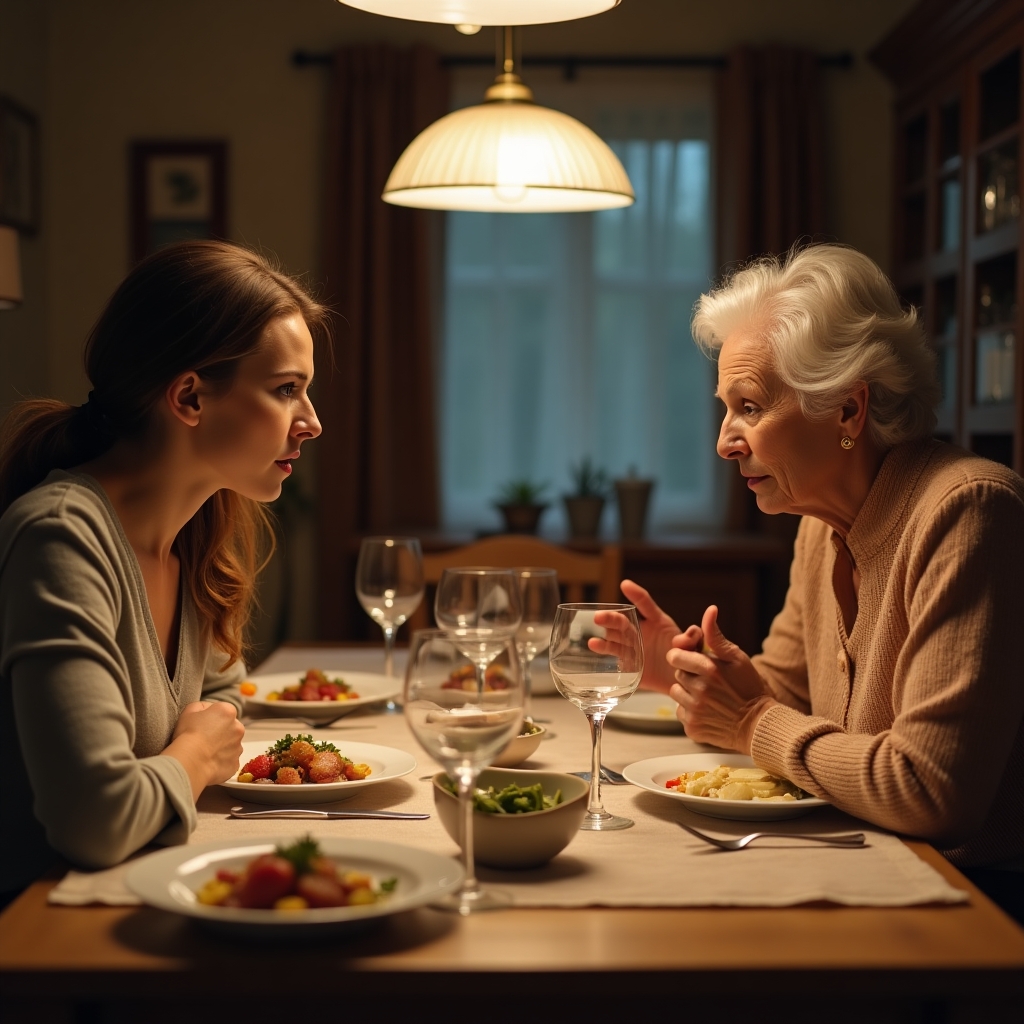



All it took was one canceled holiday for us to finally see Gran’s true colors. The annual trip to the lakeside cabin, a cherished tradition in our little family, was suddenly off. Gran had decided we ‘needed’ to host a family reunion instead, at her home, of course. My wife, Jenna, sat across from me at the kitchen table, her lips pressed into a thin line, the usual sparkle in her eyes replaced by a simmering frustration.
“I just don’t understand why we have to change our plans,” Jenna said, her voice barely concealing her irritation.
“You know how she is,” I replied, trying my best to sound diplomatic, though I felt a surge of anger at the thought of Gran dictating our lives yet again.
Gran, my mother-in-law, had always been a formidable presence. With her sharp eyes and even sharper tongue, she had an uncanny ability to make us feel like errant children rather than adults with our own family. Our initial compliance was out of respect – or fear. As the family matriarch, she wielded her power through subtle manipulations and overt commands.
“She thinks it’s better for the family to be together, that’s all,” I added, attempting peace.
Jenna shook her head. “But why does it have to be her way every single time? We’ve bent over backward to accommodate her. I’m tired of it.”
We did what we always did: we relented, though our hearts weren’t in it. The reunion commenced at Gran’s grand estate, a sprawling Victorian that seemed to echo her commanding persona. The tension was palpable, each forced smile and polite acknowledgment only serving to remind us of the strings she pulled.
The breaking point came the evening before the reunion. Gran, in her usual authoritarian manner, had gathered us all in the sitting room. She stood by the fireplace, an imposing figure draped in her customary regal attire, and declared, “This family has been drifting apart. Tomorrow’s reunion is crucial, and I expect all of you to be here, without exception.”
Jenna’s brows knit together as she looked at me. I knew that look, the one that preceded a storm. Despite the oppressive atmosphere, I felt something shift inside me – a resolve that had been simmering beneath the surface.
“Gran,” Jenna started, her voice steady but firm, “we’ve decided to take the kids to the cabin just as we planned. We’re sorry, but this is important for our family.”
The room fell silent. Gran’s eyes widened in disbelief, her mouth opening and closing as if grasping for the right retort. “You can’t just—”
“We can,” I interjected, taking Jenna’s hand for support. “We’ve always respected you, but we need to make decisions for our own family now.”
It was as if the walls of the room had shifted, a barrier finally shattered. The family watched, a subtle nod from Jenna’s brother, a quiet agreement. Gran’s face softened, realization dawning in her eyes as she stepped back, conceding if only for the moment.
As we left her house, a symbolic release in the slam of the front door, the air seemed fresher, lighter. Our journey to the lakeside cabin felt like the beginning of something new and precious – our independence, fought for and reclaimed.
In years to come, our relationship with Gran softened. Boundaries set in that decisive moment helped foster a mutual respect we had longed for. It was not about severing ties but reshaping them to ensure our family’s freedom and happiness.