

Hey everyone, it’s been a while since I posted anything personal. This isn’t easy for me to share, but I feel like it might be time to finally let it out. I’ve been carrying around a truth for years, hidden beneath layers of denial, and the realization hit me at the most unexpected moment.
A few weeks ago, my niece Emma was playing in our attic. She’s a curious seven-year-old with an adventurous spirit, just like I was at her age. While I was tidying up downstairs, she brought me an object wrapped in a dusty, yellowed cloth. I recognized it immediately—my grandfather’s old police whistle.
I hadn’t seen it in decades. It was a small, insignificant-looking thing, but it held a world of memories. I remember my grandfather wearing it during his morning walks when he’d entertain me with tales of his days on the force, his voice tinged with pride and nostalgia. To a child, he was a hero.
“What’s this, Aunt Lucy?” Emma asked, her eyes wide with curiosity.
As I held the cold metal in my palm, a flood of emotions washed over me. I hadn’t thought about those days for so long. The whistle was more than just a keepsake; it was a symbol of everything I had admired and feared.
You see, as a teenager, I had discovered something that changed everything. I overheard my grandfather arguing with my father in the garage. Their voices were hushed but fierce, filled with words that rattled my understanding of the past. My grandfather had been dismissed from the force under a cloud of suspicion that he had never been able to shake, despite his insistence of innocence. That was the day the image of my hero shattered.
I couldn’t reconcile the man I knew with the truths I had learned. I buried it deep, pretending it didn’t matter, that it was just a part of life. But the truth was, it ate away at me. I grew distant from my grandfather. We never spoke about it, and he never knew I heard. Our relationship became a series of polite conversations, devoid of the warmth and laughter that once filled the cracks.
Holding the whistle now, it all resurfaced. I realized how much I missed him. Not the hero—just him. The man who taught me to ride a bike, who shared his peanut butter and jelly sandwiches with me, who played chess on rainy Sunday afternoons. I had let the shadows of the past overshadow the light.
That night, I lay awake, the whistle resting on the bedside table, a silent witness to my turmoil. Memories played in my mind like an old film reel, spliced with regret and longing. The following morning, I made a decision.
I called my dad. We hadn’t talked about Grandpa in years. “Dad,” I began hesitantly, “can we talk about Grandpa?”
There was a pause on the line, as if he was bracing for something. “Sure, Lucy. What about him?”
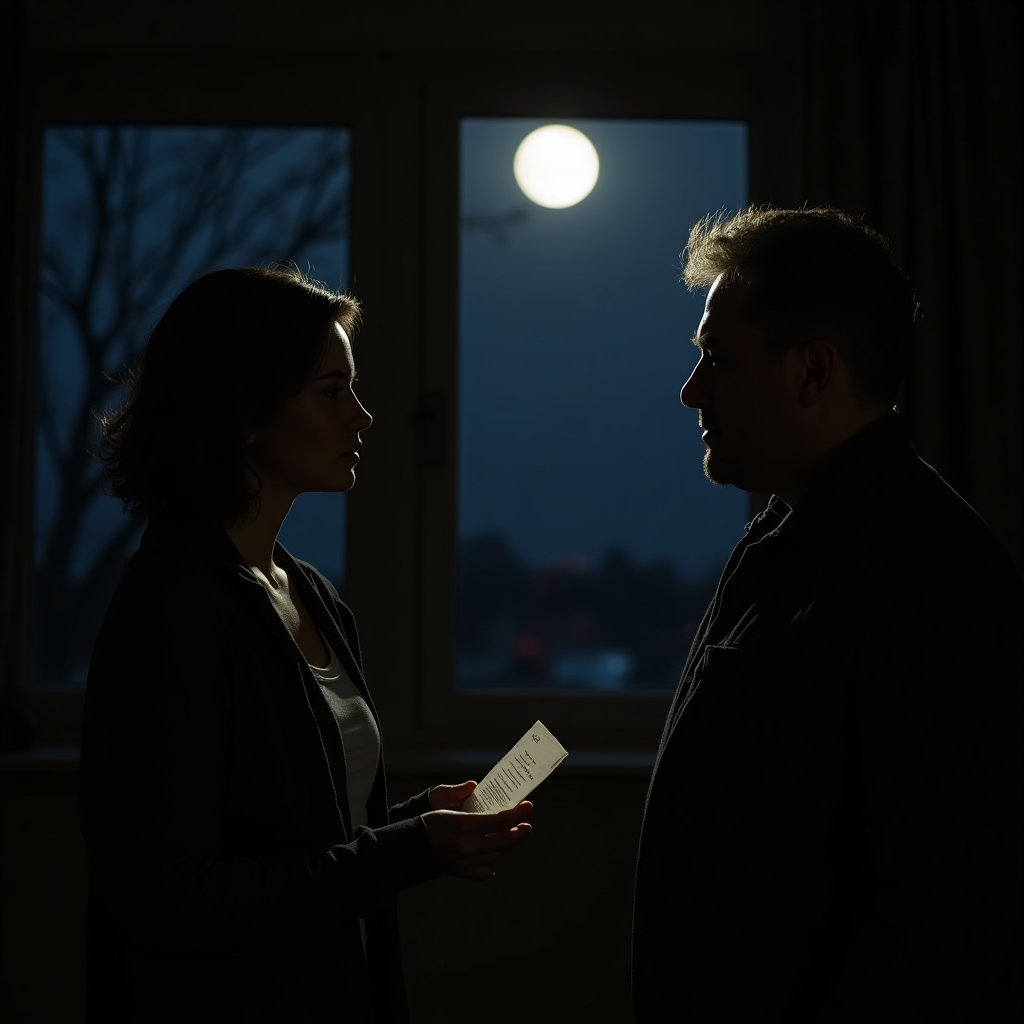
“I found his whistle,” I confessed. “Or rather, Emma did. And it got me thinking…I never told you, but I overheard you two arguing in the garage when I was younger. I heard about why he left the force.”
The silence was thick, but eventually, Dad’s voice came through, softer and more vulnerable than I remembered. “Lucy, your grandfather was complicated. He made choices, some good, some bad, but he loved you.”
“I know,” I whispered, tears blurring my vision. “I just wish I hadn’t let it come between us.”
There was a long pause before Dad spoke again, his voice filled with emotion. “He knew, honey. He knew you loved him, even if things got complicated.”
That conversation was like a balm, soothing the hurt I hadn’t realized was still so raw. I understood then that holding onto the hero image was less important than cherishing the real person, messy past and all.
In the weeks that followed, I began to talk about Grandpa more. I told Emma stories of his kindness, his quirks, and yes, even his mistakes. I wanted to pass down the truth of who he was, not the idealized figure or the flawed human, but the entirety of him.
And in sharing, I found peace. My grandfather would have been the first to tell me that life isn’t about being perfect; it’s about being true to who you are. That small whistle, once a heavy weight, became a reminder that love encompasses all parts of a person—the good and the bad.
So, thank you for listening. I hope this resonates with someone out there who might be wrestling with similar feelings. It’s never too late to reconcile with the past, to forgive, and to remember with love.