



Amara sat at the small kitchen table, the morning sun casting a soft glow over the simple room. The aroma of freshly brewed coffee mingled with the faint scent of lavender from her mother’s garden, seeping in through the open window. It was in this space, at this table, that Amara often found her mind meandering through the corridors of her life, navigating the tug-of-war between her heart’s desires and the weight of her family’s expectations.
Amara’s mother, Lailah, held deeply to the traditions passed down through their lineage. She was a woman of grace, her every action echoing the spirit of generations before her. Lailah believed in the community, in the power of collective wisdom, and firmly in the roots that anchored them to their history. Her daughter, however, felt the gentle yet persistent pull of something else—a yearning to wander, to explore possibilities beyond what was deemed conventional, and to carve out a path all her own.
The pressure of familial duty was not an overt demand but rather a subtle undercurrent that had woven itself into the fabric of Amara’s life. It was in the stories told during family gatherings, the knowing looks exchanged when certain topics arose, and the unspoken agreements that whispered to her of continuity and loyalty. It was as if the very essence of who she was expected to be had seeped into her bones, grounding her in ways she was both grateful for and wary of.
Amara often found solace in her art, where she could explore without constraint, letting her brush dance across the canvas with colors her words could not capture. Her small studio, tucked away in the corner of her apartment, was a sanctuary, a place where the outside world paused and she could listen to her own voice, unfettered by expectation.
Yet, even here, her mind wandered back to thoughts of her family. Was she selfish for wanting more? For questioning the life laid out before her like a well-trodden path? She feared disappointing those she loved, feared the quiet disappointment in her mother’s eyes, the kind that spoke louder than any words.
The internal struggle wore on, like a tide that ebbed and flowed, carrying her through moments of self-doubt and fleeting clarity. Until one day, as she strolled through her mother’s garden, the air thick with the scent of blooming roses and the sound of bees buzzing industriously, Amara found herself pausing beside an old oak tree.
It was here, surrounded by the earth and sky, that the noise in her head began to quiet. She leaned against the sturdy trunk, feeling the rough bark against her palm. It was a tree planted by her grandfather, a man she had never met but whose presence lingered in the stories her mother told. As a child, she’d played beneath its branches, feeling both protected and free.
In that moment, under the gentle sway of the branches above, Amara closed her eyes. She allowed herself to breathe, to feel the connection to the past and the possibilities of the future blending into a sense of now. She realized she didn’t have to choose between the two—her dreams and her heritage. Instead, she could carry them both forward, interwoven in a tapestry of her own making.
Opening her eyes, Amara felt a calm resolve settle within her. She would honor her family by living truthfully, by striking a balance between their values and her own aspirations. It was a revelation that was not a rejection but an evolution, a way of being that allowed her to embrace her lineage while stepping boldly into her own story.
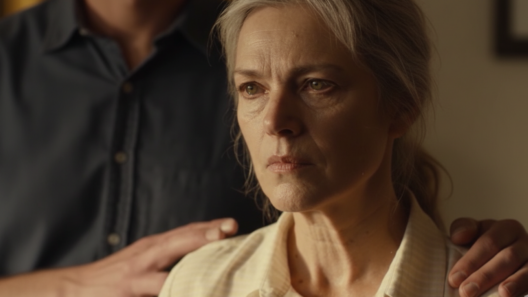
Later that evening, as she sat with her mother in the twilight of the garden, she began to speak, her voice steady and sure. She shared her dreams, her fears, and her hope to find a path that honored them both. Lailah listened, her expression unreadable at first, but as Amara spoke, a gentle smile played at her lips, her eyes softening, a silent acknowledgment of understanding and acceptance.
In that small yet significant moment, Amara felt the threads of their lives intertwine, felt the strength of her mother’s love bolstering her own resolve. It was not a loud declaration but a quiet, profound shift—a peace found in the merging of past and present, of familial bonds and individual truths. And for the first time, she saw a future where she was not torn between two worlds but enriched by them.