

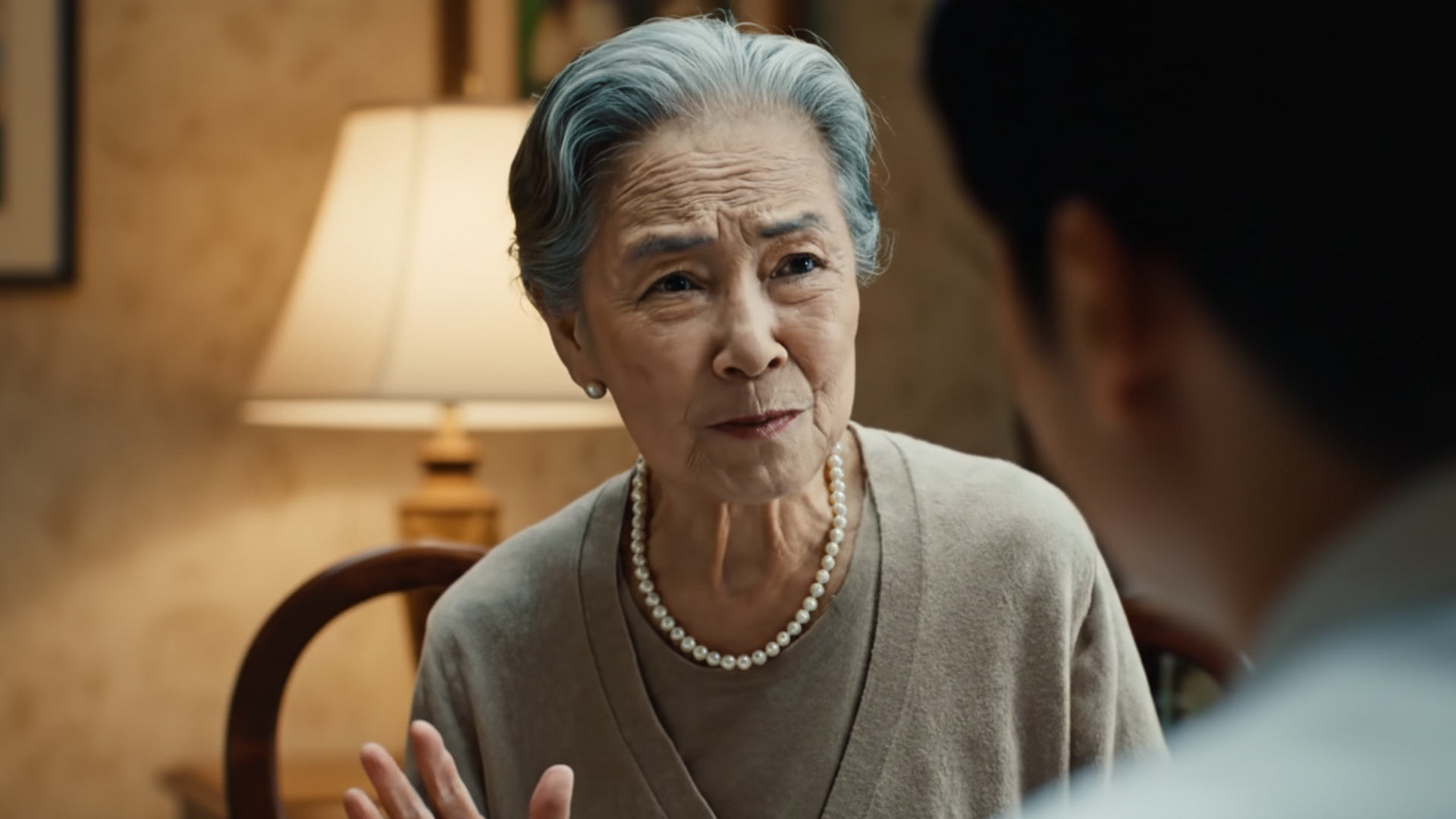
All it took was one canceled holiday for us to finally see Gran’s true colors. When she announced that our meticulously planned New Year’s vacation was ‘unsuitable’ and instead booked a chalet in the mountains for the whole family, it was the last straw.
The tension had been simmering for years—no, decades if I’m being honest. Gran, with her indomitable spirit and undeterred opinions, had a way of steering our lives without us realizing the reins weren’t in our hands anymore. From choosing our wedding venue to dictating how we should raise our children, from selecting our children’s schools to “suggesting” which cars we should drive, Gran’s influence was as expansive as it was burdensome.
But this time felt different. This time, she had crossed an invisible line that neither John nor I even knew existed until it was trampled.
It was a sunny Saturday morning in early December when the latest bombshell dropped. John, my husband, was diligently working in our garden, preparing it for winter, when his phone buzzed with a message in the family group chat. Gran’s voice was unmistakable, even in text form: “The beach trip is canceled. We’re all going to the mountains instead. I’ve already booked a chalet for everyone—five bedrooms, spectacular views. You’ll thank me later. Non-refundable, by the way. Departure is December 28th.”
John’s grip tightened around the gardening spade, his knuckles white against the wooden handle. The earth beneath him seemed symbolic of the control he desperately wanted to reclaim. “She’s done it again,” he sighed, showing me the message, his voice hollow with defeat.
The familiar surge of frustration washed over me, and I felt my jaw clench so hard my teeth ached. We had spent months planning this beach vacation—researching the perfect resort, booking activities the kids would love, saving money specifically for this trip. Our children, Emma (8) and Lucas (6), had been counting down the days, their excitement palpable every time they talked about building sandcastles and swimming in the ocean.
“We need to talk,” John said, and this time, determination replaced the resignation in his voice.
The Breaking Point
Later that evening, after putting the kids to bed with promises of “yes, we’ll figure out the vacation,” we sat at the kitchen table, a fortress of bright lamplight in our otherwise dim home. The house was silent except for the rhythmic ticking of the wall clock—each tick a reminder of how much time we’d already wasted living under Gran’s shadow.
“We can’t keep letting her do this,” John said, his hands wrapped around a mug of coffee that had long gone cold. “It’s not just about a holiday—it’s about how we live our lives. It’s about respect.”
I nodded, my fingers tracing the grain of the wood table as I gathered my resolve. “We need to set boundaries, but how do we do that without… you know, causing a family war? Your mother will take Gran’s side. Your brother will say we’re being dramatic. And your Aunt Patricia—”
“I don’t care,” John interrupted, and the firmness in his voice startled me. “We speak to her. It’s our life, our children’s childhood memories, and she needs to respect that. I’m forty-two years old, and I’m still asking permission to live my own life.”
He pulled out his phone and showed me something I hadn’t noticed before—a detailed spreadsheet Gran had sent separately to him. It outlined not just the mountain trip, but plans for the next three years: family gatherings, holiday destinations, even suggestions for which summer camps our children should attend.
“She’s planning our lives like we’re chess pieces,” John said, his voice cracking slightly. “When does it end? When our kids are making the same complaint about us in thirty years?”
That’s when I knew we had reached the point of no return.
Uncovering the Pattern
Over the next few days, John and I began comparing notes—really talking about Gran’s influence for the first time in our marriage. The revelations were startling.
Our wedding venue? Gran had “recommended” it so strongly that we felt we couldn’t choose anywhere else without causing offense. The result was a beautiful but impersonal ceremony that felt more like her event than ours.
Our house? We’d been looking at a charming craftsman in a different neighborhood, but Gran insisted this area was “more suitable for raising children.” We’d convinced ourselves she was right.
My career? I’d been offered a promotion three years ago that would have required occasional travel. Gran had voiced her concerns so loudly about me being “away from the children” that I’d turned it down. John had supported her position, and I’d resented him silently ever since.
Even small things: the piano lessons Emma hated but Gran insisted she needed, the sports Lucas was enrolled in because Gran believed they built character, the family dinners every Sunday that dominated our weekends.
“We’ve been frogs in boiling water,” I said to John one night. “It happened so gradually we didn’t notice until now.”
John discovered something else too—his brother Mark had tried to set boundaries five years ago. There had been a huge family fallout, and Mark had ended up apologizing and falling back in line. “He warned me,” John admitted. “He said standing up to Gran was impossible. I didn’t believe it was that bad. I thought he was exaggerating.”
The Confrontation
The confrontation happened during our regular Sunday lunch at Gran’s, but this time we came prepared. Her house was a museum of family history, every corner filled with photographs and mementos she used to remind us of our legacy—and her authority within it. The walls practically shouted: “I built this family, and I know what’s best.”
As the meal progressed, Gran started to elaborate on her grand plans for our newfound mountain adventure. She’d printed out itineraries for everyone, complete with scheduled activities and meal plans.
“There’s a lovely ski school for the children,” she announced, passing folders around the table like a corporate presentation. “And I’ve arranged for a photographer to capture our family portraits against the snow. It will be so much more elegant than beach photos.”
My mother-in-law, Carol, was nodding enthusiastically. “That sounds wonderful, Mother. So thoughtful of you.”
“It’ll be cold,” I interjected, keeping my tone light but firm. “The kids have been looking forward to the beach for months. They’ve been talking about nothing else.”
Gran waved her hand dismissively, her diamond rings catching the light. “Children don’t understand these things. They think they want one thing, but they don’t know what’s truly good for them. Trust me, you’ll all have a better time my way. I have seventy-eight years of wisdom, dear.”
John put his fork down deliberately, the clink against the porcelain plate cutting through the chatter. His face was a mask of calm, but I could see the tension in his shoulders. “Gran,” he said, breaking the unspoken rule of never challenging her at the table, “we’ve decided to go to the beach. It’s what we want, and we’ve already paid for it.”
The silence that followed was deafening. Gran’s eyes narrowed slightly, a storm brewing behind them. John’s brother Mark looked down at his plate, his wife Susan suddenly became fascinated with her napkin. Carol opened her mouth to speak but seemed to think better of it.
“And I suppose you think you know better than your elders,” Gran retorted, her voice sharp as cut glass. “I’ve been planning family holidays since before you were born, John. I’ve never steered this family wrong.”
“It’s not about knowing better,” John replied evenly, though I could see his hands trembling slightly. “It’s about choosing what’s best for our family—our immediate family. We love you, Gran, we respect you, but this is our decision. We’re not asking for permission; we’re informing you of our choice.”
“I’ve already paid for the chalet,” Gran said, her voice taking on a dangerous edge. “Non-refundable, as I mentioned. Are you really going to waste my money?”
This was the manipulation I’d expected. But John was ready.
“We didn’t ask you to book it,” he said quietly. “That was your choice. We told you our plans three months ago. You chose to ignore them.”
Gran’s face flushed red. “How dare you speak to me this way! After everything I’ve done for this family, after all the sacrifices—”
“And we’re grateful,” I interjected, finding my voice. “But gratitude doesn’t mean giving up our autonomy. We’re adults, Gran. We’re parents. We need to make our own decisions, including our own mistakes.”
Her lips pursed tightly, and for a moment, I thought she would explode. But then she leaned back in her chair, a calculating look replacing the anger in her eyes. The shift was almost imperceptible, but I caught it—this wasn’t over.
“Fine,” she said, her voice icy and controlled. “Have it your way. But don’t come crying to me when your ‘perfect’ beach vacation disappoints those children. Don’t expect me to fix it.”
The threat hung in the air, unspoken but clear: there would be consequences.
The Aftermath
The ride home was silent, the children sensing the tension and unusually quiet in the backseat. But despite the discomfort, there was a lightness in the car that hadn’t been there before. We felt liberated, as if we had unshackled ourselves from unseen chains.
“Did we just do that?” I whispered to John as we pulled into our driveway.
“We did,” he replied, and I could hear both relief and worry in his voice.
The next few days were strange. No calls from Gran. No texts in the family group chat. The silence was almost worse than her interference. Carol called once, her voice dripping with disappointment, suggesting we “apologize and make peace before Christmas.” We politely declined.
Then, a week before Christmas, the real campaign began.
First came the package: expensive gifts for the children, with a note saying how much Gran was “looking forward to the mountain adventure” and how she’d “bought special snow gear” for them. Emma and Lucas were confused—hadn’t we said we were going to the beach?
Then the phone calls to my parents, who suddenly started asking if we were “sure” about the beach, if we’d “considered Gran’s feelings,” if we understood “how family loyalty works.”
Finally, Aunt Patricia called, her voice thick with tears, explaining how Gran had been “so hurt” and was now “refusing to eat” and “might not have many Christmases left.”
The guilt campaign was in full force.
“She’s not going to make this easy,” I told John one night.
“Good,” he replied, surprising me. “If it were easy, it wouldn’t mean anything. We’re not backing down.”
The Beach Trip
December 28th arrived, and we loaded our car for the beach. The children’s excitement was infectious as they chattered about building the biggest sandcastle ever. As we pulled out of the driveway, my phone buzzed one final time.
It was a text from Gran: “I hope you know what you’re doing.”
I turned off my phone.
The beach trip was everything we’d hoped for and more. The resort was perfect, the weather was warm, and watching Emma and Lucas play in the waves, their laughter carried on the ocean breeze, made every moment of discomfort worthwhile. John and I took long walks on the beach, reconnecting in ways we hadn’t in years.
On New Year’s Eve, as we watched fireworks explode over the water, our children asleep in the hotel room behind us, John turned to me.
“We did the right thing,” he said.
“I know,” I replied. “I just wish it didn’t have to be so hard.”
“That’s how you know it matters,” he said, pulling me close.
The Resolution
We returned home to find that the world hadn’t ended. Gran was still alive, still formidable, but something had shifted. In the weeks that followed, her presence was less commanding. She still had her opinions, but now they came with a newfound—if grudging—respect for our autonomy.
The Sunday lunches continued, but now we occasionally declined when we had other plans. Gran would purse her lips but say nothing.
When Emma mentioned she wanted to quit piano, we told Gran before we pulled her out of lessons. She argued, of course, but when we explained it was Emma’s choice, she eventually accepted it.
The real test came in March when Gran started planning the family’s summer vacation. She presented her ideas at Sunday lunch—a villa in Tuscany, all planned and ready to book.
“That sounds lovely, Gran,” John said carefully. “Let us check our schedules and get back to you.”
I held my breath, waiting for the explosion.
Instead, Gran nodded slowly. “Of course. Just let me know by the end of the week so I can make arrangements.”
It wasn’t perfect. She still tried to influence our decisions, still offered unsolicited advice, still believed her way was best. But the power dynamic had fundamentally changed. We had proven we could say no, and survive the consequences.
Our beach trip had become more than just a vacation—it had become a symbol of our independence, a cherished memory of sunshine and freedom. We returned stronger, having reclaimed not just a holiday but the direction of our lives.
And sometimes, late at night, when the house was quiet, I’d think about that moment at Gran’s table when John said, “This is our decision.” Those four words had changed everything.
It wasn’t a perfect ending, because family never is. But it was our ending, written by us, on our terms.
And that made all the difference.