


Yara stood at the edge of the lake, her eyes tracing the outline of her reflection. The surface rippled, distorting her features, much like the expectations that distorted her sense of self. Growing up in the small town of Solhaven, every choice seemed preordained by the threads of tradition that wove through her family’s legacy.
Her family celebrated roots—a cultural tapestry proudly displayed at every gathering. Yara’s grandmother, a keeper of family lore, often regaled her with stories of ancestors who had walked the same paths, choosing stability over dreams, duty over desire. The stories were comforting, a reminder of where she came from. But they also weighed on her like a heavy cloak, whispering that any deviation from the norm was a betrayal.
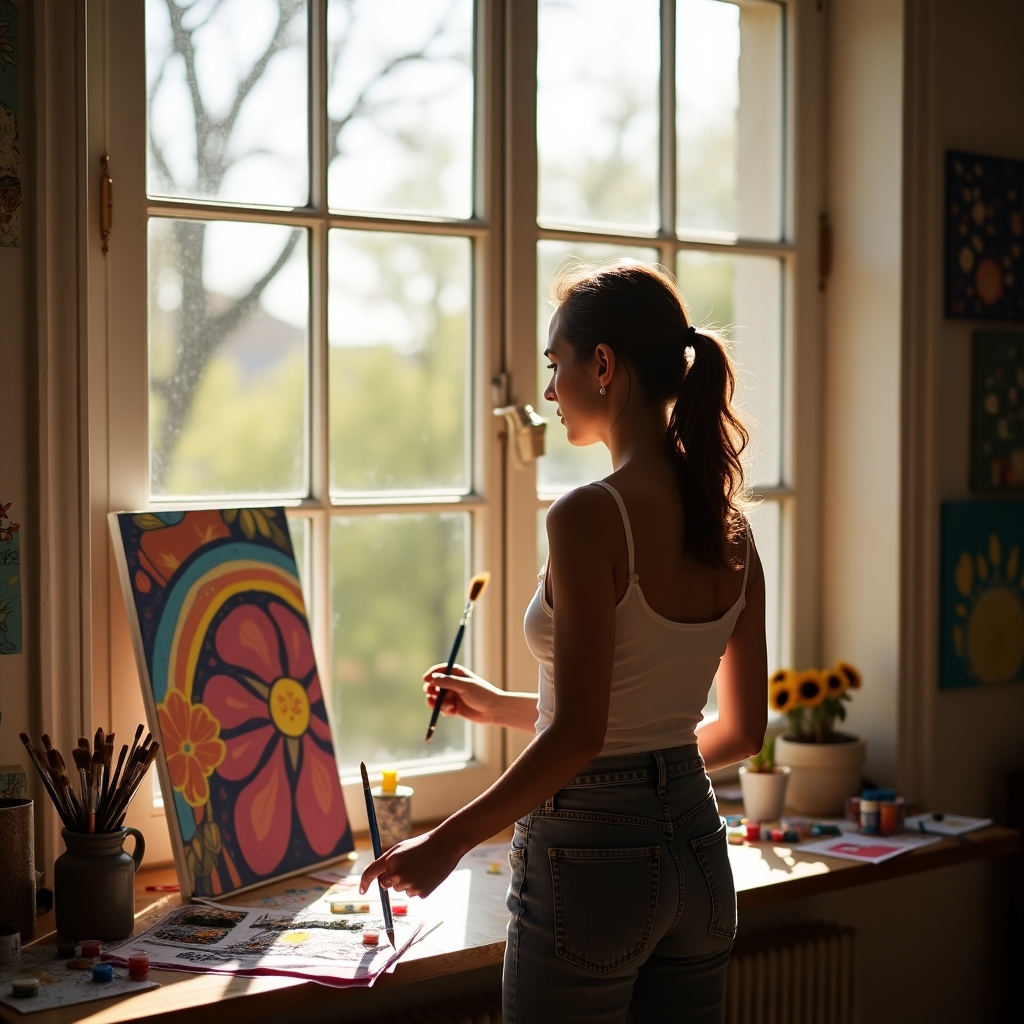
In Solhaven, dreams had confines. For Yara, her heart’s yearning was to become an artist, to sculpt emotions and stories into tangible forms. Yet her family saw art as a hobby, a distraction from the practical professions—law, medicine, business—that had been the cornerstone of their respectability. Her father’s words echoed in her mind, “Art won’t pay the bills, Yara. You need something solid to stand on.”
Yara felt split between two worlds. One anchored in family tradition, the other beckoning with the allure of personal fulfillment. The expectations were never shouted, never forceful, but their subtlety was like the gentle persistence of water over rock, eroding her resolve.
Her friend Lila, the only person in town who seemed to understand, had once said, “It’s not about choosing them or you. It’s about finding a way to honor both.” But Yara couldn’t see how that was possible without tearing herself apart.
As the days passed, the unease in Yara grew. A quiet storm of indecision brewed in her chest, a tension she couldn’t quite name. She began to retreat into herself, spending more time at the lake where the silence offered her solace.
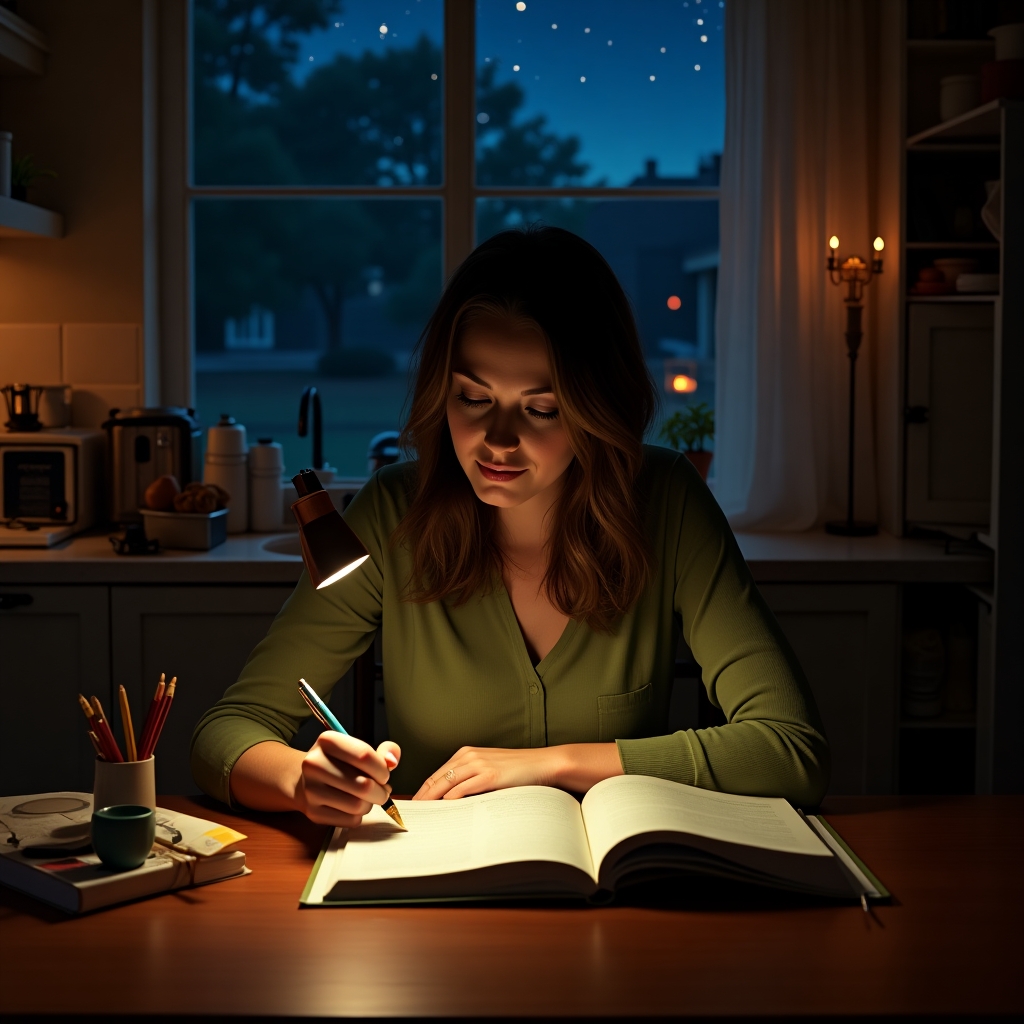
One evening, under the pastel hues of dusk, Yara brought her sketchpad. Her hand moved almost of its own accord, capturing the serene beauty of the world around her. But the image that appeared was not just the lake; it was a reflection of her soul’s turmoil—a twisting vine caught in a struggle between the earth and sky.
Her parents’ voices were there too, muted yet insistent, in the whispers of the evening breeze. They spoke of past sacrifices, of hopes pinned on her shoulders. It wasn’t that she didn’t love them or wasn’t grateful for all they had done, but the pressure to conform was suffocating.
Then, as the stars began to prick the sky, clarity came, gentle as a sigh. Her gaze fell upon her sketch—an epiphany unfolding in lines and shades. She realized she wasn’t dishonoring her family by choosing a different path; instead, she could honor them by living authentically, by extending the lineage of courage and resilience into new territory.
That night, Yara went home with a decision, not a defiant one but a peaceful resolve. She entered the quiet house, the scent of her mother’s cooking lingering in the air, and sat with her family. Her hands trembled slightly as she spoke, each word chosen with care and love.
“I need to talk to you about my future,” she began, her voice steady. Her parents exchanged a brief look, the room tense with anticipation.
“I love you both and respect all that you’ve done for me. But I need to follow my heart and pursue art. It’s where I find myself the most. I hope you can understand.”
There was a silence, the kind that stretched and filled the room with unspoken emotions. Yara held her breath, awaiting their response. Her father’s face softened first, a gentle sigh escaping his lips.
“We’ve always wanted what’s best for you, Yara,” he said slowly. “If this is what you truly want, then we will support you. Just promise to keep the door open for us to understand.”
Her mother nodded, tears pooling in her eyes, not of disappointment but of pride mingled with the poignant knowledge of letting go.
Yara’s heart swelled with relief and gratitude. The quiet storm had passed, leaving a renewed landscape of mutual respect and understanding. She now understood that she could be the bridge between generations, weaving a tapestry that was richer, expansive enough to embrace both tradition and transformation.