




Marissa leaned against the kitchen counter, staring at the water slowly boiling on the stove. The rhythmic sound of water bubbles rising and popping was a monotonous lullaby she had grown accustomed to. Every evening seemed to blend into the next, with each night feeling like a silent film on an endless loop.
The house around her was filled with the faint hum of routine—the clock ticking, the fridge humming, and the distant sound of a TV playing in the living room where her husband, Tom, sat absorbed in an endless stream of news programs. For years, Marissa had moved silently within these walls, her actions carefully calibrated to prevent invisible waves from crashing against the peace she so desperately needed to maintain.
It wasn’t that Tom was unkind. He was attentive in a way that people often remarked on, a reliable husband and father. But his expectations were woven into the very fabric of their lives; they were subtle, unspoken rules that pressed upon Marissa’s consciousness like a weighted blanket.
“Did you get a chance to pick up the dry cleaning?” Tom called from the sofa, not taking his eyes off the screen.
“Yes,” Marissa replied, her voice steady but soft, as if speaking too loudly might shatter something fragile.
These small exchanges were the extent of their conversations lately. Over time, Marissa had learned which interests of hers were deemed trivial or unworthy of discussion, so she tucked them away, gathering dust in the corners of her mind.
But something had changed recently. The quiet brewing inside her had started the moment she found an old sketchbook under a pile of forgotten things in the attic. Once filled with vibrant drawings and ideas, it had reignited a spark—a memory of who she used to be before she became so adept at minimizing herself to fit the mold of someone else’s ideal.
She had tried to ignore it at first, to brush aside the pang of longing that accompanied each page she turned. But it festered, and soon even the slightest hint of a suggestion felt like a call to action. It was an internal shift too deep to ignore.
“Mom, can you help me with my project?” Lily, their daughter, poked her head into the kitchen, holding a cluster of colored pencils and sheets of paper.
Marissa’s heart softened a bit. “Of course, sweetheart. Let’s see what you’ve got.” She joined Lily at the kitchen table, and their discussions about color combinations and design concepts became a balm for Marissa’s restlessness.
It was during these moments that Marissa felt the most herself, free of the rigid expectations set by those around her. With Lily, she could let her guard down, her laughter coming easily, her smiles genuine.
“You’re really good at this, Mom,” Lily said one evening, admiring Marissa’s quick sketches beside her own.
“I used to draw all the time,” Marissa admitted, surprised at the ease with which she spoke the truth after years of silence.
The admission felt like stepping into sunlight after a long, cloudy day. She realized she wanted to recapture that joy, not just in quiet moments stolen at the kitchen table, but as a permanent fixture in her life.
The idea terrified and thrilled her. The thought of confronting Tom, of shaking the foundation of their carefully curated life, was daunting. Yet, the longing to reclaim her identity was stronger than the fear of disruption.
Over the following weeks, Marissa began taking small steps towards change. She spent her afternoons sketching, slowly reviving her skills and rediscovering a side of herself she had almost forgotten. The drawings piled up, colorful reminders that she was still there, waiting beneath the surface.
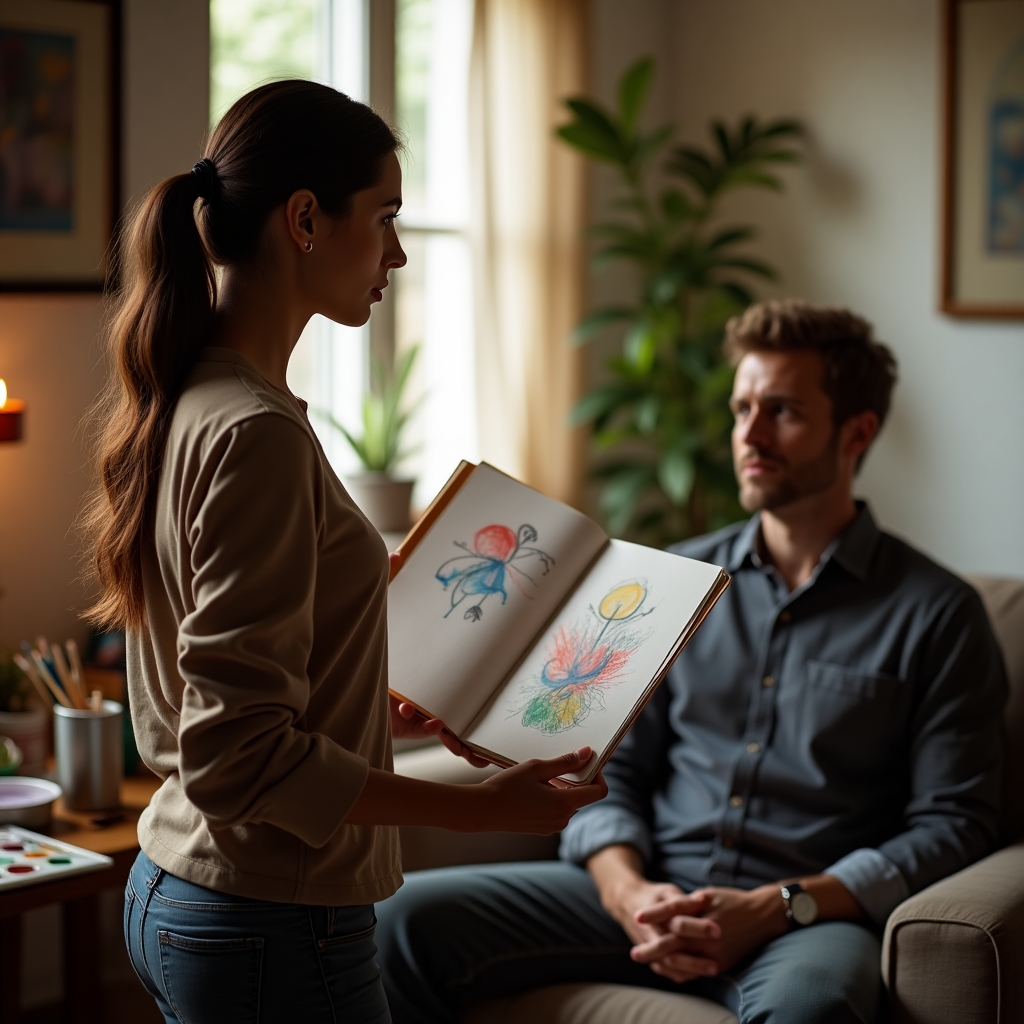
Then came the pivotal evening, subtle yet profound in its execution. Marissa stood before Tom as he settled into his usual spot on the couch. The sketchbook in her hand felt both heavy and liberating.
“I’d like to show you something,” she said, her voice firm yet calm.
Tom glanced up, surprised by the unusual request. “What’s that, hon?”
Marissa opened the sketchbook, revealing pages filled with vibrant depictions of people, places, and dreams long set aside.
“I’ve been drawing again,” she said, her eyes meeting his with a mixture of vulnerability and determination. “I want to pursue it.”
For a moment, the air in the room felt charged with impending change. Tom studied the drawings, his usual expression of casual disinterest shifting to one of mild surprise.
“These are really good,” he finally said, though his tone was cautious.
Marissa simply nodded, accepting the compliment but knowing she needed more than polite approval. “It’s important to me,” she continued. “I want to take it seriously, maybe even consider it as more than just a hobby.”
Tom hesitated, seemingly weighing his response. “Well, if that’s what you want,” he said, sounding more resigned than supportive.
It wasn’t a grand declaration of encouragement, but it was enough. Enough for Marissa to reclaim a piece of herself she had thought lost. The quiet revolution that had begun inside her had finally manifested in a simple, yet powerful decision.
The days that followed saw Marissa carving out space for herself, both physically in their home and emotionally in her life. She set up a small studio area, a sanctuary where she could explore her creativity without reservation. The tension of unspoken expectations lessened, replaced by the gentle hum of newfound autonomy.
In the end, it was not a dramatic upheaval but a series of small, deliberate choices that led Marissa back to herself, each step building upon the last, creating a bridge to a future shaped by her own hands.