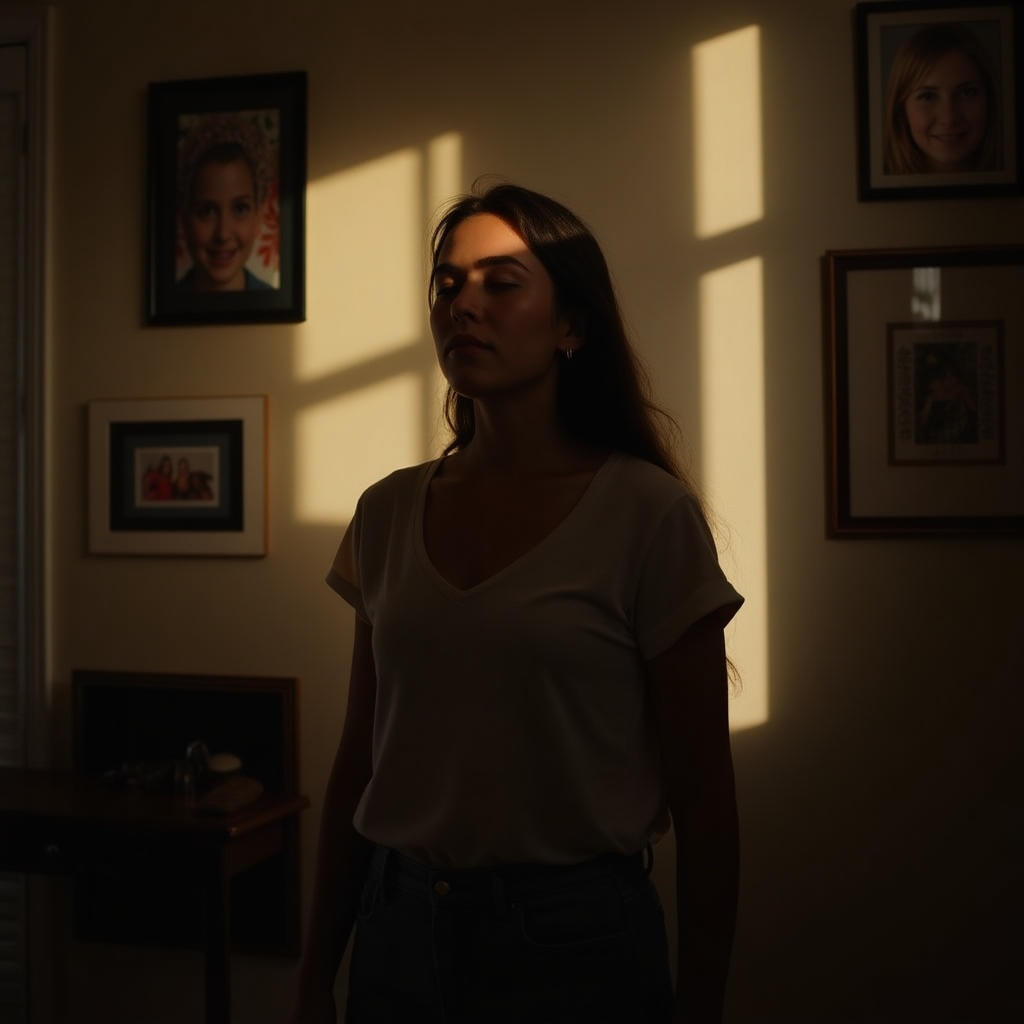



Elena sat in the small nook of her bedroom, the dusky light filtering through the lace curtains as dusk draped the room in its gentle embrace. The air was dense with the aroma of her grandmother’s incense, lingering from an afternoon prayer that seeped through the entire house. The incense was a subtle reminder of family traditions, whispering a quiet, persistent call to Elena’s heart—a heart that beat to its own unique rhythm.
Her family’s expectations were like the invisible strings of a marionette, subtly guiding her every move. Since she was a child, their hopes had been woven into her identity—a tapestry of cultural pride and generational dreams. Her grandmother, Abuela Rosa, was the matriarch, her presence almost sacred, guiding the family with wisdom and warmth. Yet, with that warmth came the weight of tradition.
Elena’s parents, molded by the same hands of expectation, looked to her as the continuation of a legacy. They emigrated from their homeland with nothing but dreams and determination, hoping for their daughter to carry their sacrifices forward. Elena knew the narrative so well; it was a story recounted at every family dinner, woven into every celebration, an undercurrent of gratitude and duty.
As the only daughter, Elena carried the unspoken burden of these dreams, even as her own aspirations tugged at her heart, like a gentle rebellion yearning for acknowledgment. She yearned to be a composer, to create symphonies that echoed her soul, but her parents envisioned her as a doctor, the triumphant culmination of their struggles.
Her days were filled with quiet, dutiful compliance. She attended her pre-med classes, excelled in her studies, and nodded attentively during family discussions about her future. Yet inside, a symphony brewed, discordant notes of anxiety and unmet desire simmering beneath the surface.
Elena’s best friend, Marisol, often sensed the turmoil brewing within her. “You’re not a prisoner, you know,” Marisol would say, her voice a soft lifeline. “Your dreams matter too. You’re allowed to be who you are.”
But Elena struggled to untangle her own voice from the tapestry of her family’s expectations. Their desires felt like a tapestry in itself, each thread connected to the stories of their past, each stitch a mark of their love and labor. How could she possibly unravel that without causing it to fray and tear?
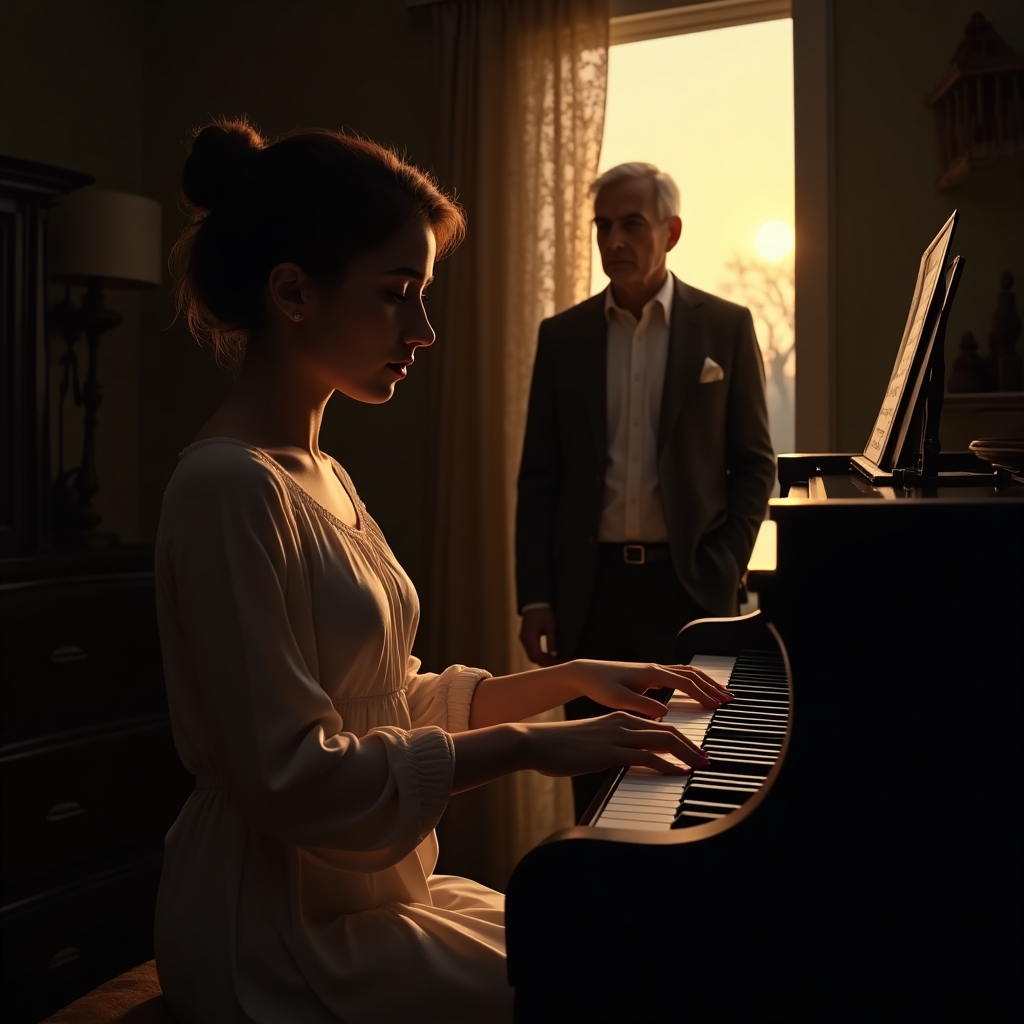
One evening, after yet another day of internal conflict, Elena found herself at the piano. Her fingers hovered above the keys, a caress of potential. She closed her eyes and let the music flow through her fingertips, her heart spilling out in a melody of longing and love. The room filled with the haunting grace of her composition—a story told in notes where words failed.
As the final chord lingered in the air, her father stood in the doorway, silent. He had been listening, drawn by the music. Their eyes met, and in that moment, Elena saw a flicker of something—recognition, perhaps, or understanding.
He stepped into the room, the rustle of his clothes like an echo of the past. “That was beautiful,” he said quietly, his voice tinged with an emotion she rarely heard. “It reminds me of the songs your grandmother used to sing in the old country.”
Elena’s heart ached, the affection in her father’s voice wrapping around her like a gentle embrace. “Papa,” she began, her voice cracking under the weight of what needed to be said. “I love you and Mama, everything you’ve done for me. But… I need to follow my music. It’s my heart, it’s who I am.”
Her father nodded slowly, the weight of her words settling between them. “It’s not easy, you know? Balancing dreams with tradition. But I hear you, niña.”
There was a pause, a shared silence where generations converged, intertwined yet distinct. “We want you to be happy,” he continued, his voice softer now. “Just like we wanted for ourselves.”
In that quiet moment, Elena felt the threads loosen. They didn’t break, but shifted, creating space for both her dreams and her family’s love. It was not a separation, but an integration—a new harmony.
In the days that followed, the dialogues continued, with Abuela Rosa’s wise eyes watching over them. Together, they slowly began to weave a new narrative, one that respected the past but also celebrated the new symphony Elena was creating in her life.
The emotional clarity Elena had discovered, like a note resonating perfectly in a quiet room, gave her the courage to step forward with her own truth, not as a defiance, but as an evolution of her family’s dreams.
And so, with each note she composed, Elena felt herself becoming whole, one melody at a time.