


It feels strange to sit here, typing this confession into the void of the internet. Perhaps it’s the anonymity, or maybe it’s just the need to finally say it out loud, to throw my emotions out like paper lanterns hoping they’ll light up the night. I’m not really sure who I’m doing this for anymore, but maybe it’s time for me to let go of the past I didn’t even know I was holding onto.
Growing up, I spent many weekends at my grandmother’s house. Her place wasn’t just a house; it was an old, creaky sanctuary, where the warm scent of lavender and aged wood hung in the air. The backyard was dominated by a giant oak tree, its branches sprawling like the limbs of a wise old guardian. Underneath its shade, I often sat with my grandmother, listening as she spun stories about our family, each tale a thread in the tapestry of our heritage.
It was after her passing, during the process of sorting through her belongings, that I found something that would unravel the tightly wound yarn of my family’s history. She left me a small, antique jewelry box, something I’d always admired. I didn’t open it right away, too raw from the funeral to face any more memories.
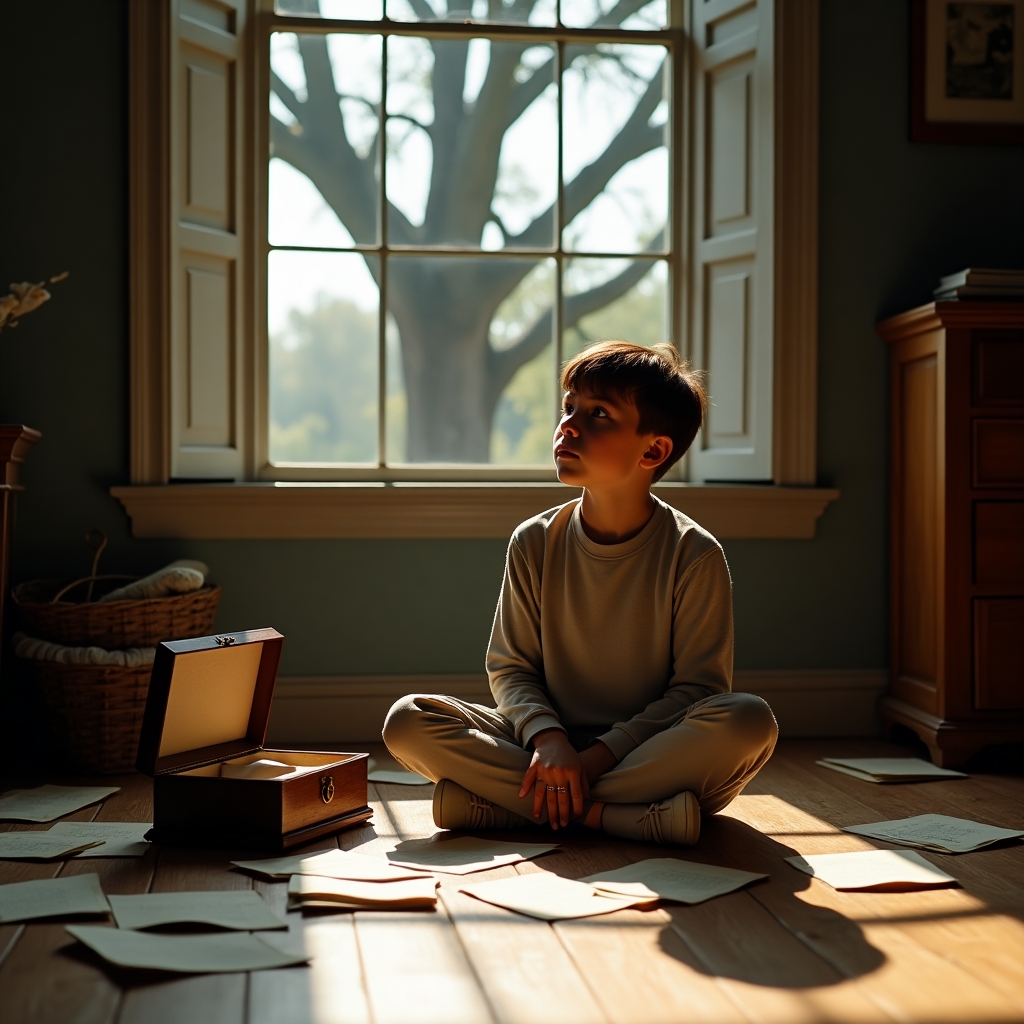
A few weeks later, on a quiet afternoon, I decided it was time. Sitting cross-legged on my bedroom floor, I lifted the lid. The box creaked open, and inside lay a collection of trinkets: an old locket, a faded photograph of her when she was young, and a bundle of letters tied with a blue ribbon. It was this bundle that caught my eye. The paper was yellowed with age, the handwriting a delicate script that was unmistakably hers.
As I unfolded the first letter, my eyes fell upon a name I had never heard before—Josephine. The letters were love letters. They spoke of stolen moments, longing glances, and dreams of a life they could never have. Each word was a heartbeat, and between the lines, I could feel the pulse of a love that had been buried beneath the weight of societal expectation.
Josephine, it turned out, was my grandmother’s love—a love she never spoke of, a truth hidden away like the letters themselves. Reading through them, I felt a profound sadness for the love she had kept in the shadows, never daring to bring it into the light. Each letter was a window into a world where my grandmother had been someone else entirely—a woman who loved deeply, fiercely, and quietly.
I remember sitting there for a long time after I finished reading, the letters scattered around me like fallen leaves. It was as if I had opened a secret door into her soul, one that she had never shown anyone. The weight of her hidden truth settled over me, and with it, a new understanding of who she was.
My grandmother had always been a gentle, loving presence in my life, but knowing this side of her gave me a new sense of her strength. She had carried her truth with grace, creating a life of love and laughter while holding onto this hidden piece of her heart. The discovery was bittersweet—my chest ached for the love she couldn’t openly embrace, but I was grateful for the glimpse it gave me into her world.
In the weeks that followed, I started to notice the small ways in which my grandmother’s influence had shaped me. Her quiet courage, her acceptance of life and all its complexities, suddenly made more sense. I knew then that I wanted to live my life as fully and truthfully as she had, to love without fear of judgment, and to let go of the secrets that bind me.
The oak tree still stands in her old backyard, and I find myself drawn there often. It feels like a place where her spirit lingers, a guardian of our shared truths. Under its branches, I speak to her, thanking her for the lessons, for the love, and for the legacy of courage she left behind.
In opening her jewelry box, I opened a part of myself as well. I learned that personal truth is not just about being honest with others, but also about being honest with oneself, about the willingness to be vulnerable. And that sometimes, the greatest act of courage is simply letting go.