




Amara sat by the bay window in her room, the autumn leaves swirling in a dance that felt both chaotic and serene. It was a Sunday morning, quiet except for the distant hum of traffic and the occasional chirp of birds. Her gaze drifted from the pages of her textbook to the vibrant world outside, each leaf a metaphor for the choices she felt tangled within.
Amara was caught between two worlds, the vibrant tapestry of her Indian heritage and the Western ideals that surrounded her every day. Her family had moved to the U.S. when she was just a toddler, with dreams of prosperity and the hope that their children would have opportunities they never had. Her parents, deeply rooted in their traditions, held the hope that Amara would carry forward the values they cherished.
Yet, as Amara grew, she found herself drawn to ideas that conflicted with those expectations. She loved the arts, philosophy, and the pursuit of a life beyond the conventions her family envisioned. The Smiths, her neighbors, often invited her over for book club discussions, which always ignited her passion for literature. Their conversations were liberating, intellectual dances far removed from the practical realities her parents insisted upon.
It was during one of these book club meetings that Amara first felt the stirring of internal conflict. A passage from a novel they were discussing lingered in her mind: “To thine own self be true, and it must follow, as the night the day, thou canst not then be false to any man.” The words struck a chord, a line resonating with a part of her that had been quiet for too long.
Her mother, Meera, was a silhouette of tradition: graceful, poised, and fiercely devoted to family duties. She had often spoken of dreams sacrificed, a medical career she put on hold indefinitely. Amara understood that her mother’s life was a blueprint of what was expected—devotion to family above all else.
The tension in their household was often subtle, quiet conversations at the dinner table where her father would casually mention potential suitors or prestigious career paths. Amara would nod, her silence speaking volumes, as an invisible wall between her desires and her parents’ expectations slowly built itself brick by invisible brick.
It was at the temple during a cultural festival that the weight of her struggle became almost unbearable. Surrounded by people who knew her family for generations, she felt like a performer in an unending play. The warmth and familiarity should have comforted her, but instead, it felt heavy—a stage set in the past.
Aunties and uncles commented on her future with smiles that carried more expectation than encouragement. “You must be thinking about settling down soon,” they would say, their words as predictable as the rituals unfolding around her.
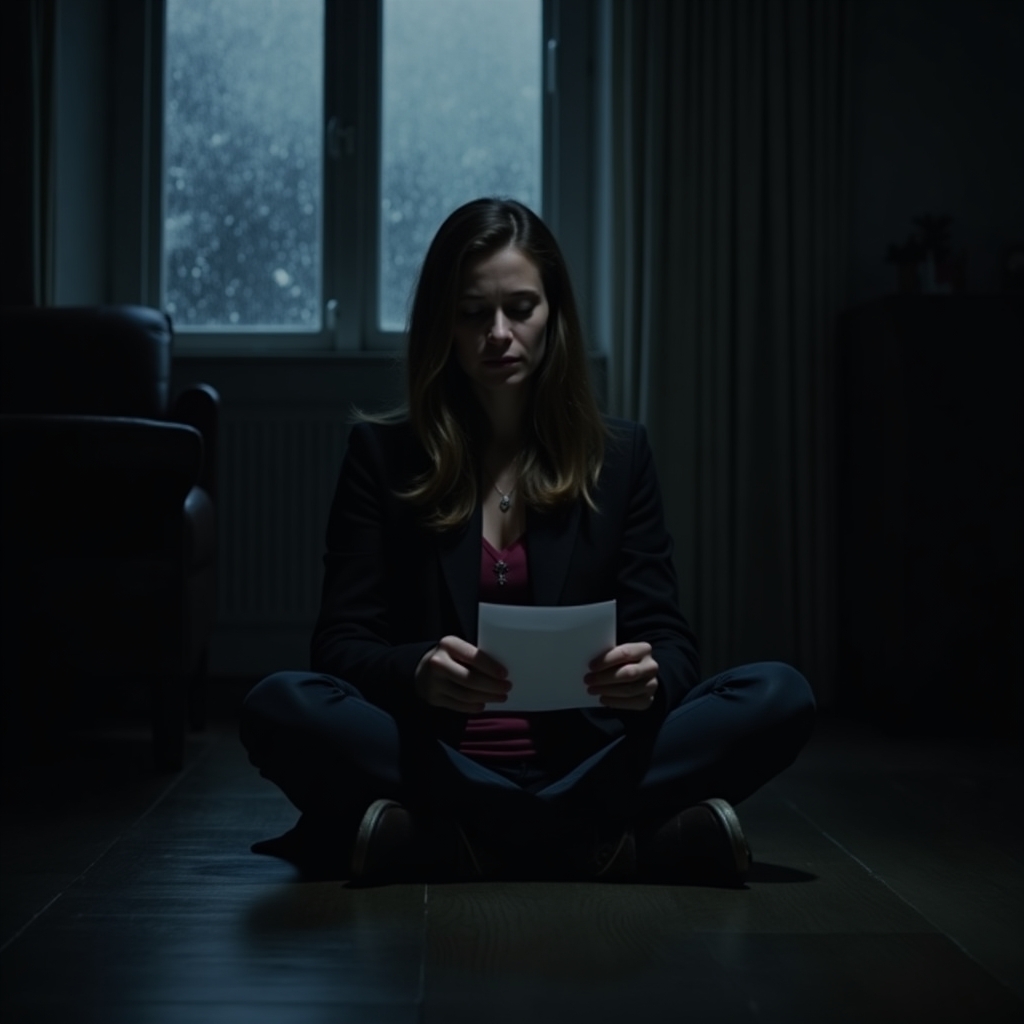
One evening, after a particularly overwhelming day, Amara found herself unable to sleep. She wandered to the living room, where the moon cast a gentle glow through the curtains, and the quiet of the house was palpable. Her heart felt heavy, a pulsing reminder of the choices she needed to make.
As she sat there, cocooned in shadows, she realized that her life couldn’t be lived in halves, an existence split between who she was and who she was expected to be. The thought was terrifying, but freeing in its simplicity.
A week later, Amara had an unplanned conversation with her mother over a cup of chai. Meera had noticed her daughter’s increasing withdrawal and gently broached the topic. “Amara, you’ve been distant lately. What’s on your mind?”
Amara hesitated, the words caught in her throat. But as she looked into her mother’s eyes, warmth and concern mirrored back at her. “I feel like I’m being torn in two,” she began, tracing the rim of her cup with a finger. “There are things I want for myself that may not align with what everyone expects.”
Meera listened quietly, her own heart aching at the familiarity of the struggle. She reached out, placing her hand over Amara’s. “You know, I had dreams too,” Meera said softly, her voice carrying the weight of untold stories. “But it wasn’t easy to choose between them and the life I was expected to lead.”
This exchange opened a new dialogue between them, one that Amara never thought possible. Her mother’s admission was a revelation, a moment where the generational gap seemed to close, albeit slightly.
Amara realized that asserting her truth didn’t mean severing ties with her heritage or family, but rather integrating her aspirations with the values she held dear. The clarity in her mother’s eyes, the quiet strength in her words, all laid a foundation for Amara to begin shaping her path.
And so, with a renewed sense of courage, she decided to take her steps in both worlds, a journey that honored her roots while also embracing her individuality. The leaves continued to fall outside, each finding its place on the earth, mirroring Amara’s process of finding her own.
The complexity of her decision remained, as did the whispers of expectation. But in the quiet strength of shared understanding, Amara discovered the courage to weave together the threads of her identity into something uniquely her own.