


The soft glow of dawn seeped through the lace curtains in Naomi’s bedroom, casting delicate shadows across her desk. Shelves crammed with books on philosophy, psychology, and poetry stood as silent witnesses to her inner storm. Though the room was a sanctuary of her thoughts and dreams, the air was thick with unspoken questions and the invisible threads of expectation.
Naomi’s family had followed her to the United States from Taiwan when she was a child, bringing with them a tapestry of traditions, values, and hopes. Her parents, particularly her father, harbored dreams of seeing her become a doctor — a path paved with prestige and security. In their eyes, it was the ultimate fulfillment of the sacrifices they had made.
Yet Naomi’s heart thrummed to a different beat, longing for the fluid expression of art and storytelling. She found herself drawn to the raw honesty of canvases and the quiet truth whispered by words on paper. It was a language she felt down to her very bones, one that offered a kind of freedom the expectations placed upon her did not.
The tension was like a shadow that followed her, slipping into her daydreams during lectures she felt no passion for, pressing at her conscience during family dinners. Her father’s voice echoed in her mind, filled with pride but devoid of understanding, as he spoke of her future as though it were a prize to be won.
Naomi often thought of her grandmother, whose stories of resilience and perseverance underlined the family’s narrative. Although, her grandmother’s tales always carried a hint of something unsaid, a glimmer of roads not taken. Perhaps, Naomi mused, this was the thread that connected them — a shared but silent understanding of dreams set aside.
It was on one of these mornings, when the house was still and the world outside had yet to fully awaken, that Naomi stood at a crossroads. She sat at her desk, fingers poised over the keyboard, a paper due for a class she did not care for. The cursor blinked accusingly, a metronome ticking away the seconds of her indecision.
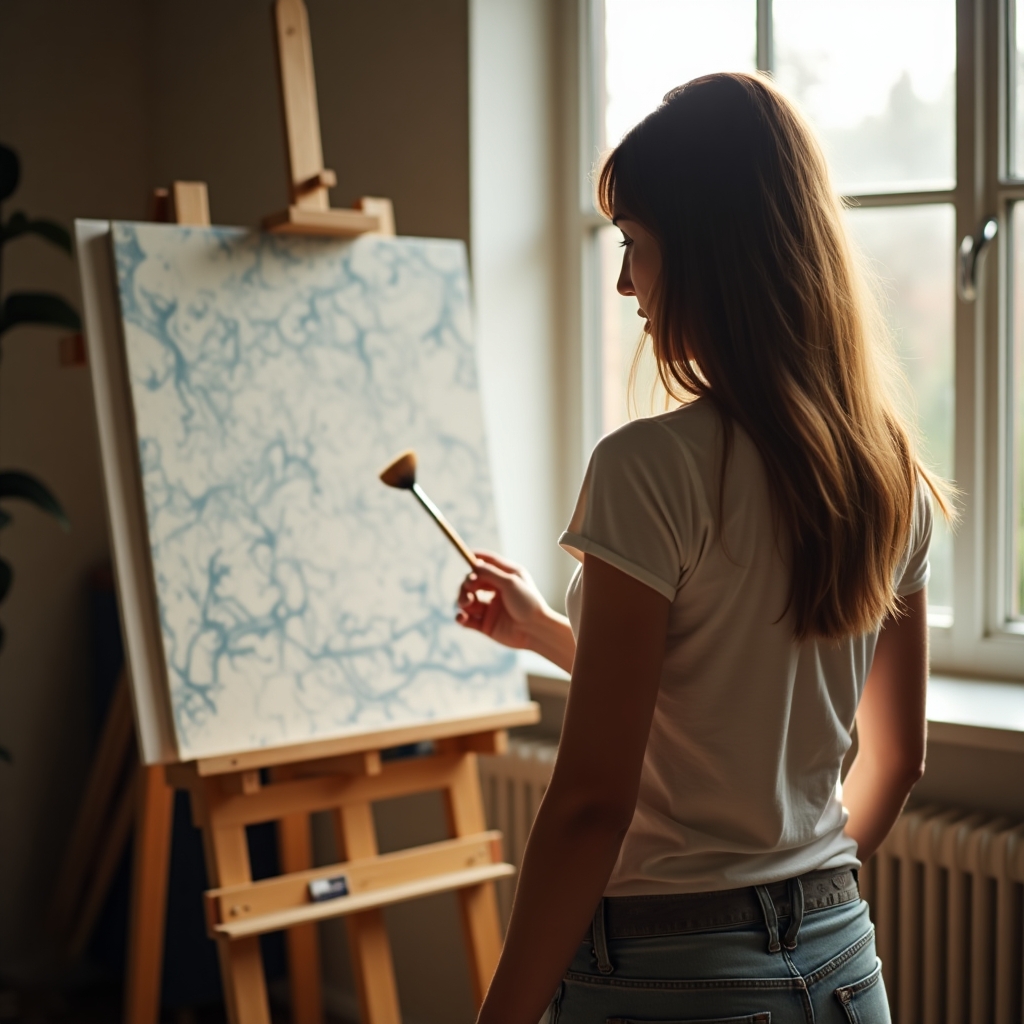
Her eyes drifted to a painting she had created — vivid swirls of color that told a story only she knew. It was a piece born from an evening of emotional turmoil, an outlet for feelings that had no other place to go. In that moment, she felt a tug, gentle but insistent, directing her gaze back to the screen, then again to the painting.
As the sun climbed higher, the light in the room shifted, illuminating the painting in a way that seemed almost magical. Naomi felt a warmth rise within her chest, a quiet assurance that settled her racing thoughts. For the first time, she allowed herself to consider that her path was not one of rebellion against her family, but rather an expression of the truth she carried within.
The clarity was as transformative as it was subtle, bringing with it a profound sense of peace. She knew she would have to face the conversations ahead — her parents, perhaps even herself — but the fear of disappointing them dissolved in the warmth of this newfound certainty. Naomi realized that true loyalty was not about blind adherence, but about honoring the authenticity of one’s own heart.
In the days that followed, Naomi began to weave her own narrative into the broader tapestry of her family’s expectations. She approached her parents with respect and clarity, speaking not from a place of defiance, but from one of love and understanding. Their initial reactions were mixed — her father’s silence weighed heavily, but her mother’s gentle nod held promise.
Over time, they began to see in her art what they had always hoped for: the reflection of a life guided by passion and purpose, as vibrant and rich as the colors in her painting. The threads of their expectations and her truths intertwined, creating a new story of generational healing. Naomi learned that the quiet courage to be oneself could transform the invisible strings of expectation into bonds of understanding and love.