
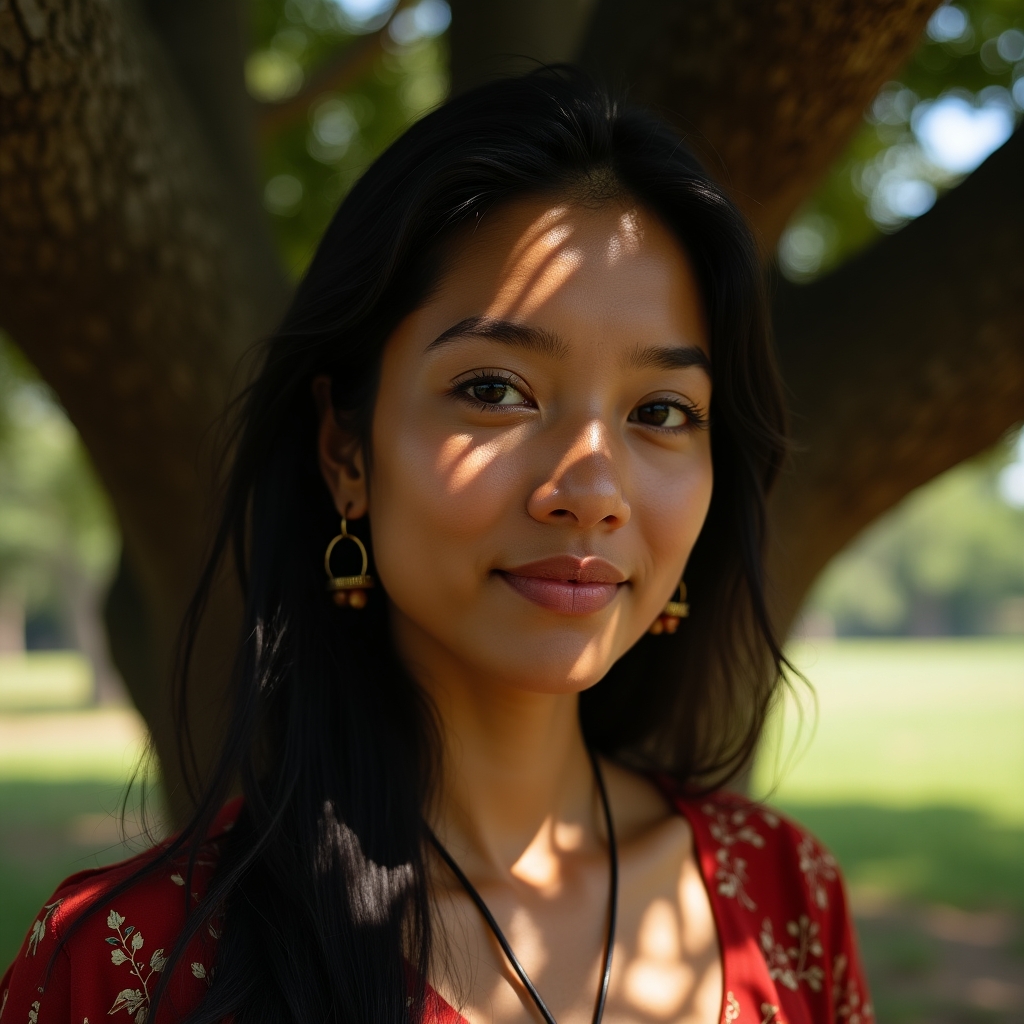


Riya sat on the rooftop of her family’s ancestral home, surrounded by the whispers of the ancient banyan tree that stood like a guardian in the courtyard below. The branches, like gnarled fingers, stretched wide across the azure sky, their shadows dappling the crumbling white walls of the house. In the distance, the sun dipped behind the hills, painting the horizon in hues of amber and rose.
Ever since she returned from university, Riya felt an invisible weight pressing against her chest. It was as if the air in her hometown, with its scent of incense and spices, was thicker, more expectant. Her grandmother, Amma, had lived her entire life here, in the embrace of the banyan’s roots, weaving tales of tradition and duty.
Riya cherished Amma’s stories. As a child, she would sit cross-legged on the veranda, her ears drinking in tales of gods and ancestors, of harvest festivals and family honor. It was a tapestry of belonging, intricately woven with threads of love and history. Yet now, as an adult, those threads seemed to twine around her wrists like gentle shackles.
The village was alive with preparations for the upcoming festival. Women gathered to weave garlands, their laughter mingling with the aroma of sweetmeats. Men busied themselves erecting colorful pandals, where the community would gather to celebrate. For Riya, though, the festivities were a reminder of the expectations looming over her.
Her parents, particularly her father, were intent on seeing her settled, in the traditional sense—married to a ‘suitable’ boy from a ‘good’ family. The notion clashed violently with Riya’s dreams of pursuing a career in art, of traveling and painting, of seeking beauty beyond the village’s verdant boundaries.
Riya’s mind often drifted back to her time at university, to those long evenings in the studio, where the world melted away, leaving only her canvases and the vibrant colors that poured from her soul. Yet here, amidst familial obligations and cultural expectations, her hands felt heavy, as if they could no longer create.
Amma noticed. Her eyes, sharp despite the wrinkles, observed Riya’s quiet turmoil. One evening, as they sat beneath the banyan, Amma spoke softly, her voice merging with the rustle of leaves. “You have the heart of the banyan, child,” she said. “Strong and wide-reaching, yet rooted.”
Riya pondered her grandmother’s words, feeling their weight. She longed to reconcile her heart’s desires with the life her family envisioned for her. Could she honor both, or would one inevitably overshadow the other?
As the festival day approached, Riya’s anxiety grew. She felt torn between her quiet rebellion and the pull of her family’s expectations. During the vibrant celebrations, her heart remained heavy, a mismatched note in the symphony of joy around her.
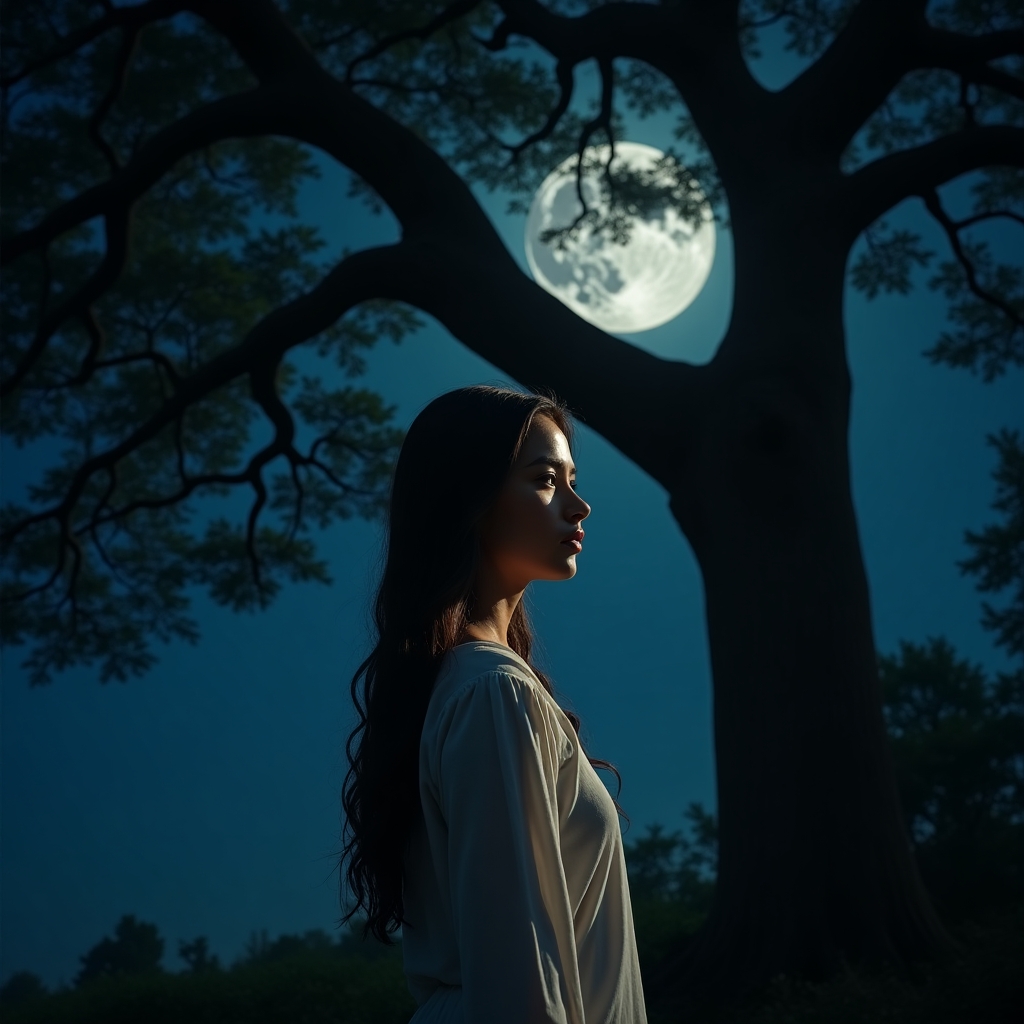
It was during a quiet moment, standing alone in the courtyard, that clarity washed over Riya. The moon hung low, bathing the world in a serene glow. She listened to the whispers of the banyan, a soft caress against her skin. “You are part of this,” the tree seemed to murmur, “yet you are also free.”
Riya’s heart swelled with a newfound understanding. She realized that defying her family’s wishes did not equate to rejecting them. Her individuality, her dreams, and her love for art were not betrayals—they were extensions of the same roots that anchored her.
With the dawning of this awareness, Riya felt a quiet strength unfurl within her. The next morning, she approached her father, her voice steady but soft. “Baba,” she began, “I want to honor our family, but I also need to honor myself. I wish to pursue my art, to see where it leads me.”
Her father’s brow furrowed, a storm of emotions crossing his face. But Riya held his gaze, unflinching. Her words had been spoken with love, not defiance, and she believed they would find their way to his heart.
In the silence that followed, Riya felt her grandmother’s presence, like a gentle hand placed in hers. The banyan tree swayed softly in the wind, its leaves a melodious rustle of acceptance.
Her father nodded slowly, his expression softening. “You are like the banyan too,” he said finally, “strong and rooted. Follow your path, my daughter.”
In that moment, a generational bridge was built—not of expectations, but of understanding and respect. Riya’s journey lay ahead, a canvas waiting to be filled with her colors, while the village remained her anchor, its traditions a part of her story, but not its entirety.