

In the quiet town of Eldenbridge, nestled between rolling hills and whispering forests, lived Emily Tran. She was a young woman of twenty-four, her days filled with the harmonies of whispers between the past and the present. Her family, Vietnamese immigrants, carried with them the essence of traditions and expectations, which wrapped around Emily like vines, both comforting and confining.
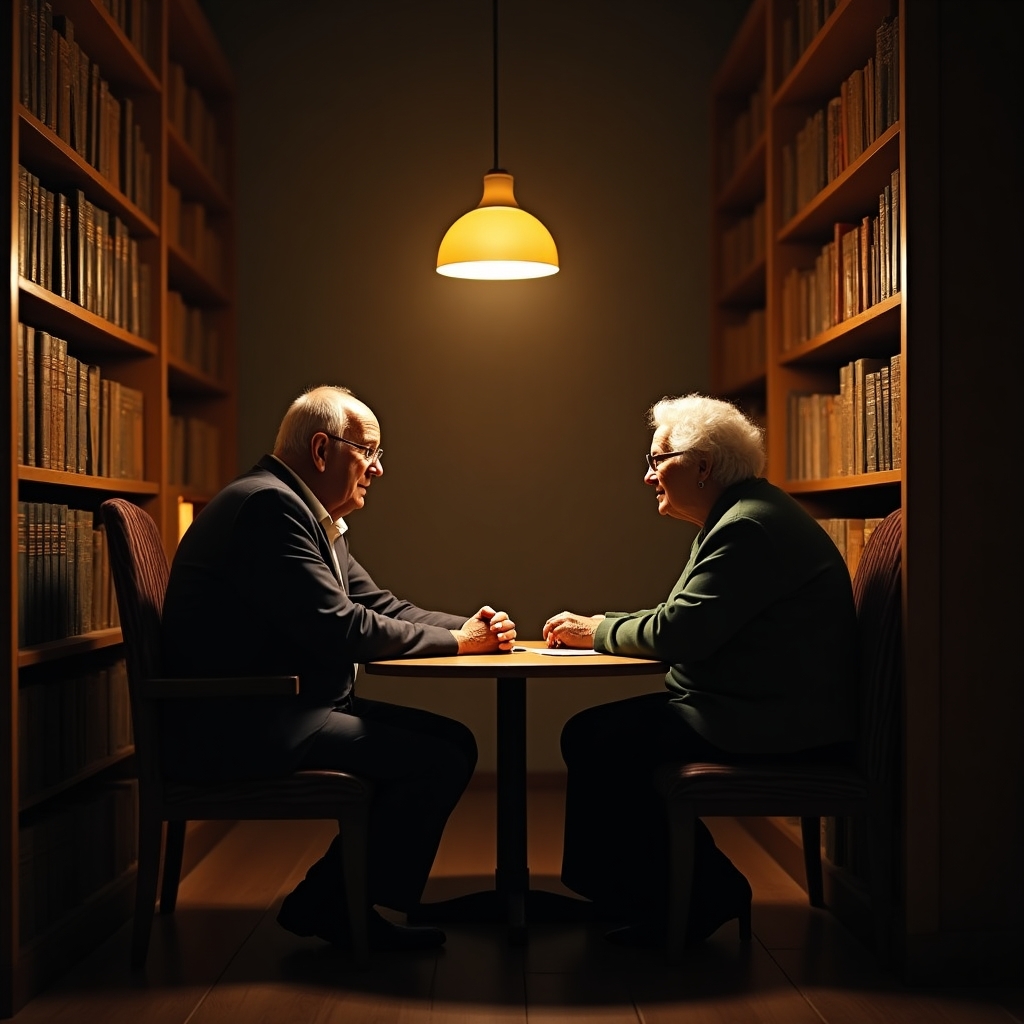
Growing up, Emily always saw her parents’ eyes light up at the mention of a successful career—doctor, lawyer, engineer—their dreams woven into the fabric of her existence. Her father often recounted tales of hardships, of how he and Emily’s mother had escaped political turmoil to provide a future for their daughter in a land of possibilities. Emily absorbed these stories with a mixture of admiration and weighty responsibility.
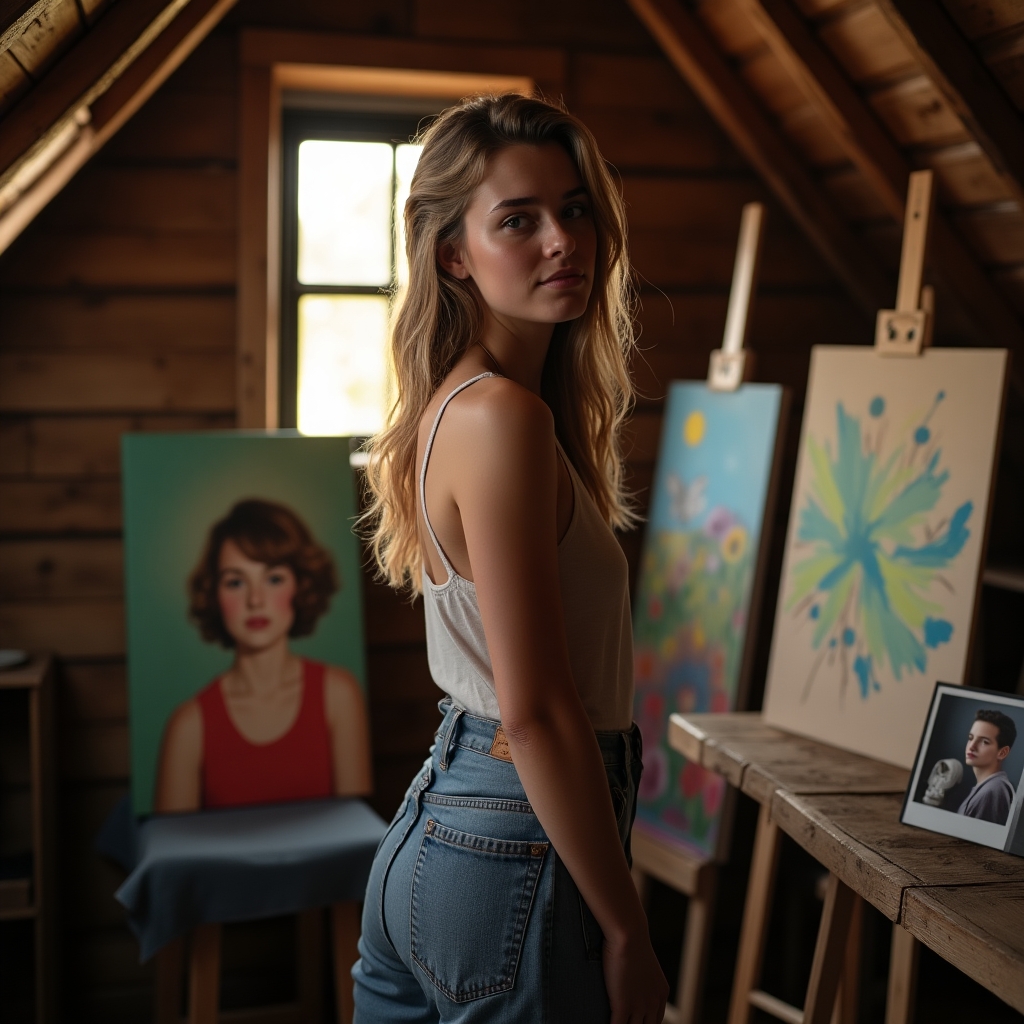
On the surface, she wore her filial piety like a badge, feeling its silent demand, a constant reminder of both love and duty. Yet, within her, there was a melody yearning to escape, a different song—art. She had discovered her passion for painting in high school, the brush strokes calming the internal cacophony, colors speaking where words could not.
But art, in the eyes of her family, was a hobby, not a career. It was suitable as an ornament, not as the foundation of one’s life. The Tran household never imposed outright prohibitions, but their gentle nudges towards certain paths were undeniable. Emily found herself a leaf caught in a gentle current, moving towards a future she hadn’t chosen.
It was during her college years, while studying chemistry to fulfill familial expectations, that Emily’s internal struggle began to intensify. Every assignment, every textbook felt like a chain, binding her to a life that seemed to belong to someone else. She spent her evenings painting in her small off-campus apartment, a sanctuary where her fears and dreams swirled in colorful chaos.
Emily’s emotional turmoil was a quiet storm, brewing beneath an exterior of calm obedience. She often felt like a spectator in her own life, watching as time marched towards a destiny she quietly resisted. The psychological tension was subtle, a constant hum of anxiety infused with moments of fleeting joy when she painted.
Her friends noticed but respected her silence, understanding the cultural complexity she navigated. They offered support through subtle gestures—a knowing smile, a shared silence. Yet, it was not until an art exhibition, hosted by the university, that Emily’s internal conflict reached a critical point.
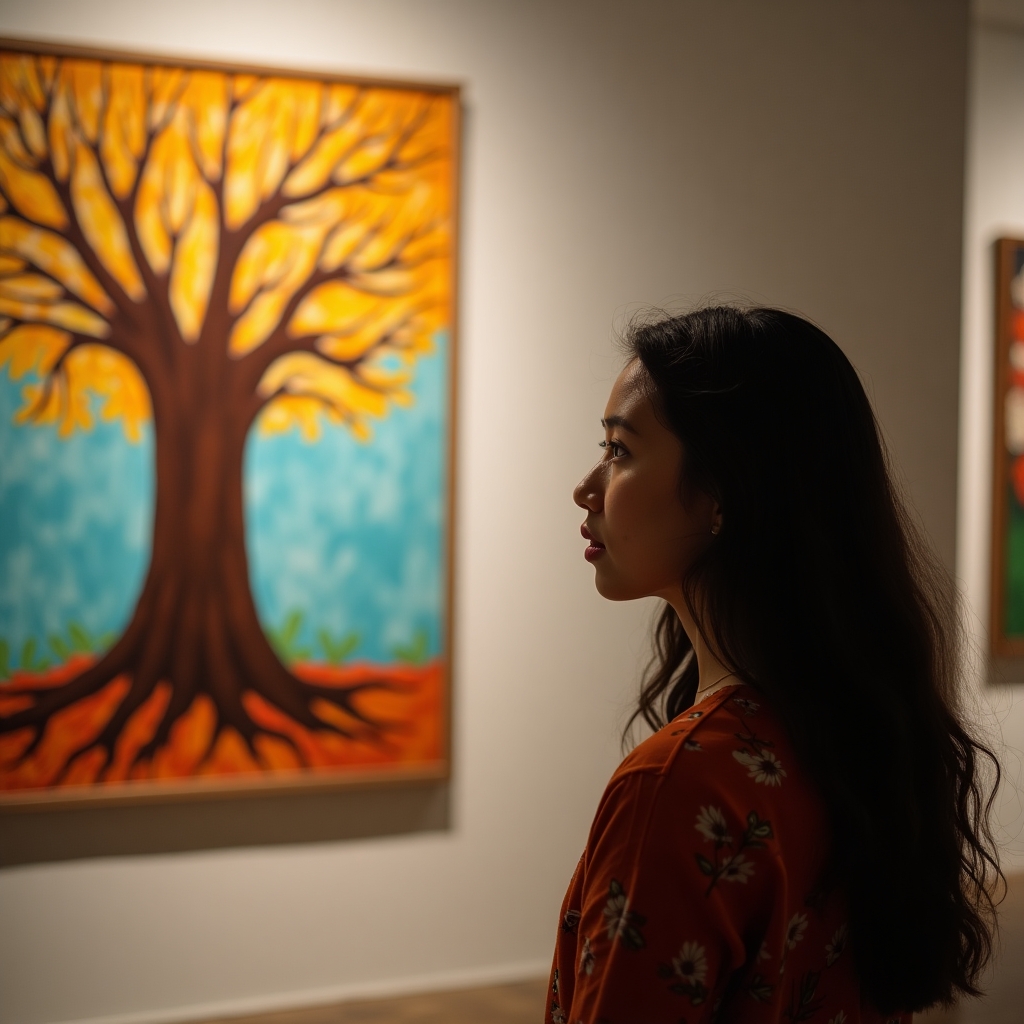
The exhibition theme was “Identity,” a call to explore the essence of being. Emily hesitated, torn between the allure of expression and the shadow of familial disappointment. Ultimately, she decided to submit a piece, a vibrant portrayal of a banyan tree, symbolizing strength and interconnectedness, its roots deep in tradition, its branches reaching for the sky.
The night of the exhibition, Emily’s heart was a flurry of emotions, an orchestra of fear, excitement, and anticipation. Her piece hung on the gallery wall, a testament to her silent struggle. As she stood before it, the world faded into a soft blur, the voices around her a distant echo.
It was then, amidst the gentle hum of admiration from strangers, that Emily felt a profound shift within herself—a moment of emotional clarity. She realized that honoring her parents’ sacrifices did not mean losing her identity. Emily understood that her art was not a rejection of them, but an extension of their dreams—a new branch on the family tree.
With trembling hands and a heart now resolute, Emily chose to embrace her truth. She knew there would be conversations, difficult ones filled with vulnerability and courage. She would face her parents, not with defiance, but with honesty, offering them a glimpse into her heart’s canvas.
As the exhibition concluded, Emily stood outside under the moonlit sky, the night air a soothing balm. The tension that had once been a heavy cloak felt lighter, replaced by a quiet strength. She was ready to weave her own story, one that honored her roots while allowing her spirit to soar.
The journey ahead was clear; it was one of bridging generations, fostering understanding through emotional courage and love. Emily knew it would take time, but she was prepared to walk this path with grace and determination.
In the end, as she walked home beneath the stars, Emily felt a sense of peace she hadn’t known before—an assurance that, just like her painting, she had found her place within the tapestry of her family, both as a Tran and as an artist.