
Hey everyone, I’ve been wrestling with something that I feel compelled to share. Some of you may find this surprising, but if you have a moment, I’d appreciate you sticking around for a bit. Writing this feels like pulling a band-aid off a wound I didn’t know existed.
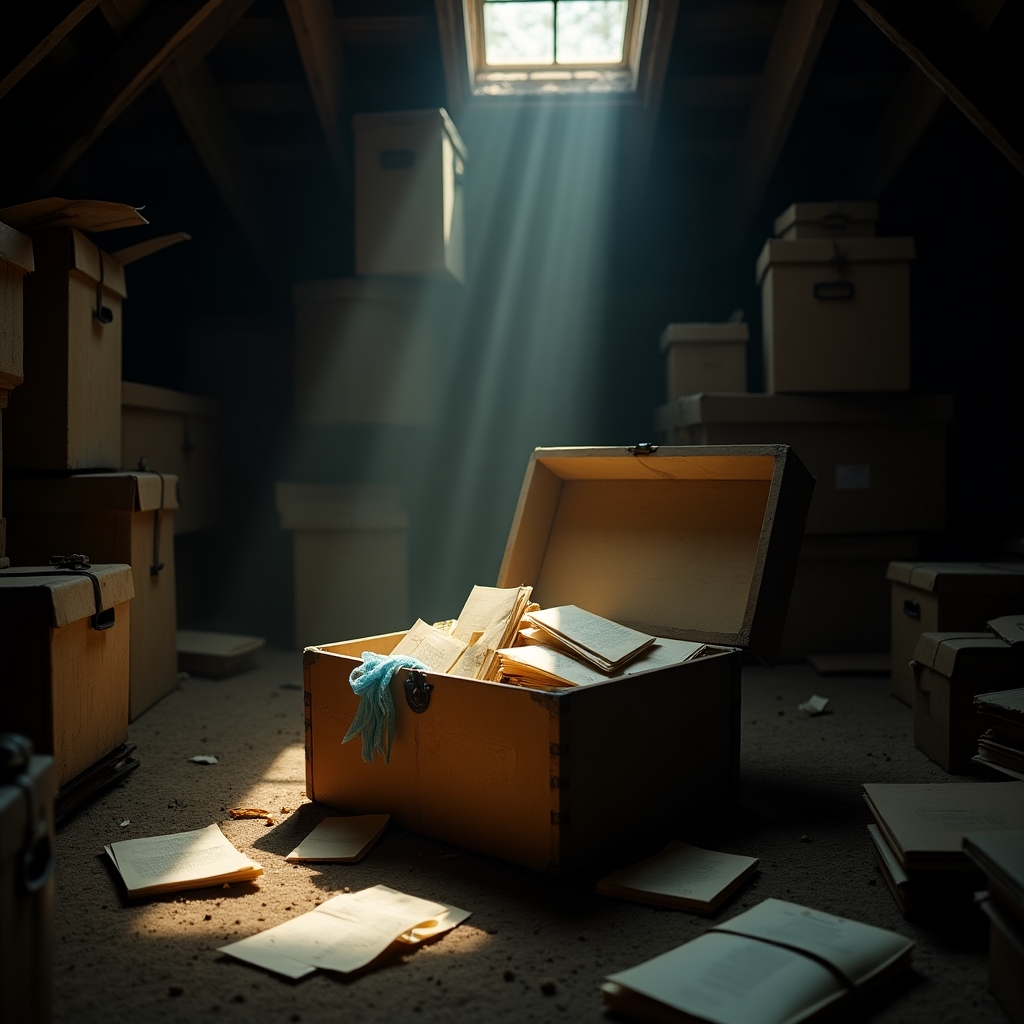
Last week, while sorting through some old boxes in my attic (you know, the kind of chores you put off until the weekend you’re utterly bored), I stumbled upon a dusty envelope. It was tucked away inside a book of pressed flowers, which seemed odd at first. The envelope was yellowed with age, and I almost dismissed it as junk mail. But something made me pause and open it.
Inside was a letter from my late father. I hadn’t recognized it right away because the handwriting was different—more rushed and loopy than the neat penmanship I remembered. The header was dated April 14, 1999, just a few days before he passed away. I was twelve then, and my memories of him have always been snapshots rather than a film reel. This letter was a relic from a chapter of my life I thought I knew, but apparently didn’t.
The letter started with a simple note: “If you find this, it means you are ready to know.” A part of me wanted to stop reading, afraid of what truths it might unveil. But curiosity and longing pushed me forward. What followed was a confession of sorts—a revelation about a life I never knew my father had lived.
He wrote about a woman named Lillian. Not in any romantic sense that threatened his marriage with my mom, but as someone he deeply admired and respected. She was an artist, a painter, and they shared a bond over creativity and expression. My father never pursued art professionally, always choosing the safe stability of his teaching job over his passion, but it was apparent that Lillian had inspired him to create, in whatever small ways he could. He wrote, “We were kindred spirits, united by the colors of a world unseen to others.”
What struck me most was a line where he said, “I hope you will find your Lillian, someone who helps you see the world as it truly is rather than how it appears.” I hadn’t realized how much I needed to hear that, to know that my father, beneath his pragmatic exterior, was a dreamer too.
Until that moment, I had always seen my father as a man of absolutes—a man of science and rationality. His world was black and white, and I had unknowingly trapped myself in that same world. Discovering this hidden facet of him felt like opening a window in a room I didn’t know was dark.
The letter itself was a small object, but the feelings it unleashed were tidal. I cried for the first time in years—truly cried. Not just for the loss of him, but for the loss of the dreams he never chased and for the dreams I had never dared to dream. It was a quiet yet profound realization of how little I truly knew him, and perhaps, even myself.
I’ve spent the past few days reflecting, and I realize that his simple wish for me to “find my Lillian” was more than a hope. It was a gentle nudge towards authenticity, urging me to live with openness and artistry, irrespective of the practicality that so often dictates life.
This letter was the signpost I didn’t know I was looking for. It’s funny, isn’t it? How something so small, so inconsequential, can reveal such depth.
I guess what I’m trying to say is, don’t be afraid to open those old boxes or read between the lines of faded letters. There’s a world waiting to be rediscovered.
I’m starting tonight by picking up my old paints, the ones I forgot in the basement years ago, and seeing where they take me. Maybe this weekend, I’ll find my Lillian, be it in a brush stroke, a sunset, or even a stranger’s smile.
Thanks for reading, and for being here as I navigate this path to understanding not just who my father was, but who I am and who I might become.