

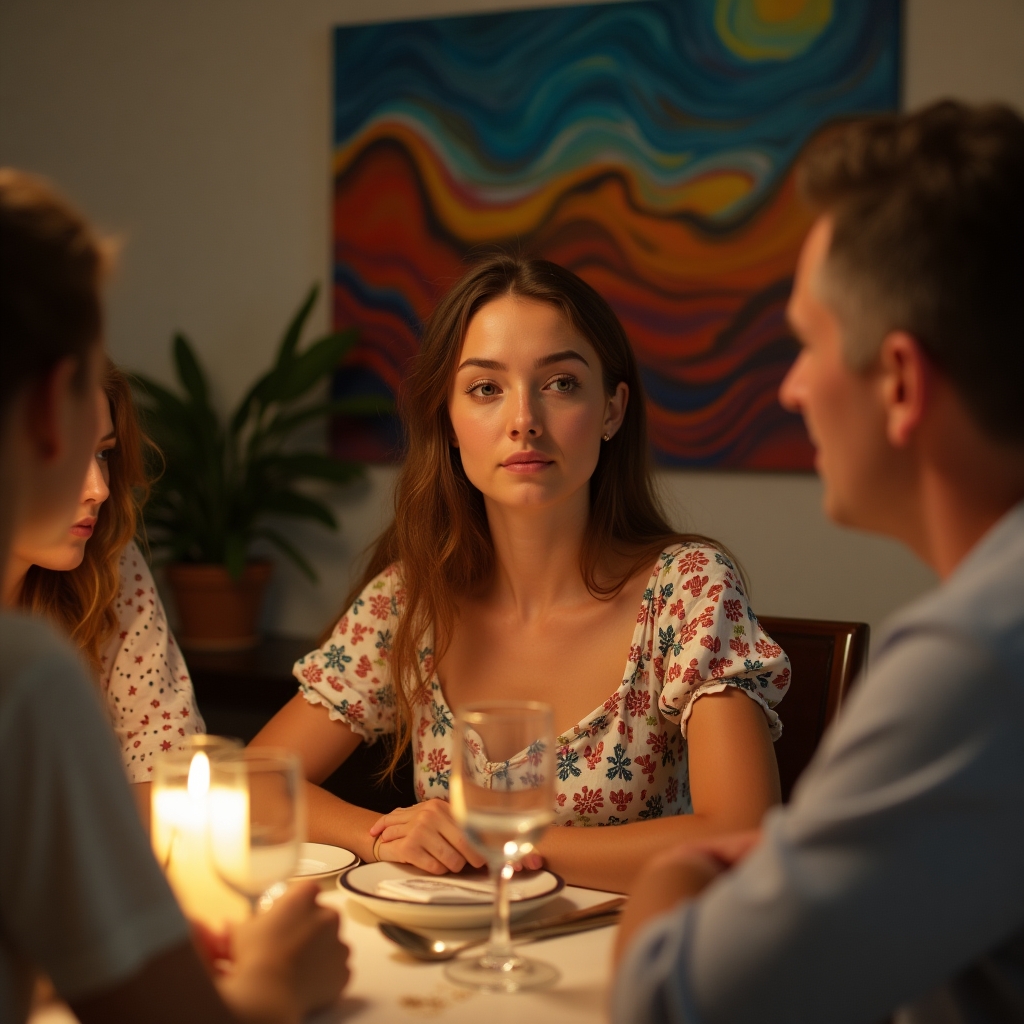
The small town of Willow Creek was known for its picturesque landscapes, tight-knit community, and traditions that ran deep as the roots of its ancient oaks. For Aria, a 23-year-old with hazel eyes reflecting the softness of her gentle spirit, these traditions were both a source of comfort and a binding constraint.
Raised in a family where Sunday dinners were sacrosanct and every family member chose a profession that upheld the family’s legacy, Aria was expected to follow suit. Most of her relatives were teachers, like her mother and grandmother, or owned small businesses, like her father who ran the local bookstore. They all cherished the close-knit nature of the community, valuing the security it provided over anything else.
Yet Aria wasn’t like most in her family. She was a dreamer who found her solace in art. As a child, she would often lose herself amidst the vibrant swirls of colors she painted, or in the stories she sketched—the only place she felt she was truly herself. Her parents, although proud of her creativity, firmly believed it was a hobby rather than a viable career path.
“Art is a beautiful pastime,” her mother would say, adjusting her glasses as she graded papers at the kitchen table. “But it doesn’t put food on the table, dear. Teaching is stable and honorable.”
Aria loved her family deeply, and she understood where they were coming from. They had sacrificed so much to provide her with a stable life and the opportunities she had. Yet, every time she held a paintbrush, she felt an irrepressible urge to express the world as she saw it—full of colors and endless possibilities.
Her internal struggle was as quiet as it was profound. She’d spend countless nights in her room, staring at the blank canvas, her heart torn between duty and passion. The cultural expectation to conform was an invisible chain around her, growing heavier with each passing day.
Willow Creek’s annual Spring Festival was approaching—a time when the town came alive with parades, food stalls, and artisan fairs. This year, Aria’s mother had arranged for her to exhibit some of her paintings at the local community center, hoping to inspire her daughter to embrace her artistic talents modestly, but within a framework of family approval.
The festival day dawned bright and warm. Aria, dressed in a simple floral dress, stood by her display, a collection of her most personal pieces. As visitors trickled in, offering polite smiles and nods, she caught snippets of conversations—most admiring her skill but with the underlying implication that it was a phase she’d outgrow.
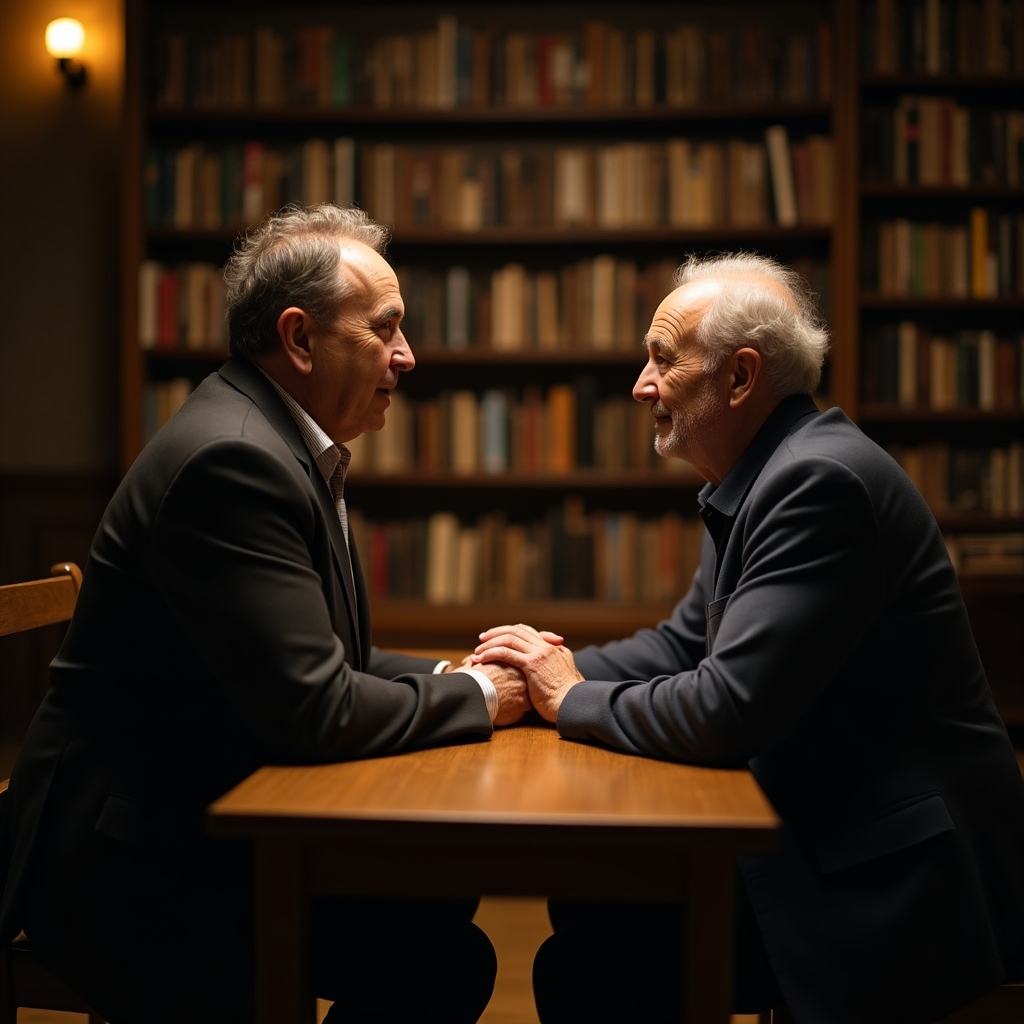
Then came Mr. Collins, the town’s reclusive artist, now in his late seventies. He approached slowly, a cane in one hand and an aura of mystery surrounding him. His eyes, sharp despite his age, scanned her paintings with an intensity Aria hadn’t encountered before.
“You have a gift,” he said finally, his voice gravelly yet warm.
Aria felt a blush creep up her cheeks. “Thank you, sir. I try…”
“No,” he interrupted gently but firmly, “you don’t try—you do. And it’s splendid.”
His words lingered with her long after the fair closed. That evening, she sat in her room, her paintings stacked against the walls. Mr. Collins’ words had sparked something within her—a glimmer of recognition that she needed to believe in herself as much as she craved her family’s approval.
A few days later, she sat across from her family at the dinner table, the familiar smell of roasted chicken and herbs filling the air. The chatter was comfortable but uninspired. Her parents spoke of work, her brother shared stories from college. But Aria was unusually quiet, the weight of her thoughts pressing down.
With a deep breath, she set down her fork. “I’ve decided I want to apply to art school,” she announced, her voice steady yet soft.
The room fell silent. Her mother looked at her, a mixture of surprise and concern etched on her face. Her father’s brow furrowed, his fork hovering mid-air. It was as if time paused, the air thick with the tension of unspoken words.
“Art school?” her mother repeated, her voice tinged with disbelief.
“Yes,” Aria replied. “I know it’s not what you expected, but it’s what I want. I’ve loved art all my life, and I believe it’s what I’m meant to do.”
Her father spoke next. “But, Aria, have you considered…”
She interrupted, not out of rudeness, but necessity. “I have, Dad. I’ve thought about it so much. I know it’s a risk, but I’m willing to take it. Because the risk of never trying…of never knowing if I could make it…that scares me more.”
The room was silent again, but this time the silence was different. It wasn’t the heavy silence of disapproval, but rather the contemplative silence of hearts opening, trying to understand.
Her mother reached across the table, taking Aria’s hand. Her eyes, now soft with a mother’s understanding, met Aria’s. “If this is really what you want, we’ll support you,” she said, her voice breaking slightly.
Aria felt a rush of emotion, tears welling up as she squeezed her mother’s hand. It was the moment of clarity she hadn’t expected—the realization that being true to herself didn’t mean abandoning her family, but rather inviting them to see her fully.
In the days that followed, Aria began preparing her portfolio for art school applications. Her family’s support, tentative yet real, became a foundation for her burgeoning confidence. She realized that their hesitation wasn’t born out of a lack of faith in her, but from a fear of the unknown—one they were now willing to face alongside her.
With each brushstroke, Aria felt her future unfolding—a canvas she was now ready to fill with the colors of her own choosing. Her quiet struggle had led her to a place of emotional courage, where the harmony between her dreams and her familial love could finally be painted into existence.