

On the surface, everything seemed perfect. Claire and Jonathan were the quintessential couple everyone admired—a shared home, laughter at dinner parties, and the tacit understanding that comes from years of shared experiences. Yet, in the quiet moments, Claire felt a shadow hovering over their happiness, an inexplicable tension that curled around the edges of her consciousness like smoke.
It started subtly, like a persistent whisper. Jonathan had always been a man of routine—a creature predictable in his habits. But lately, there were discrepancies. He would come home late, offering vague excuses about meetings that stretched longer than usual. When pressed for details, his answers were evasive, a disjointed patchwork that left more questions than answers.
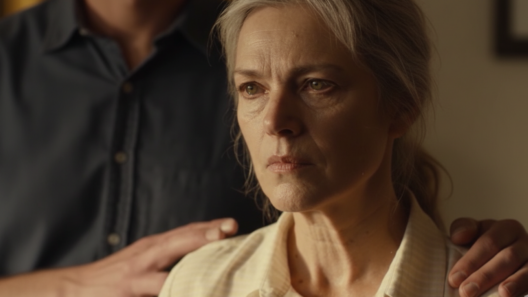
Claire found herself scrutinizing him with newfound intensity. She observed how he flinched when his phone vibrated, how his laughter seemed forced, a hollow echo of his former self. The silence between them grew louder, each pause laden with unspoken words.
One afternoon, while tidying up, Claire stumbled upon a receipt tucked between the pages of Jonathan’s favorite novel. It was from a hotel across town, dated last Saturday—a night when Jonathan had claimed to be working late. Her heart pounded in her chest, a relentless drumbeat as she tried to rationalize the discovery.
“Maybe it was a business meeting,” she told herself, though the seed of doubt had already been planted. That evening, she watched Jonathan closely, searching for any sign that could confirm or dismiss her suspicions. Yet, every gesture seemed loaded with meaning—was that a smile of reassurance, or one of deceit?
Their conversations became a minefield. Claire’s questions were met with defensiveness, a brittleness that hadn’t been there before. “Why are you always asking where I am?” he snapped one night, his words slicing through the fragile peace between them.
“I just want to understand,” Claire replied softly, though the truth was she felt adrift, grasping for something solid.
Days turned into weeks, and the chasm widened. Their once vibrant home now felt muted, each room echoing with the absence of truth. One evening, as Claire returned from the grocery store, she found Jonathan sitting in the dimly lit living room, a photograph in hand.
“Claire,” he began, his voice barely a whisper, “there’s something I need to tell you.”
Her heart clenched, anticipation mingling with dread. As he spoke, the words tumbled out—he had been visiting his childhood home, a place filled with memories of his late mother, trying to find solace in a world that sometimes felt overwhelming.
“I didn’t know how to tell you,” Jonathan confessed, tears glistening in his eyes. “I thought you’d see it as a weakness, something to fix.”
Claire sat beside him, the truth unraveling like a taut string finally loosed. She understood then—the emotional distance, the guarded silences, all stemmed from a grief he hadn’t been able to share. Her heart ached with the knowledge that their bond had been tested by secrets borne of fear, not betrayal.
“You could have told me,” she whispered, taking his hand in hers. “We can face it together.”
In the days that followed, they began to bridge the divide. Conversations that once felt like a battlefield became opportunities for healing. They spoke of the past, of Jonathan’s mother who had passed too soon, and the void that loss had left. Claire learned that trust was a fragile thing, built on vulnerability and the willingness to confront pain together.
Though everything wasn’t fixed overnight, they moved forward, hand in hand, stronger for the storm they had weathered. And in the quiet moments, when silence settled around them, Claire no longer felt the shadow of doubt, but the warmth of an unspoken promise to always seek the truth, no matter how hard it may be to face.