

In the small, sleepy town where Claire Anderson grew up, conformity was more than expected; it was demanded. Her family had inherited a comfortable house on Elm Street from her grandmother, and with it came the unspoken rules of propriety that her parents valued above all else. The curtains were always drawn at half-past six, the garden was tended to every Sunday, and Claire was expected to follow a path well-trodden by generations before her.
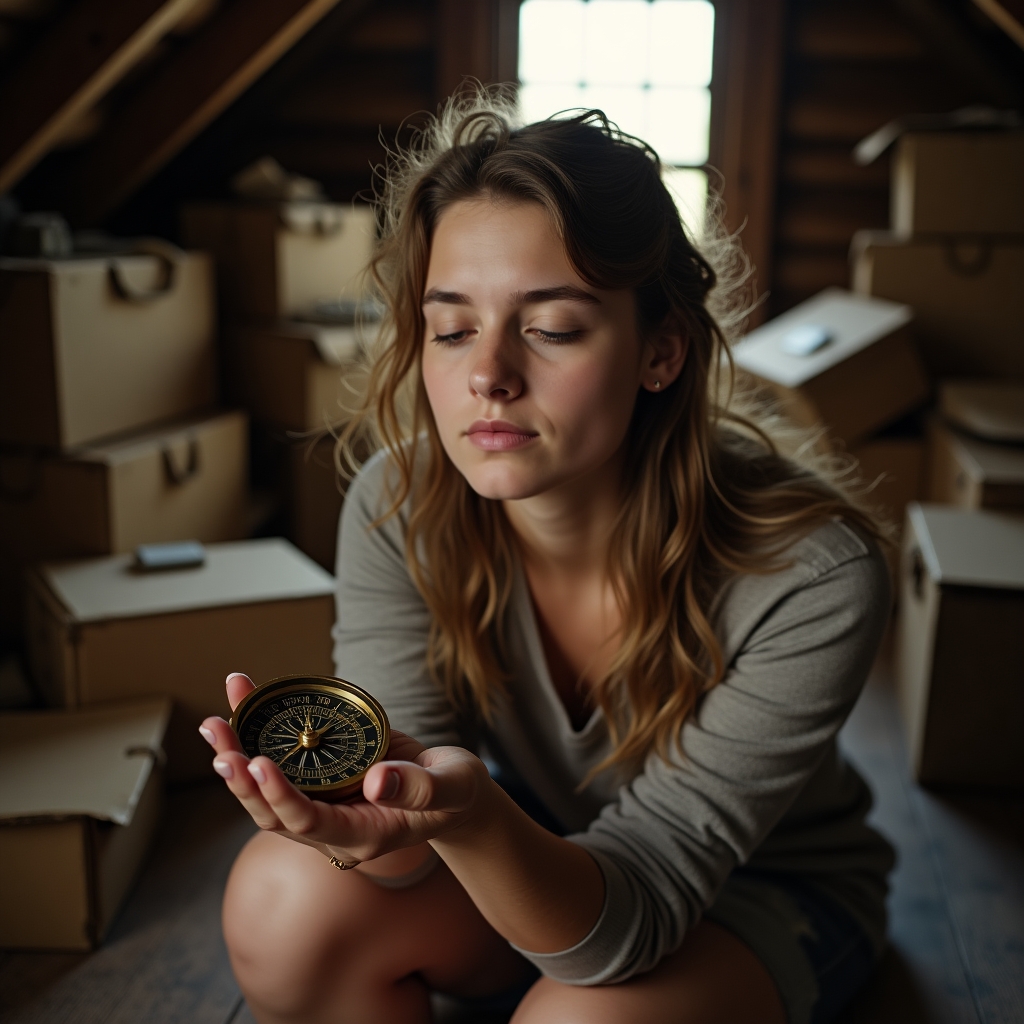
At 27, Claire still lived in that house with her parents, her spirit quietly smothered under years of traditional expectations. Her dreams were shelved like artifacts – glimpses of a life more vibrant, yet always just out of reach.
Claire worked at the local library, a quiet haven where she found solace amidst the whispers of dusty pages. Her interactions with people were cordial but restrained, each conversation a careful dance around the truth of her discontentment.
“Claire,” her mother called from the kitchen one morning as she prepared breakfast. “You should think about settling down. You know how your father feels about these things.”
Claire offered a tight-lipped smile, nodding as she buttered her toast. “I know, Mom.”
“You’re not getting any younger, darling,” her father chimed in, barely looking up from his newspaper.
Their words were a familiar refrain, a melody of expectations that had become part of the background noise of her life. Claire swallowed her retort, a bitter lump of frustration, and changed the subject.
But as the days passed, a gnawing restlessness grew within her. At night, she’d lie in bed, staring at the ceiling, feeling the weight of her unlived life pressing down on her. She’d imagine herself traveling, painting, writing — anything that was hers and hers alone. Then the morning would come, and she’d retreat back into her shell of complacency.
One evening, while shelving books, she found an old, worn-out novel tucked behind the biographies. It was ‘Women Who Run With the Wolves’ by Clarissa Pinkola Estés. The title alone sent a shiver down her spine. She took it home, and that night, as the rain pounded against her window, Claire devoured it.
The stories of wild, untamed women echoed in her mind, resonating with a part of her she’d long ago silenced. As she read, something unlocked within her, a latent spark flickering to life.
Throughout the following week, Claire noticed little changes in herself. She started taking walks after work, venturing into parts of town she’d never bothered to explore. A small art gallery caught her eye, and she found herself drawn to the vibrant paintings displayed in the window.
One afternoon, she stepped inside. The owner, a warm, older woman named Bea, greeted her with a smile. “First time here?”
“Yes,” Claire replied, her voice tentative yet eager.
“Art speaks to us, doesn’t it?” Bea said, gesturing to a vivid canvas of swirling colors. “It’s how we reclaim ourselves.”
Claire nodded, her heart thudding with recognition. “Exactly.”
They talked for hours, Bea sharing stories of the artists she showcased, many of whom had similarly found liberation in their work. Claire felt a kinship with these unknown creators, sensing their struggles and triumphs mirrored in her own journey.
As she left the gallery, Bea handed her a flyer. “We’re having an open exhibition next month. You should come. Or better yet, bring something of your own.”
Claire laughed, the thought both thrilling and terrifying. “I’m not an artist.”
“Not yet,” Bea countered with a wink.
That night, Claire sat at her small desk, staring at a blank canvas she’d impulsively bought on her way home. Her hands trembled as she picked up the brush, but once she started, it was as if the dam broke. Colors flowed from her, each stroke a defiance against the constraints of her past.
Her art became her silent rebellion, a language through which she could finally express the emotions she’d been forced to mute. Painting consumed her free time, filling her with a sense of purpose she hadn’t known before.
The tension at home, however, became more palpable. Her parents noticed the changes too – her frequent absences, her mood lighter yet distant.
“You’ve been out a lot lately,” her mother remarked one evening, suspicion lacing her words.
Claire nodded. “I’ve found something that makes me happy.”
Her father peered over his glasses, a frown creasing his forehead. “As long as you remember what’s important here.”
For the first time, Claire met their gaze head-on, feeling the shift within her solidify. “I am important,” she said, her voice steady.
The day of the exhibition arrived with a flurry of nerves and excitement. Claire had spent weeks perfecting her piece, investing it with her newfound sense of self. As she hung it on the gallery wall, a surge of pride and fear coursed through her.
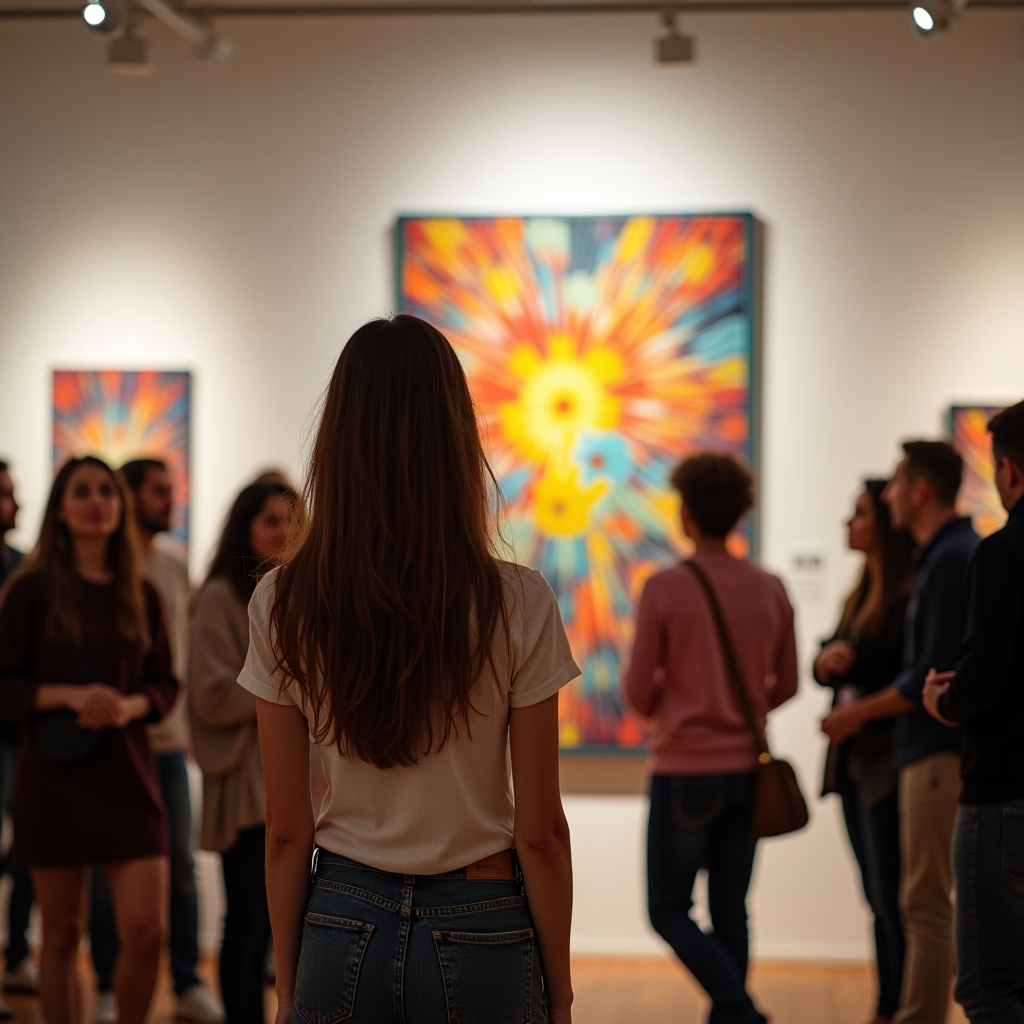
The opening night buzzed with chatter, the gallery alive with the hum of appreciation and curiosity. Claire stood by her painting, her heart a wild drumbeat, waiting for someone to stop and see.
When Bea approached, her eyes alight with admiration, Claire’s resolve strengthened. “It’s beautiful,” Bea said, touching Claire’s arm gently.
“Thank you,” Claire replied, her voice catching slightly. “It’s… it’s me.”
As the evening wore on, Claire watched the crowd ebb and flow around her creation. Strangers paused, commented, and moved on, each leaving a whisper of validation in their wake.
For the first time in her life, Claire felt free. She had stepped out of the shadows of others’ expectations, reclaiming her narrative with every brushstroke. This small act, a painting on a wall, was her declaration of independence.
That night, as she walked home beneath the canopy of stars, Claire knew she had taken a decisive step towards the life she yearned for. The echo of solitude she’d lived in for so long was replaced by the chorus of her own making — one of courage, authenticity, and an unyielding claim to her own happiness.