



Meena sat on the edge of her bed, her fingers dancing absently over the tassels of the hand-stitched quilt her grandmother had gifted her for her last birthday. The quilt was a patchwork of vibrant colors and intricate patterns, a labor of love reflecting hours spent by her grandmother’s side, learning about the art of quilting and, more importantly, the stories that each pattern carried. It was a comforting weight on her shoulders, a tangible reminder of her family’s rich heritage and the values they cherished. Yet, those same values now felt like chains holding her back.
At twenty-four, Meena was at a crossroads. Her family, deeply rooted in their traditions, expected her to embrace the life they envisioned for her — marrying within their community, keeping alive the customs they had followed for generations. On the other hand, her heart yearned for something different, something not yet defined but distinctly her own. Her quiet struggle was not against her family’s expectations alone, but against the inner voices that echoed their sentiments, voices that had accompanied her since childhood.
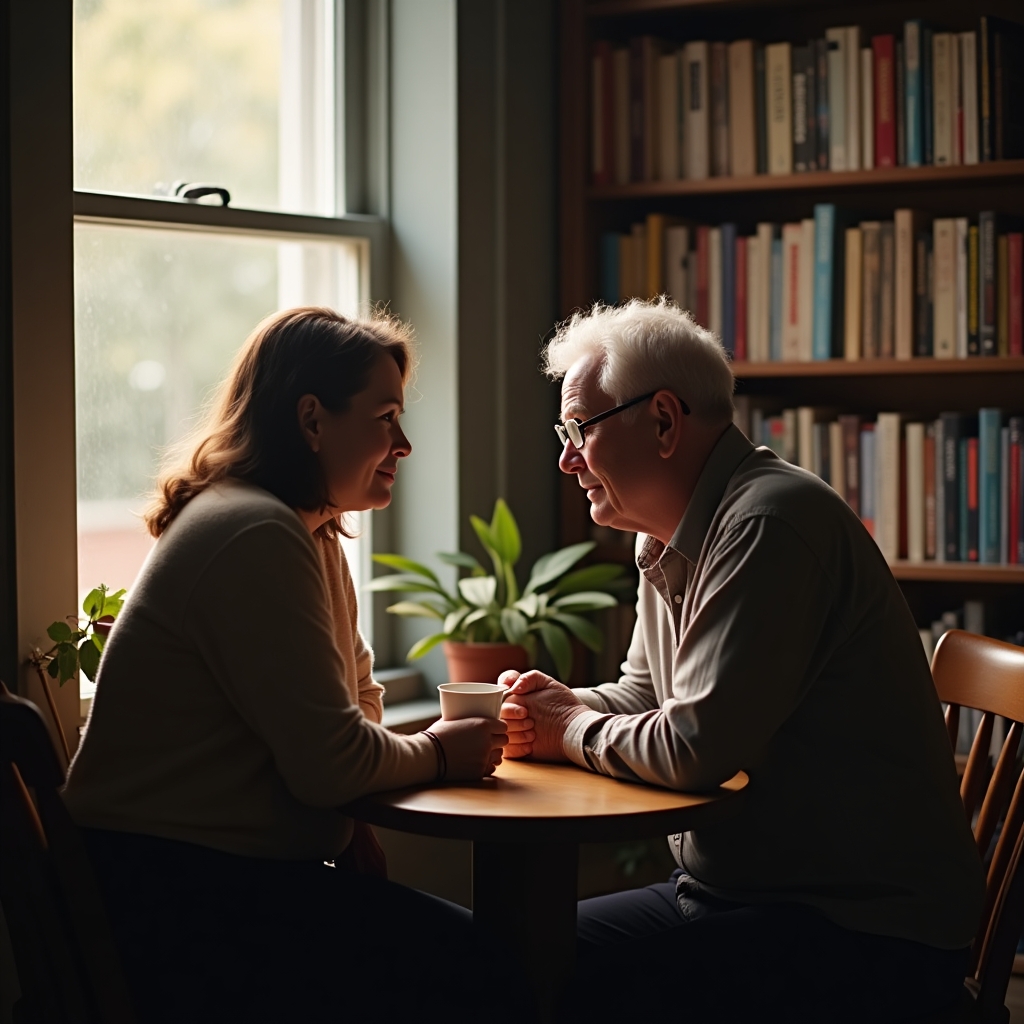
Every Sunday, the family gathered at her grandmother’s house for dinner, an occasion Meena both cherished and dreaded. The meal was always a feast, a celebration of their culture with dishes that were as much a part of their lineage as the stories passed down with them. She savored these moments of unity and joy, but the conversations invariably turned to Meena’s future.
“You know, Meena, the Kapoors’ son has just returned from the US. He’s very well-settled now,” her mother would say, her voice as light as her intention was heavy. “You should meet him; he’s a good boy, from a good family.”
Meena would smile politely, nodding while her insides churned with a complex mix of guilt, frustration, and rebellion. She loved her family dearly, respected the sacrifices they had made to provide her with a better life. Yet, the more they spoke of her settling down, the more her mind drifted to dreams of travel, of pursuing her passion for art, of writing her own story.
In the quiet of her room, away from the loving scrutiny of her family, Meena’s canvas was her sanctuary. Here, she painted the world she imagined — landscapes of far-off lands, portraits of people with stories untold, abstracts that captured the turmoil she felt within. It was in these moments, brush in hand, that she felt most herself, unconstrained and full of potential.
Her father, a man of few words, understood her in a way that her mother did not. He had once told her, “There is no shame in seeking your own path, Meena. But do so with love and respect for where you come from.” His words were a balm, yet they also added to the pressure, a gentle reminder of the balance she strived to achieve.
Months passed in this quiet turmoil until one evening, as she sat painting, a realization washed over her like a wave. Her latest piece, a portrait of a young woman standing on a bridge between two cliffs, was unfinished yet striking. The image was a metaphor so vivid it startled her — she was that woman, suspended between two worlds, caught in the liminal space of decision.
Meena set down her brush and gazed at the painting, a soft light from the setting sun filtering through her window, casting a golden glow over the room. Her heart, which had been pulled in different directions for so long, now felt a serene certainty. She realized that her love for her family and her desire to forge her path were not mutually exclusive but could coexist.
The next family dinner, she spoke with a clarity born of introspection and resolve. “I’ve been thinking a lot, and I want to explore more of what the world has to offer,” she said gently but firmly. “I want to honor our family and traditions, but I also need to find my own way.”
The room was silent for a moment, her family absorbing her words. Her grandmother, the matriarch whose approval meant the world to Meena, was the first to respond, a gentle smile spreading across her face.
“Meena, you carry our spirit within you, and I’m proud of who you are becoming,” she said softly, her eyes glistening with tears. “Your path is your own, and we are with you every step of the way.”
The understanding and acceptance in her grandmother’s words were the release Meena had longed for. She realized that she could step off the bridge and into the life she chose, carrying her heritage as a compass, not a chain.
It was not a rejection of her family but an embrace of herself, a delicate dance of loyalty and self-discovery. As the evening wore on, surrounded by laughter and love, Meena felt a profound sense of peace, knowing she could walk her path without losing sight of where she came from.