


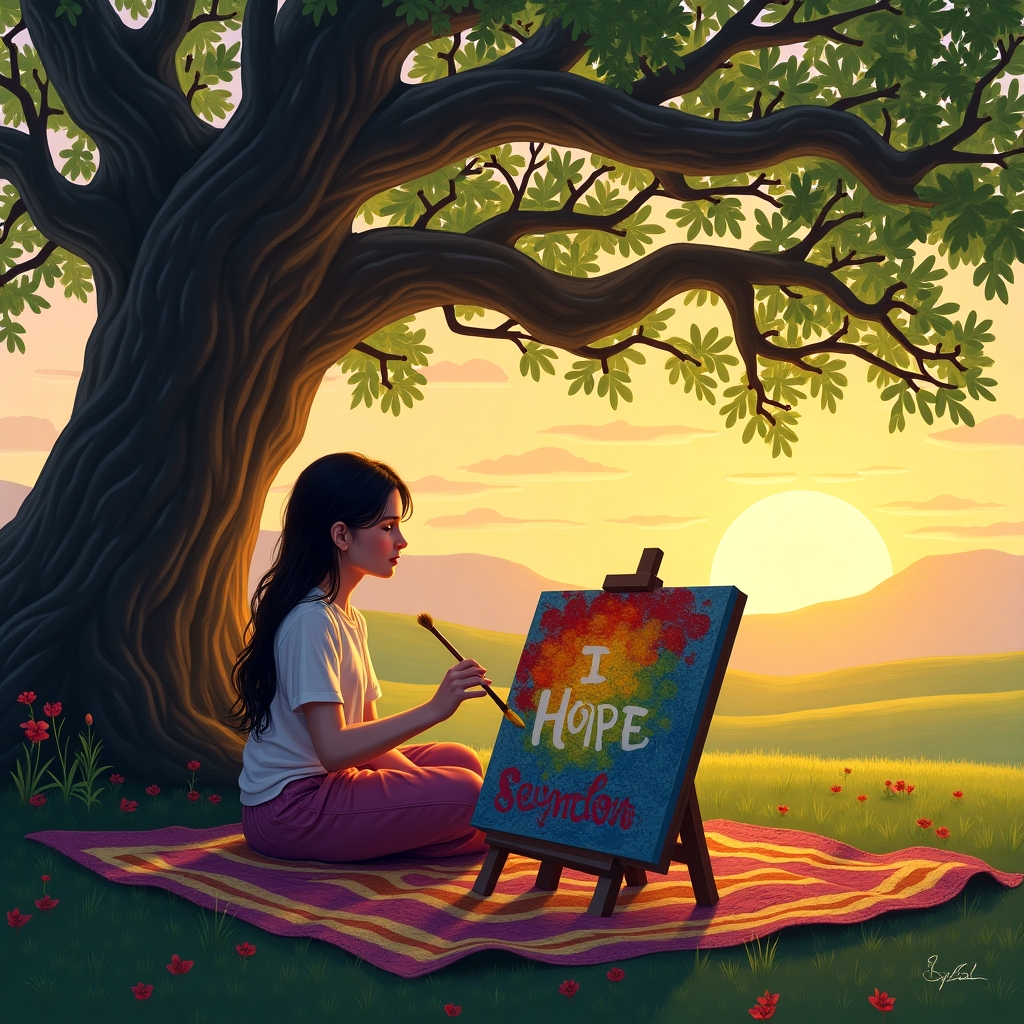
A soft breeze rustled through the leaves of the old oak tree that stood sentinel in the Raghavan family’s backyard. Kavya sat beneath its sprawling branches, her fingers tracing the intricate patterns of a faded quilt her grandmother had made years ago. The quilt, much like her, was caught in a delicate web of tradition and evolution.
Kavya was in her final year of a grueling medical program, a path chosen not out of desire but out of a sense of duty to her family. The Raghavans were a lineage of healers, stretching back generations in their Tamil Nadu village. Her father, Dr. Ravi Raghavan, was a renowned oncologist respected by both peers and patients. Her mother, Meera, an Ayurvedic practitioner, had brought ancient healing practices with her when they immigrated to America.
From a young age, Kavya was surrounded by the expectation that she would inherit the mantle of healing. Yet her heart whispered differently. It whispered in colors, in brushes, in canvases. Art was her secret, her sanctuary. It was the place where she felt most alive, where her spirit danced unfettered by expectations.
The tension of these opposing forces was a constant, subtle undertone in her life. Every morning, as she donned her white coat and stethoscope, a part of her ached for the feel of a paintbrush. Her days were filled with the sounds of monitors beeping, pages turning, yet her nights were haunted by dreams of vibrant splashes of color.
Kavya’s parents, though loving and supportive, bore the unspoken weight of their hopes for her. At family gatherings, the pride in their voices when introducing her as ‘our future Dr. Raghavan’ was palpable. It was a pride heavy with the memories of sacrifices they had made in their early immigrant years, the struggles to provide her with the opportunities they never had.
Kavya inwardly battled with these expectations, never allowing her inner conflict to breach the surface. Instead, she smiled, nodded, and continued down the path laid out for her, even as her heart longed for her true calling. Each day, she felt the quiet suffocation of compromise, and yet, she walked forward in the name of love, in the name of family loyalty.
In rare, stolen moments, Kavya would retreat to her makeshift studio in the attic. Here, amidst canvases stacked against the walls and tubes of paint scattered around, she felt a sense of belonging. In those moments, she was not Dr. Raghavan’s daughter but simply Kavya, free to express the unspoken parts of herself.
One evening, after a particularly exhausting day at the hospital, Kavya found herself drawn to the attic. The room was dimly lit, the late sunset casting a golden glow through the single window. She picked up a brush, staring at the blank canvas before her. Her mind was a whirl of thoughts, yet her hand moved almost instinctively, colors flowing from her heart onto the canvas.
As her brush danced across the surface, a serenity settled over her. Her strokes were bold yet delicate, mirroring the intricate dance of tradition and self. Lost in her creation, time slipped away until the canvas was filled with a vibrant landscape—a tapestry of her heritage intertwined with her dreams.
It was in that quiet moment, surrounded by the familiar smell of turpentine and paint, that clarity washed over her. She realized she could no longer ignore that small, persistent voice within her. It was not a matter of choosing between her family and herself, but of finding a way to honor both.
Kavya knew the conversation with her parents would not be easy. She feared their disappointment, feared seeing their hopes crumble. But there was also a flicker of hope within her—a belief that her parents loved her deeply enough to understand her truth.
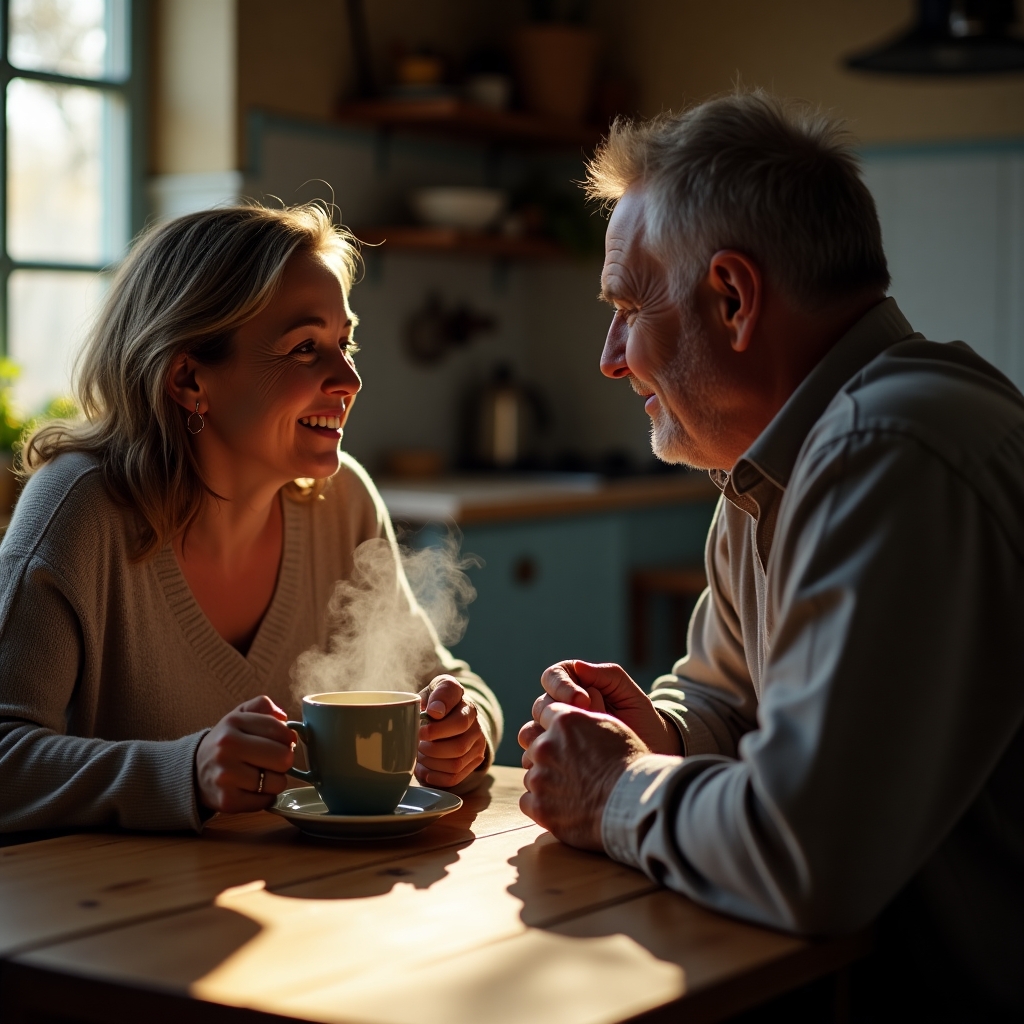
The next morning, with a heart full of resolve, she approached her parents. They were seated at the breakfast table, her mother reading the newspaper, her father sipping his coffee.
“Amma, Appa,” she began, her voice steady yet soft. “There’s something I need to share with you.”
They looked up, their faces a picture of curiosity and concern. In that moment, Kavya felt the enormity of her journey—the weight of tradition, the flame of her dreams. But she also felt the stirring of courage, the bravery to step into her own light.
“I love medicine, I truly do,” she continued, “but there’s another part of me that has always been called to art. I see it as another form of healing, one that speaks directly to the soul.”
Her mother’s eyes softened, and her father set down his coffee cup, leaning forward. “We know, Kavya,” he said gently. “We’ve seen your paintings, felt the passion in your work. We want you to be happy, to be true to yourself.”
Her mother’s hand reached across the table to clasp hers. “Your happiness is our happiness,” Meera added, her voice filled with love.
Tears prickled at Kavya’s eyes, a mixture of relief and gratitude overwhelming her. In that moment, she realized the depth of their understanding and support was more profound than she had ever imagined.
That evening, under the watchful gaze of the old oak tree, Kavya sat with her parents on the quilt, sharing stories and dreams. The breeze lifted the leaves above them, a soothing symphony that echoed the harmony she had found within herself.
Though the path ahead was uncertain, it was hers to forge—a blending of tradition and dream, a journey of healing both body and soul.