
In the small, sun-drenched town of Willow Springs, life moved at a pace that seemed to echo the whispers of the oak trees lining the streets. For Mia Tran, a twenty-four-year-old artist, it was a place of comforting rhythms and suffocating expectations. Her parents, immigrants from Vietnam, had built their lives around the values of hard work, family, and traditions, which had been their anchor in unfamiliar waters. Mia loved her family deeply, but their expectations often felt like a weight pressing against her chest.
Mia’s world was one of colors and textures, each stroke of her brush an expression of the emotions she couldn’t speak. She spent her days working at a local art gallery, a quiet sanctuary where she curated exhibitions and sometimes, timidly, displayed her own work. Her parents, however, held different dreams for her—a stable career, perhaps in medicine or law, something that they could announce proudly at family gatherings.
The tension grew quietly within Mia, an undercurrent of yearning and guilt that flowed beneath her skin. She felt it most on Sundays, when her family gathered for dinner, the air thick with the scent of pho simmering on the stove. Her father, a man of few words, would ask about her “real job,” while her mother would silently serve her rice, eyes full of quiet disappointment. Mia understood their fears, their sacrifices, but her heart thrummed to a different beat.
It was during one of these dinners that the silence between them seemed to stretch longer than usual, a taut string vibrating with unspoken words. Her mother placed a bowl in front of her and paused, her fingers lightly brushing Mia’s hand, “We worry about you, con. We just want you to be secure, to have a good life.”
Mia nodded, the familiar lump rising in her throat. “I know, mẹ. I just… I want to find my own way, too.”
Her father’s eyes caught hers, strong and steady like roots. “Is it foolish to want you to live without struggle?”
Mia shook her head, her voice barely above a whisper, “No, it’s not foolish. It’s just… different.”
The conversation ebbed, leaving behind an aching silence that spoke volumes. That night, Mia lay awake, the moonlight spilling through her window like silver paint across the floor. Her mind drifted to memories of her childhood—long summers catching fireflies, her parents’ laughter mingling with hers. The love was there, deep and certain, but the disconnect was a chasm she couldn’t seem to bridge.
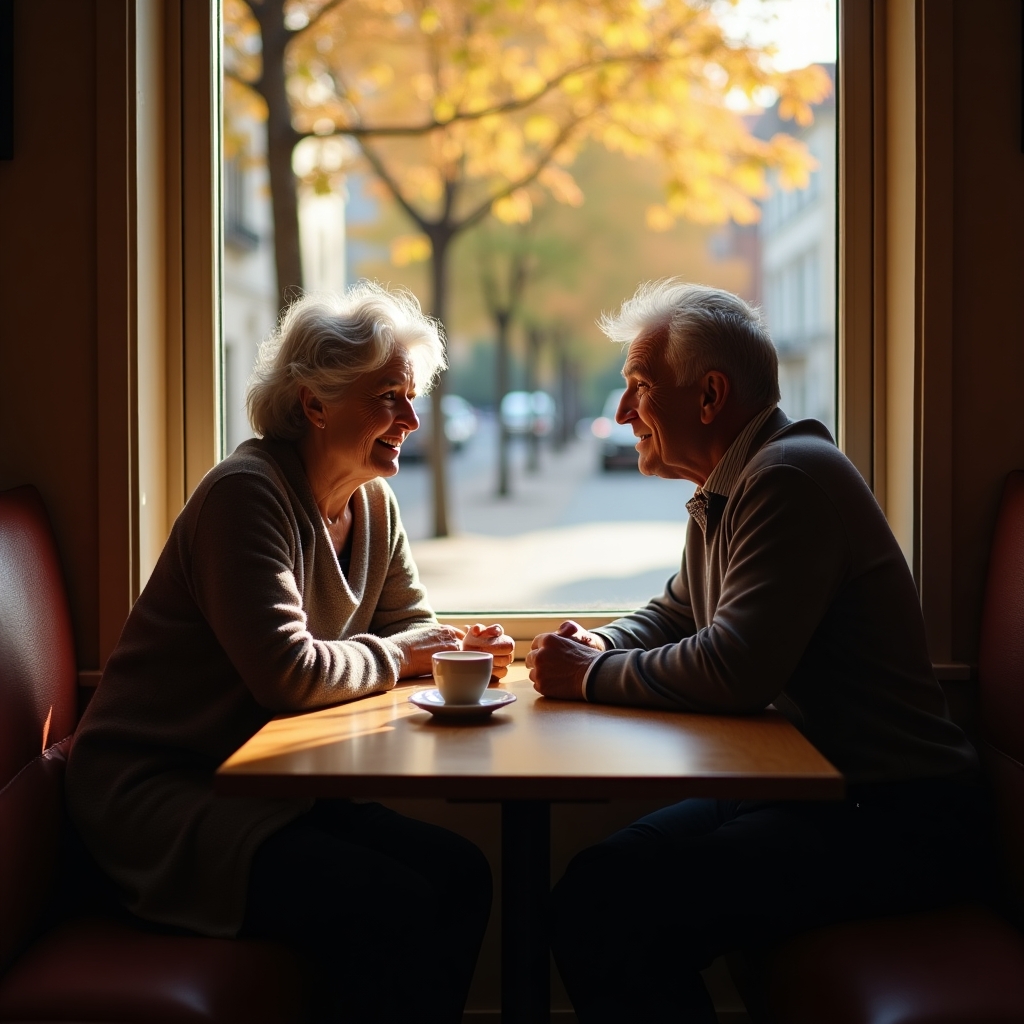
Things continued in this quiet, unspoken tension until one afternoon, a moment of clarity unfolded as Mia was preparing for an upcoming exhibition at the gallery. As she arranged her paintings, she overheard a conversation between an elderly couple admiring one of her landscapes. They spoke about the peace and freedom the piece evoked, how the colors seemed to dance with a quiet joy.
Their words were like a gentle breeze, lifting the fog that had clouded her thoughts. It was then she realized that her art wasn’t just a personal escape—it was a bridge. A way to connect with others, perhaps even her own family. Her heart swelled with the understanding that she could honor her parents’ journey while forging her own path.
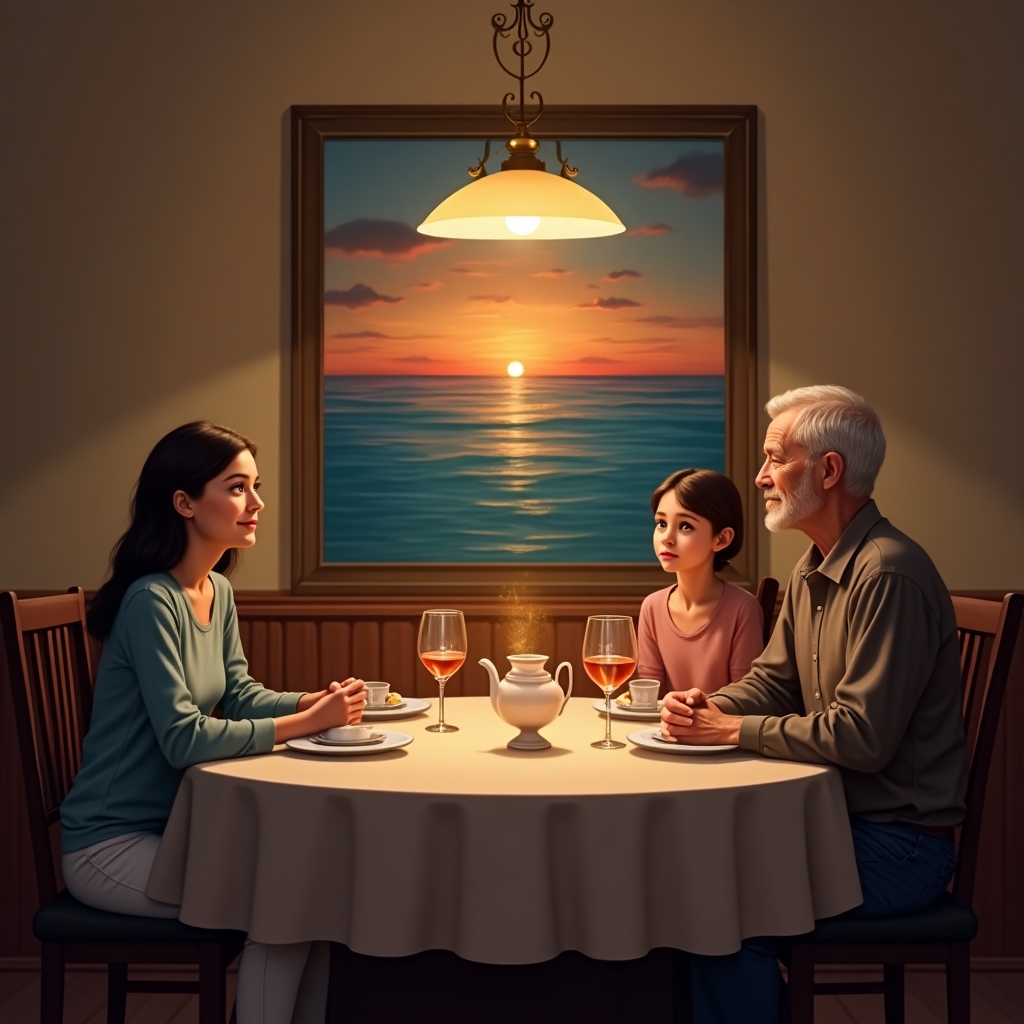
That evening, she returned home with a quiet resolve. After dinner, she gently placed one of her paintings—a serene seascape with merging hues of dawn and dusk—on the table. “This is for you,” she said, her voice steady, “a part of me, and a part of us.” Her parents exchanged glances, their expressions softening as they took in the piece.
Her father’s gaze lingered on the canvas, a rare smile tugging at his lips. “It’s like a song without words,” he murmured, and Mia knew, in that moment, they had finally found a language beyond expectations and fears.
The quiet harmony they created that night was delicate but real, a testament to the strength of their love and the power of understanding. In that quiet resolution, Mia found the courage to honor both her parents’ hopes and her own dreams, understanding that their journeys, while different, were deeply intertwined.