


Amara stood by the old oaken kitchen table, its surface weathered by the hands of generations. The morning light filtered through lace curtains, casting delicate shadows that seemed to dance with the quiet whispers of the past. Her fingers traced the intricate wood grain, feeling each groove as if searching for answers within the ridges. Today, she would make a decision, or so she hoped.
The house was filled with the aroma of cardamom and jasmine, a scent that pulled her back into childhood memories of festivals and family gatherings. Yet, these same fragrances now felt like chains, binding her to expectations as old and unyielding as the table itself. Amara’s mother, Meera, believed in tradition with a fervor that was both comforting and suffocating.
“Have you thought about it, Amara?” Her mother’s voice, gentle yet firm, carried an unspoken weight. It was the question that had hovered in their conversations like an uninvited guest ever since Amara’s recent graduation.
“Yes, I’m thinking about it,” Amara replied, her voice steady but soft. She avoided eye contact, focusing instead on adjusting the lace curtains.
Amara was expected to join the family business, a custom textile enterprise that had been in the family for generations. It was her mother’s dream for her to continue this legacy, to honor their heritage and keep the cultural narrative alive. But Amara had her own dreams, ones that involved art galleries and vibrant canvases, not textile negotiations and business meetings.
The tension was subtle but palpable, a silent current beneath the surface of everyday interactions. Amara felt it during family dinners, in the way her mother spoke about the future, always including “when you run the business,” as if it was a foregone conclusion. She felt it in her father’s quiet nods, his encouragement laced with expectation.
Amara’s heart was a battlefield of loyalty and desire. She loved her family deeply, respected their sacrifices and the legacy they wanted her to uphold. But in the mirror, she saw an artist yearning to paint stories that were her own.
As weeks turned into months, the internal tug-of-war left Amara in quiet turmoil. Her nights were restless, filled with dreams of color and form, only to be greeted by dawns of duty.
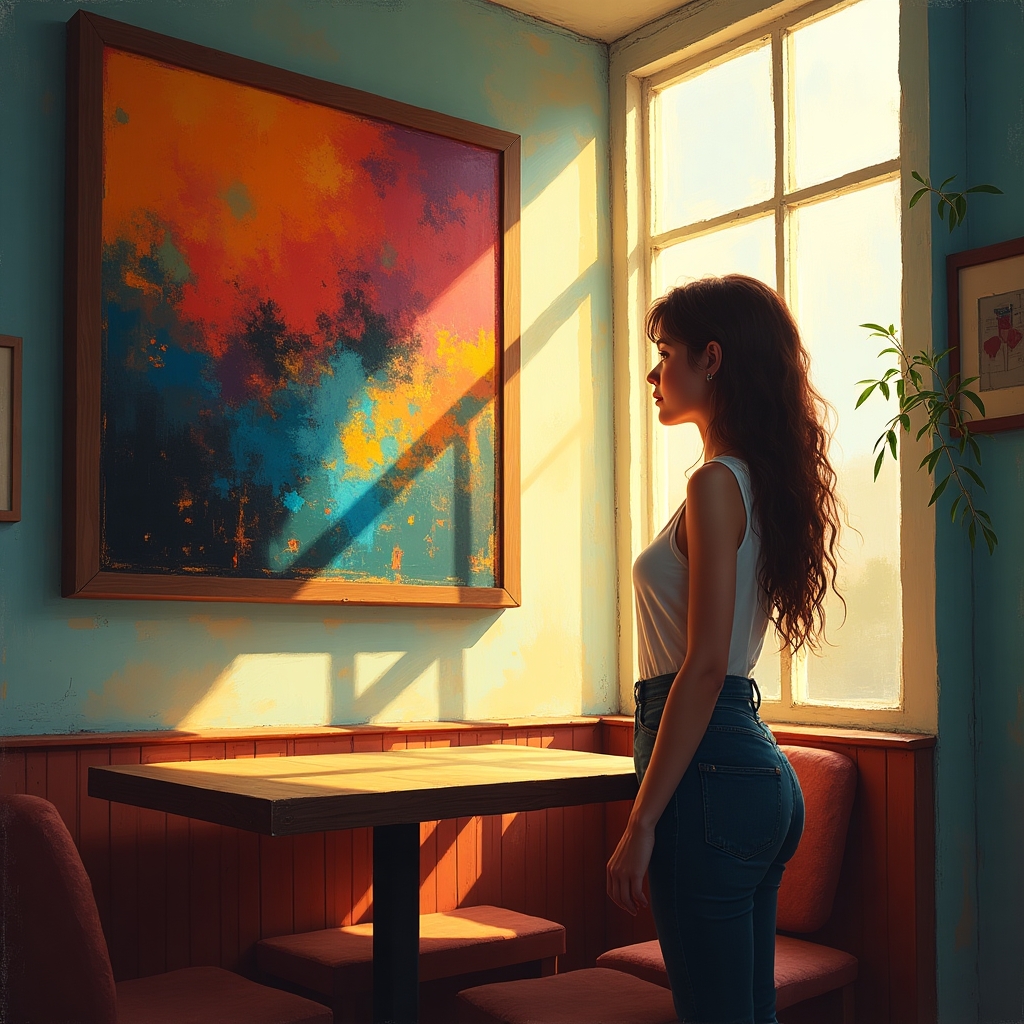
The turning point came one rainy afternoon, as Amara sought solace in her favorite café, a small nook with walls adorned by local artists. As she sipped her coffee, her eyes caught a painting titled “Liberation,” a vivid explosion of colors that seemed to pulse with a life force of its own. It was raw and unrestrained, capturing a moment of pure emotional clarity.
In that instant, Amara felt a crack in the walls she had built around herself. Her heart raced, and for the first time, she could clearly envision a path not shadowed by expectation. “This is who I am,” she realized, feeling the truth resonate within her, clearing away the cobwebs of doubt.
That evening, Amara returned home drenched from the rain, her resolve unshaken. She found her mother in the kitchen, preparing dinner.
“Mom,” Amara began, her voice soft but resolute, “I need to talk to you.” Meera looked up, her eyes meeting Amara’s with a mixture of surprise and concern.
“I’ve thought about it a lot,” Amara continued, choosing her words carefully. “And I’ve realized that while I respect our family’s legacy, my heart is in art. I need to follow this path, not just for me, but because it’s where I can flourish and, hopefully, make you proud in a different way.”
Meera’s silence was heavy, the air thick with unspoken emotions. Then, in a moment that felt like the breaking of a dawn, her mother’s expression softened. “We all have our own paths, Amara,” Meera said quietly, her voice tinged with an unexpected warmth. “Your grandfather once told me that following our truth is the greatest respect we can pay to our heritage, because it shows we’re listening to our own story.”
The quiet exchange was profound, a release of the unspoken tension that had woven itself through their lives. Amara felt a weight lift, replaced by a lightness she hadn’t anticipated.
As they embraced, the rain outside turned to a gentle patter, mirroring the silent yet significant shift within their home. It was a beginning, a step towards honoring personal truth while acknowledging the bonds of family.
Amara knew the journey ahead wouldn’t be without its challenges, but she felt ready, buoyed by the knowledge that her family’s love was a foundation she could stand upon, not a shackle to hold her back.